





And finally… campaign to save ‘first’ Hampden Park
 Reading time: 4 minutes
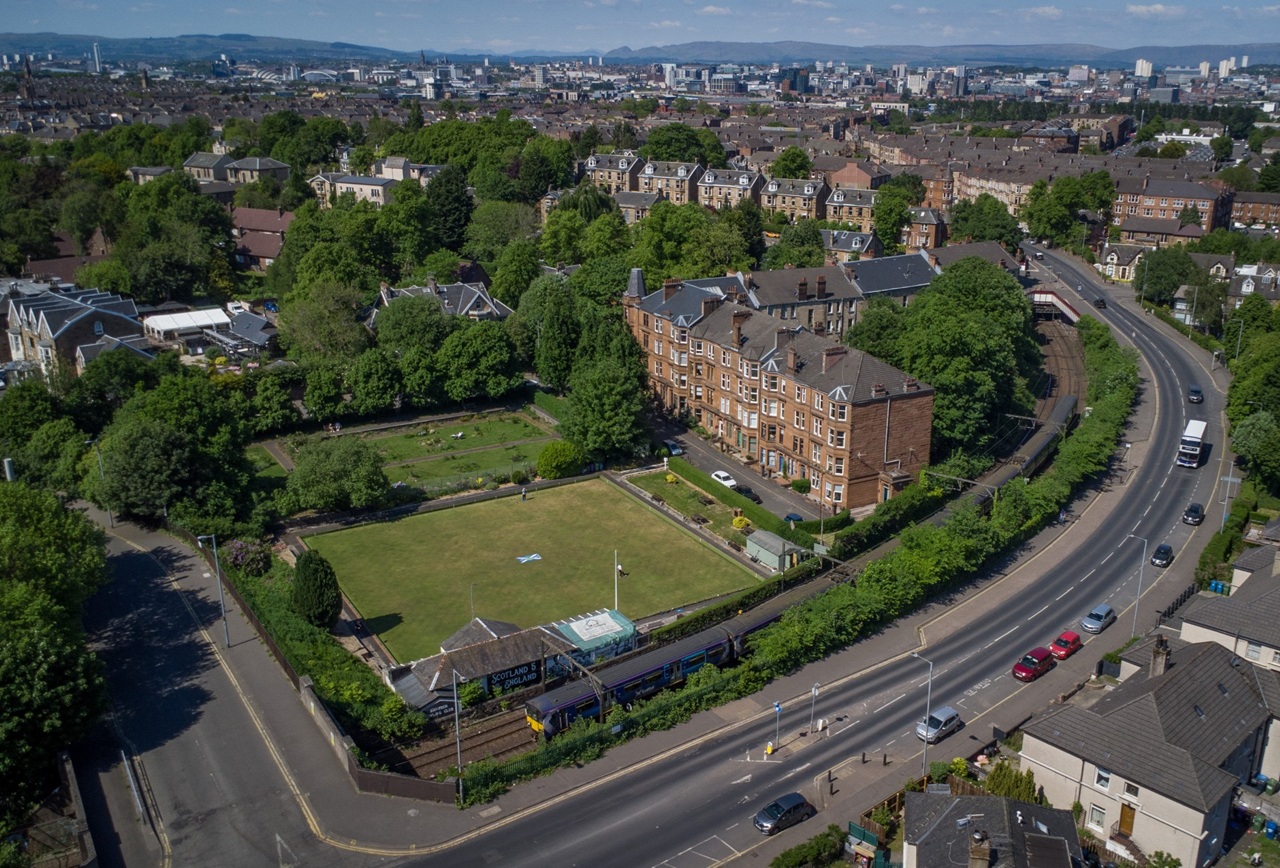
The site of the first Hampden Park (Photo credit: Campbell Ramage)
As the men’s football team makes plans for the 2026 World Cup and Scottish football sits top of mind for many across the country, the National Trust for Scotland has added its voice to those seeking assurances about the preservation of the first ever Hampden Park in Glasgow.
The site, at Kingsley Avenue in Glasgow’s southside, is where Scottish and international football played out its formative years. It was home to the Queen’s Park club from 1873-1883, and hosted Scottish Cup finals, including the very first final between Queen’s Park and Clydesdale in 1874, and Scotland internationals.
Importantly, it was also where modern football as we know it was created. Scottish teams are considered the first to start passing the ball between teammates, which went on to inspire the game in South America and beyond.

Since 1905, the grounds have been leased by the Hampden Bowling Club, but with the club winding up in February next year, there has been a considerable level of community and public concern that the site will be lost and subject to development.
Football’s Square Mile, the world’s largest open air football museum sharing the story of Scottish football and the impact of the earliest matches in Glasgow on the modern game, is leading the call for the site to be saved.
The National Trust for Scotland’s chief executive, Philip Long, said: “Scotland’s recent win was a glorious moment in the game’s history, so let’s not sully that by the potential obliteration of the very first Hampden Park.
“The site is intrinsic to the development of the game of football as we know it, so making a vital contribution to Scotland’s culture and modern identity. A place of such significance needs to be protected and respected. It is vital that our country’s cultural history is preserved, and we continue to tell the stories that have made Scotland the place it is today.


“We urge all parties concerned, as well as Historic Environment Scotland and the Scottish Government, to come together to find a way forward that will ensure this pivotal site is saved and its historic role shared and celebrated.”
An archaeological excavation at the site discovered the remains of what has been described as ‘the first purpose-built international football stadium’ and it is considered the template for the countless pitches and stadia that followed it worldwide.
Eventually, because of the construction of the now adjacent railway line, Queen’s Park and Scottish Cup and International fixtures moved to a new site - ‘Hampden Two’ - 150 yards away in Crosshill in 1884. However, this was not before Scotland beat England 5-1 in 1882, an event commemorated on a mural on the back of the bowling pavilion viewed daily by commuters on the very railway line that led to the move.
The third Hampden Park was built on land acquired in Mount Florida in 1899 and play began there in 1903. This is the stadium that is still in use today.
Football’s Square Mile and the Glasgow Building Preservation Trust have been working together to devise a feasibility study that can design a viable future for the site of the first Hampden Park. Funding has been secured for the study, and a design team is ready to start once a small amount of gap funding is found.
Ian McLelland, the National Trust for Scotland’s regional director for the South & West, said: “Over the last 150 years, football has become synonymous with Scotland and Hampden Park synonymous with Scottish Football.
“We’re aware of the valiant efforts being made by Football’s Square Mile and the Glasgow Building Preservation Trust to find a viable way forward for the very first incarnation of Hampden Park so that it is not lost.
“While as a charity, we are not in a position to take over the site, we are keen to support the interpretation of this cultural legacy and work with partners to tell the story of Scottish football and its impact on the world. Football’s Square Mile fulfils an important need in Glasgow, ensuring that this intangible history is not lost. Intervention at national and local authority level will be necessary and we believe this site and the heritage it represents certainly justifies that.
“With St Andrew’s Day over the weekend, when we celebrated Scotland’s Patron Saint, let’s use this occasion to think about and cherish places like this that have made Scotland what it is today.”

Share this article:

Subscribe to our newsletter to not miss articles like this one:
 SUBSCRIBE