




Architects call for 100-year plan for tree planting
 Reading time: 4 minutes
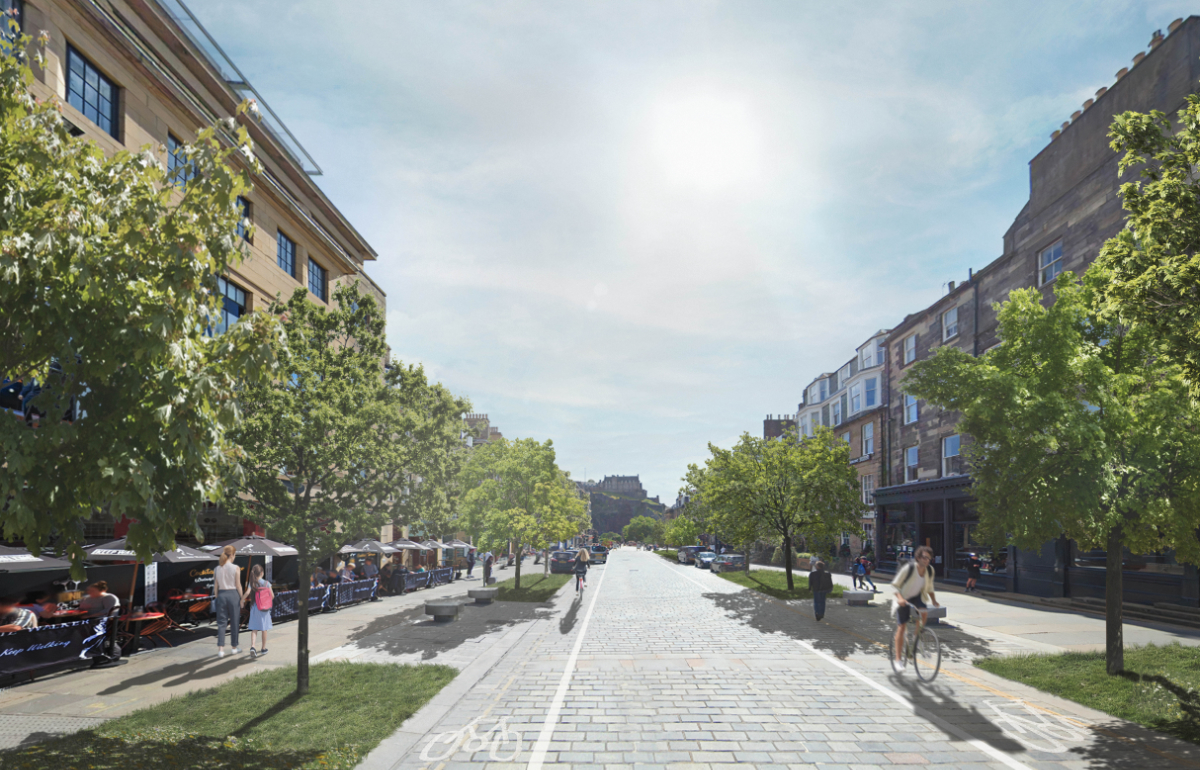
A future plan for Castle Street, Edinburgh
As climate change accelerates and the construction sector grapples with its hidden carbon footprint, architects Anderson Bell Christie (ABC) argue that Scotland must once again adopt a bold, transformative approach to tree planting.
Following World War I, Scotland’s tree canopy cover had collapsed to around 5%. The Forestry Act of 1919 was introduced to rapidly rebuild timber reserves, leading to vast monocultures of fast-growing Sitka spruce across the country. The strategy was blunt but effective: today, Scotland’s canopy cover has risen to roughly 19%.
Yet, as ABC highlights in its new White Paper Balance, this is no time for complacency. The climate emergency demands action on a scale comparable to the post-war forestry drive—this time not for timber security, but for carbon sequestration, biodiversity, and urban resilience.


While the construction industry has made strides in reducing operational energy use, a major challenge remains largely unregulated: embodied carbon. These emissions—generated through the extraction, manufacture, transport, and assembly of building materials—are locked in before a building even opens its doors.
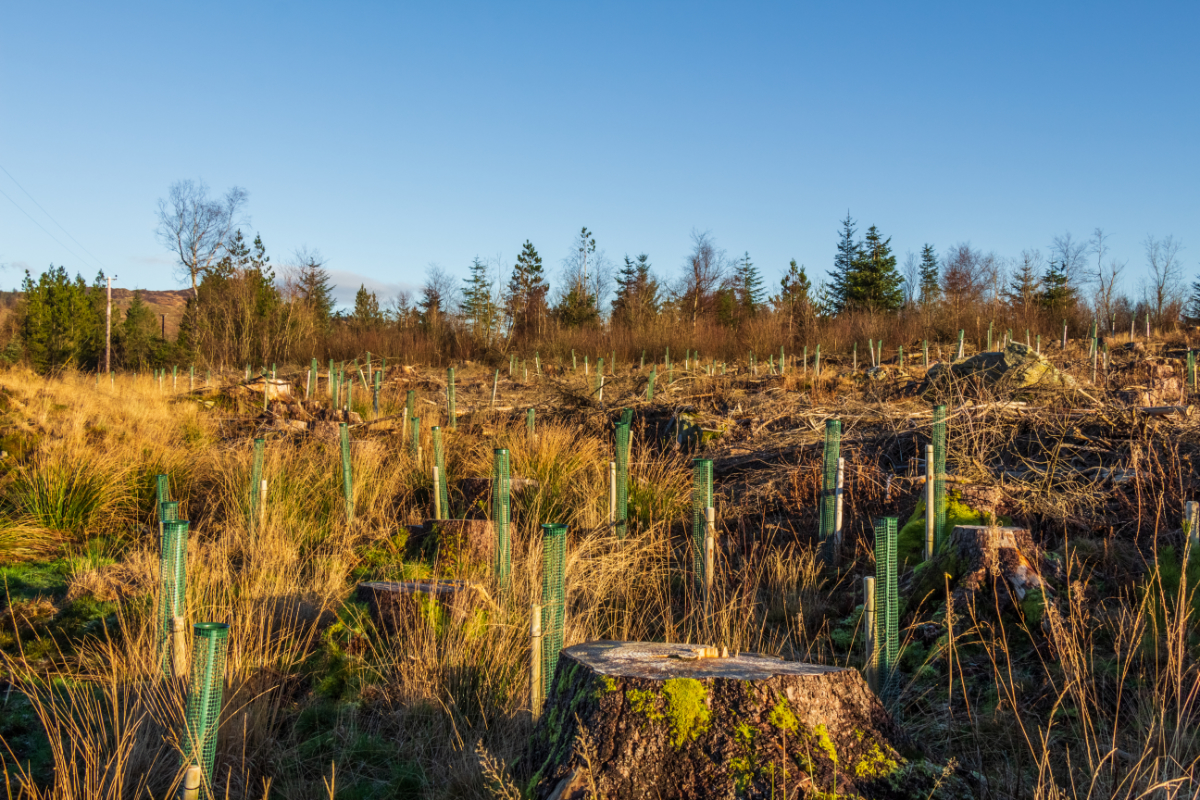
Rethink subsidising like for like replacement of coniferous forest
ABC community carbon consultant Dr F. P. Ekdi warns that the scale of the issue is immense.
“New housebuilding in Scotland to 2050 will release around 74 million tonnes of embodied carbon emissions,” he said. “There is no plan in place to address these emissions.”


ABC’s modelling suggests that over 107,000 hectares of new tree planting would be required to offset the embodied carbon of new homes alone. When wider construction activity is factored in, the required planting area multiplies dramatically.
ABC argue that Scotland must adopt a two-pronged approach:
- Dramatically reduce embodied carbon in construction through new regulation and industry-wide standards.
- Turbo-charge tree planting programmes to sequester unavoidable emissions and build climate resilience into towns and cities.
“Carbon must be connected to place,” ABC assert—meaning that tree planting should not be confined to remote forestry plantations but embedded directly into the fabric of communities.


Local authorities across Scotland have already set ambitious tree-planting targets, but ABC believe these programmes require far greater support and funding.
Research from the European Environment Agency shows that European capital cities average around 30% tree canopy cover. Glasgow sits at just 15%, and Edinburgh at 17%—well below their continental peers.
The opportunity is clear: Scotland’s cities have the space and the need to grow greener. By planting trees in the underused spaces between buildings, streets, and infrastructure, urban areas could significantly reduce flood risk, mitigate overheating, improve air quality, and enhance community wellbeing.

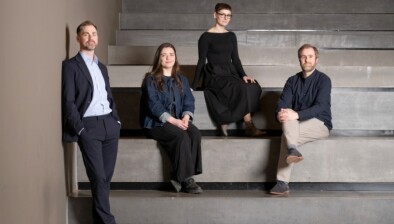
Dr Fatma Pelin Ekdi, community carbon consultant at ABC
Dr Ekdi is unequivocal in his call for government action.
“We call on the Scottish Government to take a dual approach. First, turbo-charge existing local authority tree planting programmes by significantly increasing funding and adapting local development plans.
“This could be achieved by shifting funding from monoculture forestry to nature-based solutions and urban greening. Second, implement a new policy suite to regulate embodied carbon in the construction industry. Our White Paper, Balance, provides roadmaps to illustrate how this could be achieved.”
This position is echoed by the Royal Society of Edinburgh, which has also urged a rebalancing of public financial support away from traditional forestry models and toward more diverse, climate-focused planting strategies.
ABC argues that a carefully coordinated approach, combining regulatory reform with a nationwide greening programme, would allow Scotland to meet its 2045 net-zero targets while creating healthier, more resilient places to live.
More than a century after the first Forestry Act reshaped the nation’s landscape, Scotland once again stands at a crossroads. The question now is whether it will seize the moment to craft an ambitious new plan for the century ahead—one that recognises trees not as a resource to be exploited, but as essential partners in building a sustainable future.

Share this article:

Subscribe to our newsletter to not miss articles like this one:
 SUBSCRIBE