



Barratt Redrow injects £342m into Scotland’s economy
 Reading time: 4 minutes
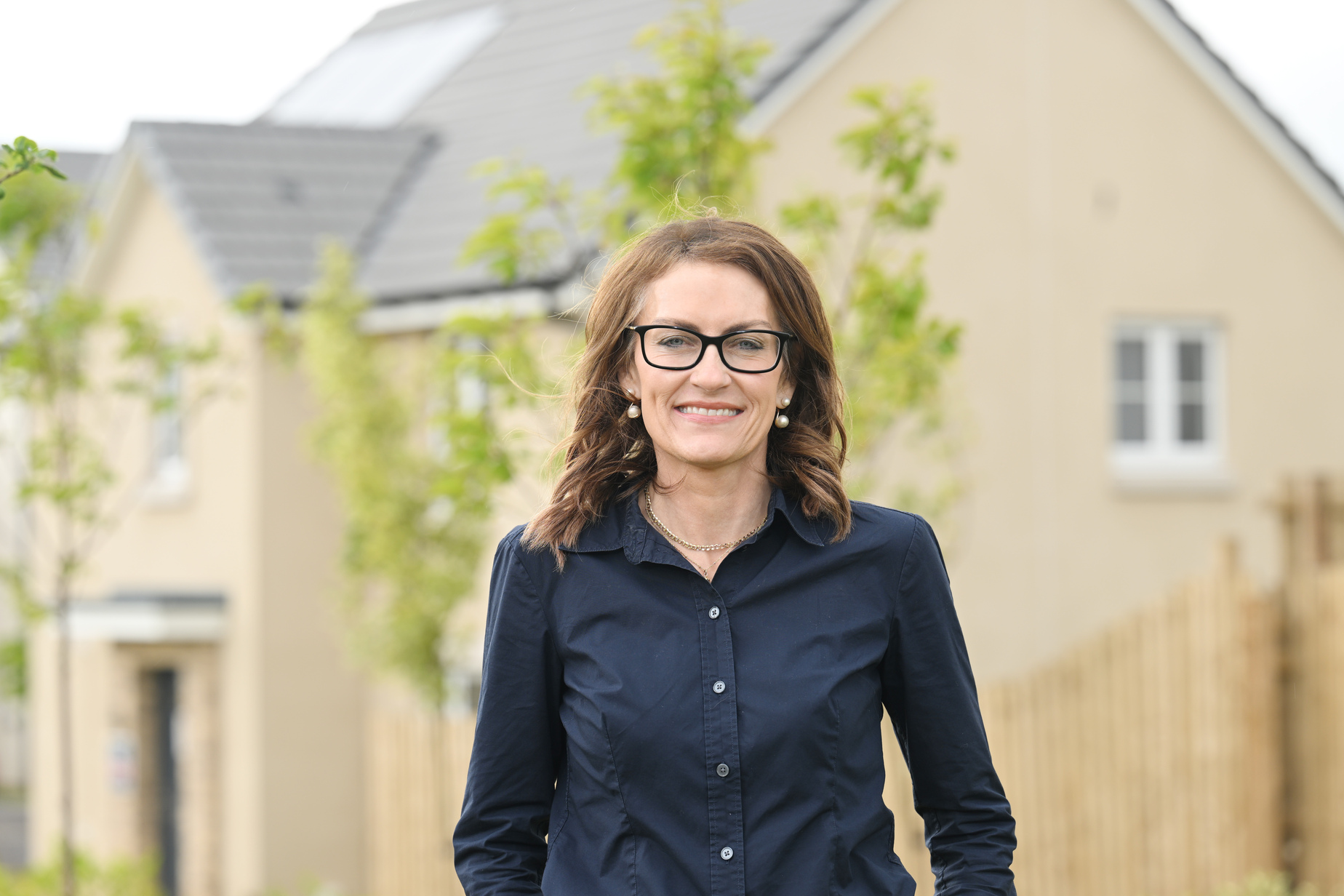
Alison Condie – Regional managing director for Barratt Redrow in Scotland
Barratt Homes and David Wilson Homes, both part of housebuilder Barratt Redrow, have injected £342.7 million into the Scottish economy for the year ending 29 June 2025, reinforcing their role as key contributors to economic growth, housing delivery and employment across the country.
In total 1,544 new homes were brought to market, including 246 affordable homes. Underlining their commitment to sustainability, 99% of all homes achieved an EPC rating of A or B, and most properties were built with access to renewable energy sources such as solar thermal panels, solar PV and air-source heat pumps.
With 90% of materials manufactured or assembled in the UK, Barratt Homes and David Wilson Homes directly and indirectly supported 5,036 jobs across the group, its sub-contractors and suppliers – a 24% increase in jobs compared with 2023/24. They also generated an estimated £287.1m in total spend with suppliers and sub-contractors.


The two businesses continue to create high quality communities in some of Scotland’s most scenic and popular locations, from St Andrews to Cammo Estate in Edinburgh, Aberdeenshire and Moray. In 2026, the homebuilders will also begin construction on 3,000 homes at Durrieshill, just outside Stirling, representing one of the largest delivery of homes in Scottish history.
Together Barratt Homes and David Wilson Homes made £12.7m in local contributions, creating 541 new school places in communities and generating more than £56m in tax revenues for reinvestment across Scotland.
Their approach to purposeful building focuses on creating long-term value through sustainable, inclusive communities. Affordable homes are sold at an average of 34% below equivalent private market prices, helping more people access high-quality, energy-efficient housing.
Environmental commitment remains central to delivery, with 22.2 hectares of green space created through public open spaces and private gardens – equivalent to 32 football pitches – alongside the installation of 782 electric vehicle charging points. They also supported 59 graduates, apprentices and trainees through its various skills programmes.


Alison Condie, regional managing director for Barratt Redrow in Scotland, said: “At Barratt Homes and David Wilson Homes our purpose is to create strong communities where sustainable living is a reality for everyone. In 2025, we continued to deliver against this commitment, making a meaningful contribution to the Scottish economy, local communities and businesses.
“It is particularly encouraging to see the growth in skills and employment opportunities, and we remain firmly committed to investing in the future of our young people and our industry.
“Scotland continues to face a significant housing challenge. While we are proud of the difference we have made in delivering high-quality, energy-efficient homes so far, we recognise that there is still much more to do to ensure everyone can access housing that meets the needs of modern living.
“Looking ahead, 2026 will be a landmark year for Barratt Homes and David Wilson Homes as we begin construction on significant developments like Durieshill outside of Stirling and Lingerwood in Dalkeith. Across all our projects, our commitment to people, places and nature will remain at the heart of everything we do.”
Other key findings from Barratt Homes and David Wilson Homes Scotland 2025 socio-economic report include:
- £287.1m total spend with 578 sub-contractor companies and 601 supplier companies.
- £47.8m invested in physical works benefiting local communities, including highways, environmental improvements, affordable housing and community facilities.
- £43.8m annual spending in local shops and services by residents of new homes, supporting 423.5 retail and service-related jobs.
- £294,100 in charitable donations made directly or via the Barratt Redrow Foundation and 2,746 hours of employee volunteering.
- £114m of land approved for future investment.
- 218 nature interventions installed, including integrated nesting bricks, bat boxes, bug hotels and the creation of hedgehog highway routes.
The assessment was carried out by independent experts who analysed socio-economic impacts through the delivery chain for new housing based upon Barratt Redrow datasets, published research and national statistics.

Share this article:

Subscribe to our newsletter to not miss articles like this one:
 SUBSCRIBE