




Better use of land information in Scotland could strengthen public services
 Reading time: 2 minutes
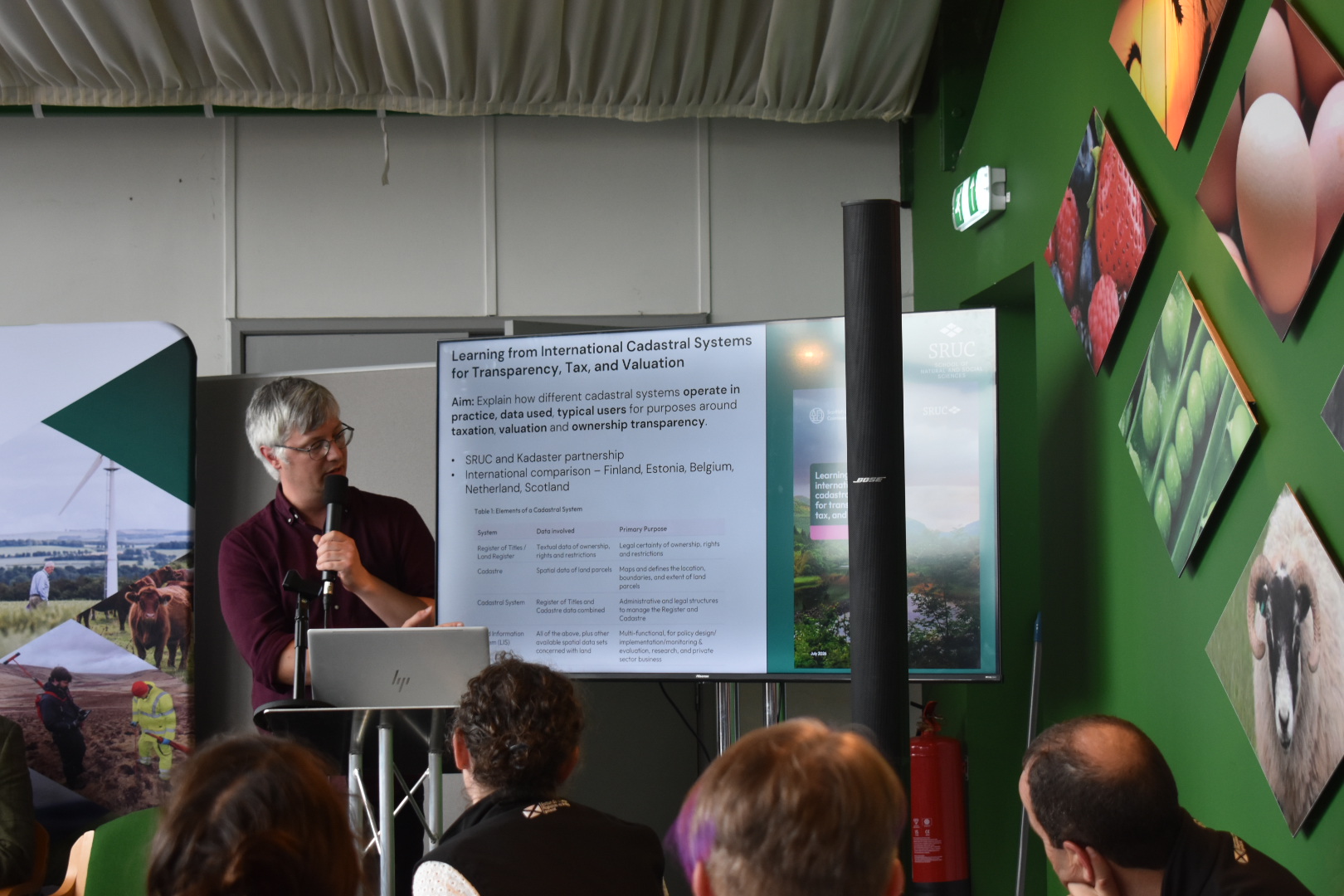
Dr Ian Merrell (SRUC) discusses the findings of the cadastral system report at this year's Royal Highland Show
If Scotland modernises its collection and use of land information, a more effective system for communities, public services and the economy could be in the pipeline, a new report from the Scottish Land Commission has said.
The research, which looks into land data systems in Finland, Estonia, Belgium, the Netherlands and Scotland has found that nations investing in up-to-date and well-connected digital systems are making more efficient, well-informed decisions on subjects such as housing and infrastructure to taxation and climate policy.
The research, which was created by Scotland’s Rural College (SRUC), indicates Scotland has the option to do the same by developing what it currently has.


A lot of nations are no longer using traditional land registers, but are using integrated digital systems that merge legal ownership, mapping, valuation and land use information in one place. This integrated approach gives governments a more thorough idea of how land is being used and who is using it.
The report identifies complete, high-quality data as the basis of a system that functions well. It also discusses the advantages of linking public datasets, enabling data to be shared with ease between organisations.
The research also indicates that up-to-date land information systems can help governments to attain a deeper understanding of policy, aid public services and make long-term decisions that are of a greater impact.
The research has been built upon older Scottish Land Commission research into global strategies for land valuation and taxation.


Kathie Pollard, head of policy at the Scottish Land Commission, said: “When we have a clearer picture of how land is owned, used and valued, we can make better decisions that benefit people, communities and the economy.
“This research isn’t about copying another country’s system. It’s about understanding what works elsewhere and identifying practical ways Scotland can build on the systems and information it already has to help underpin Scotland’s future public policy ambitions.”



Share this article:

Subscribe to our newsletter to not miss articles like this one:
 SUBSCRIBE