




Budget call for smarter materials logistics and relief on diesel costs
 Reading time: 4 minutes
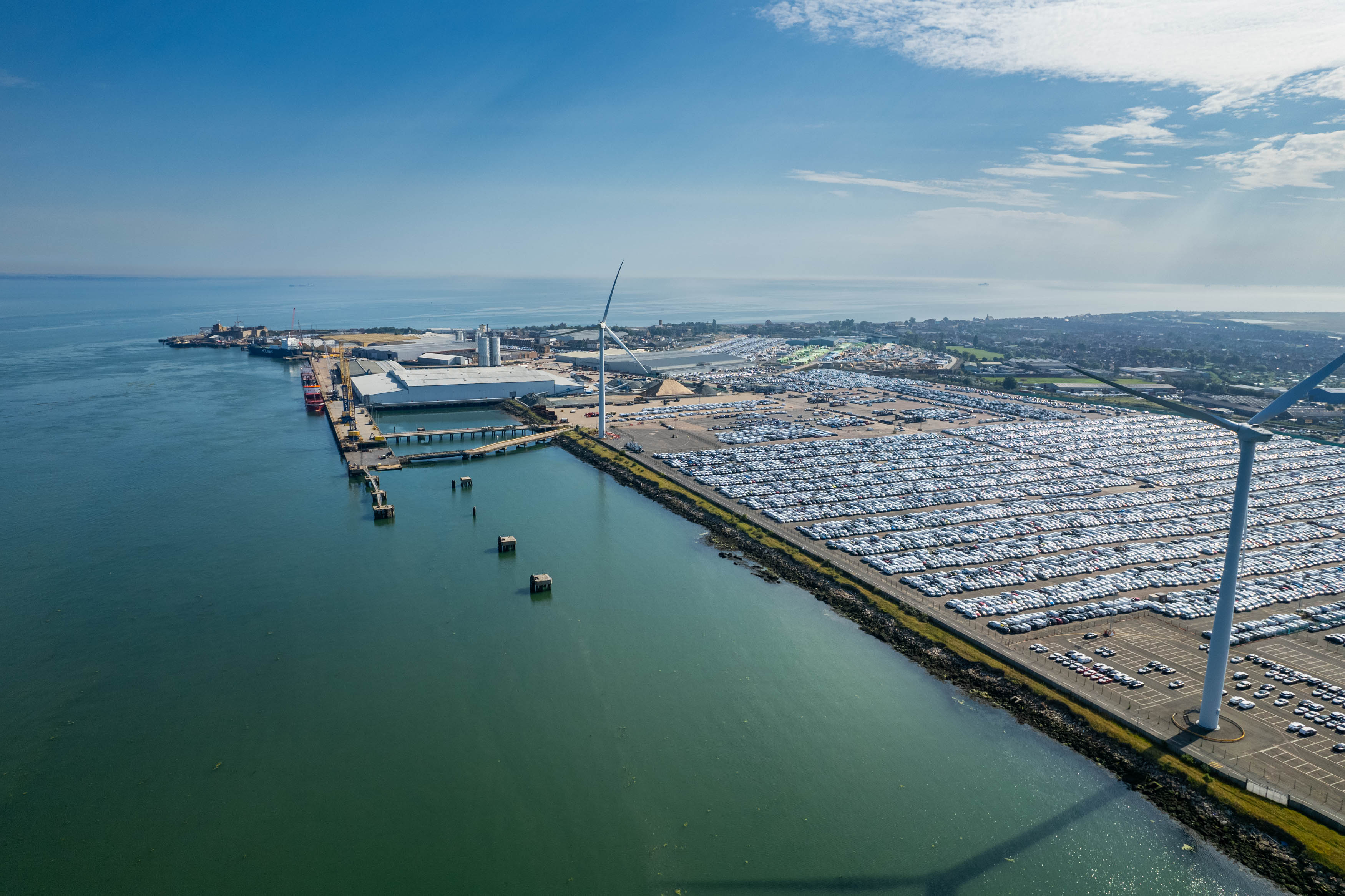
London Medway (Image credit: Peel Ports Group)
Two industry voices are urging the UK government to act on the cost and movement of construction inputs ahead of Prime Minister Andy Burnham’s first Budget this month.
Peel Ports Group wants a smarter approach to bringing materials into the UK, while the Scottish Plant Owners Association (SPOA) wants action on record diesel prices.
The government has committed almost £10 billion to build 70,000 new council and social homes in the first phase of what Burnham has called the biggest council housebuilding programme since the post-war period. That is part of a wider pledge of 1.5 million homes this parliament. Housing Secretary Angela Rayner told the BBC this month that “headwinds” mean there is only a “slim chance” of meeting it.


A large infrastructure pipeline sits alongside this, including Sizewell C, the Lower Thames Crossing, the East Anglia reservoirs and the Heathrow expansion.
Recent data shows the sector struggling. ONS figures show construction output fell across April, May and June, with new orders down 11.8% quarter-on-quarter. Glenigan analysis found project starts down 11% on the quarter and 29% on the year, with housing starts alone down 25% quarter-on-quarter.
Peel Ports Group, the UK’s second largest port operator, argues the Budget is a chance to help construction regain momentum by improving how materials enter and move around the country. It is calling for efficient consolidation and greater use of deep-water ports.
David Huck, chief operating officer at Peel Ports Group, said: “Despite being tasked with an ambitious pipeline of projects, the construction industry is seemingly struggling to overcome a combination of hurdles, from higher material costs to skills shortages, and the government has acknowledged even its own ambitions may not be achievable. We believe an obvious place to start is with how vital construction materials get into and move around the country.”
Peel’s Sustainable Construction Partners programme, with Ecocem and Mibau Stema, aims to use port-centric hubs to cut cost, carbon and congestion. Hubs at the Port of London Medway and Port of East Anglia already support Sizewell C, the Lower Thames Crossing and other major south east projects. The partners have also researched barriers to efficiency and resilience in the UK construction supply chain, with full findings due in early 2027.
Paul Roos, Ecocem’s managing director for North-West Europe, said proven low-carbon cement technologies could help deliver the housing and infrastructure programme with significantly less CO₂, and that “the priority now is to ensure these solutions are deployed rapidly and at scale.”
Martin Johansen, managing director at Mibau Stema Group, said its self-discharging vessels already move large volumes of aggregates through North Sea and Baltic deep-water terminals, easing pressure on roads. The aim, he said, is to bring that model to the UK by “consolidating materials at coastal hubs so housing and infrastructure projects get what they require without adding to congestion, cost or emissions”.

David Jarvie
The SPOA warns that the cost of diesel has hit a record high of £2 a litre. SPOA president David Jarvie described it as “yet another hammer blow to the plant industry,” following the 2022 removal of the red diesel rebate and changes to Business Property Relief and Agricultural Property Relief.
Jarvie said the SPOA fully supports decarbonisation, but “there is still a long way to go.” Alternatives such as hydrogen, HVO and electric are advancing, he said, “but we are not there yet.” If businesses must absorb higher diesel costs, he warned, the headroom to invest in new technologies will be significantly curtailed.
The SPOA is asking the Chancellor for measures to ease the impact, such as a targeted cut on commercial diesel. It also wants the Prime Minister to step up diplomatic efforts on diesel supply from the Middle East and on the threat of the USA ceasing its diesel exports, both of which it says risk pushing prices to unsustainable levels.

Share this article:

Subscribe to our newsletter to not miss articles like this one:
 SUBSCRIBE