





Conference spotlights skills crisis amid disappearing building surveying courses
 Reading time: 3 minutes
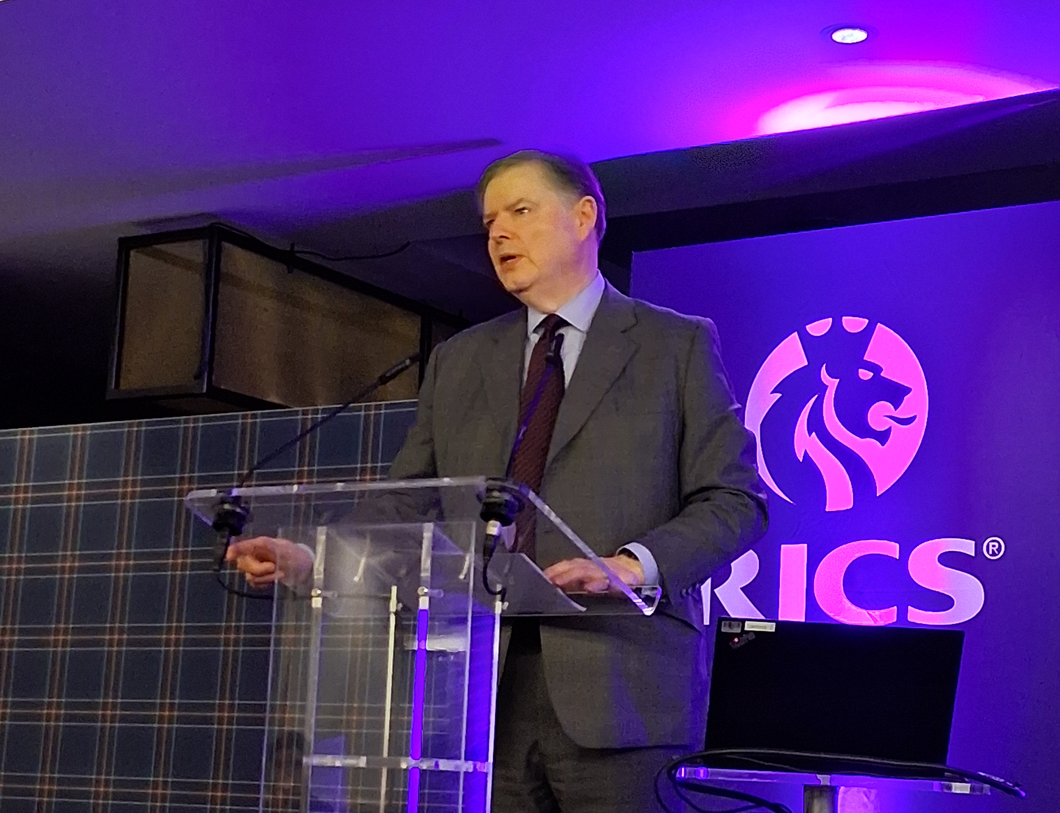
RICS president Nick Maclean addresses RICS Scotland Building Surveying and Dilapidations Conference at Hampden Park
Hundreds of surveyors, legal professionals and sector leaders from across Scotland came together earlier this week in a strong show of collaboration and professional leadership at the RICS Scotland Building Surveying and Dilapidations Conference at Hampden Park.
The event provided an opportunity to share best practice, strengthen professional networks and celebrate the vital role building surveyors play in shaping Scotland’s built environment, while also uniting the profession around one of its most pressing priorities - addressing the rapid decline of building surveying education in Scotland.
The conference took place against a challenging backdrop, with the recent suspension of the building surveying programme at Glasgow Caledonian University. Delegates engaged in constructive discussions on the implications for the profession and the wider built environment, demonstrating a shared commitment to strengthening the future talent pipeline.


Overall student numbers in Scotland remain below 2022/23 levels, heightening concerns about future workforce capacity. This challenge is further highlighted in the RICS Surveying Skills Report 2025, which found that building surveyors are particularly concerned about demographic pressures, including an ageing workforce with high retirement rates and a shortage of new entrants to the profession.
Nick Maclean OBE RD FRICS, President of RICS, and former Scottish trade envoy who spoke at the conference, reflected on the day: “This week’s conference underscored the urgency of a skills crisis that can no longer be ignored. As we see building surveying courses close or struggle to attract students, we risk undermining the very foundation of safe, sustainable and resilient built environments in Scotland.
“The breadth of expertise shared – from building safety to professional practice – is testament to the strength of our profession. But it also highlights that education, and recruitment must be central if we are to secure the future of building surveying in Scotland.”



The full-day event offered a mix of technical briefings, regulatory updates and forward-looking panel discussions, spanning building and fire safety, climate resilience, dispute resolution, and the crucial future of building surveying education itself.
Highlights included sessions on updated fire safety and building regulations; sustainable building materials, delivered by Alumasc roofing; professional risk and liabilities; the future building standards policy pipeline delivered by Scottish Government; and an in-depth panel on the future of building surveying in Scotland, exploring how higher education, apprenticeships and industry engagement must evolve to attract new entrants.
Nick Maclean added: “RICS is committed to working with universities, employers and policymakers to reverse this decline and we were pleased to accredit the Graduate Apprenticeship programmes in building surveying and quantity surveying at Robert Gordon University late last year.
“The conversations we’ve had today, especially on stimulating interest in careers in surveying and supporting diverse educational routes, are an important step forward.”
The conference concluded with a dive into RICS Scotland Manifesto: Surveying Scotland, a forward-looking Q&A session and calls for enhanced collaboration across industry, education and government to ensure Scotland’s built environment is supported by a robust and future-ready surveying profession.

Share this article:

Subscribe to our newsletter to not miss articles like this one:
 SUBSCRIBE