




Conservation work gets underway for Glasgow Cathedral spire
 Reading time: 2 minutes
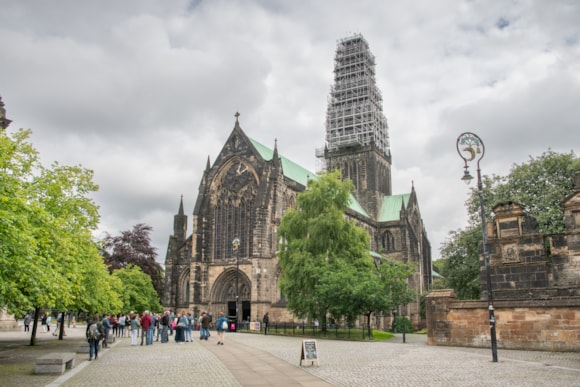
(c) Historic Environment Scotland
Conservation work to safeguard Glasgow Cathedral’s medieval spire has begun, which will see the head of the spire rebuilt to repair damaged stonework.
The three-year Historic Environment Scotland (HES) project will see the head of the 225 feet spire dismantled before the rebuilding process.
In 1970, a steel frame was put inside the spire to support the medieval masonry.


But as time has progressed, the bolts that hold the frame in place have rusted and pushed against the stone, prompting cracks as well as movement. This corrosion has intensified due to growing rainfall.
HES stonemasons have already started carving replacement stones, while conservation teams will retain and restore as much original medieval fabric as possible during the rebuilding process.
The work will be carried out in phases, which will be carefully planned, with teams being active around weather windows and solid safety requirements being implemented for high-level work.
David Borthwick, head of South Region at HES, said: “Glasgow Cathedral is a defining part of the city’s skyline and one of Scotland’s great medieval buildings.


“Conservation work to the spire has been ongoing, but detailed surveys have confirmed that the upper section of the spire must now be taken down and rebuilt to secure it for the future.”
Borthwick added: “Our teams are combining traditional craft skills with modern conservation expertise to tackle complex damage high above the cathedral roofline.”
Following recent incidents of unauthorised access, HES is calling on people to stay off the cathedral scaffolding.
Borthwick commented: “As well as being extremely dangerous, activity like this disrupts conservation work, diverts our resources, and adds avoidable security costs.”


Glasgow Cathedral is Glasgow’s oldest building. It is also the only medieval cathedral on the Scottish mainland to have survived the Protestant Reformation of 1560 virtually unscathed.
Dedicated to St Kentigern, also known as St Mungo, the current building originated in the 12th century. However, much of what is seen today dates back to the rebuilding which took place in the 13th century.
Constructed in the 15th century, the stone spire replaced a previous wooden spire which was destroyed by lightning in 1406.

Share this article:

Subscribe to our newsletter to not miss articles like this one:
 SUBSCRIBE