






From spreadsheets to systems: how Survey Design Consult is reshaping building services design
 Reading time: 4 minutes
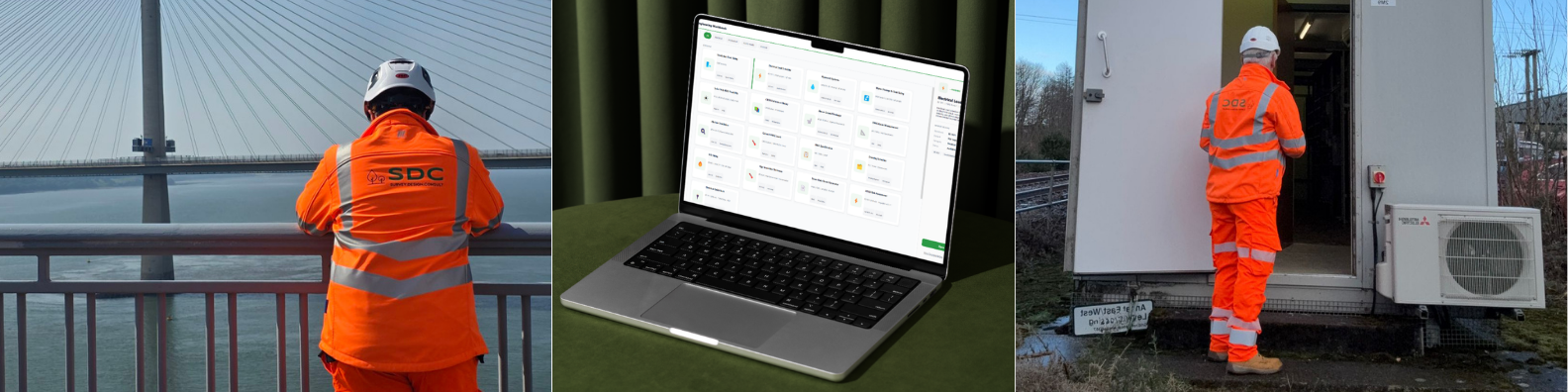
Paisley-based Survey Design Consult is putting quality assurance and consistency at the heart of its M&E design process, investing in a bespoke engineering platform to raise the bar for building services delivery.
While spreadsheets have long been embedded in building services, the firm believes their limitations are increasingly at odds with the demands of modern construction.
“Spreadsheets have a place, but they were never designed to meet today’s expectations around quality assurance, traceability and consistency,” said founder Craig MacKenzie. “As projects become more complex, the risks associated with fragmented, manual processes become much more significant.”
Moving beyond legacy tools
Like the majority of consultancies, Survey Design Consult historically relied on design spreadsheets for activities ranging from load calculations to system sizing. As the business grew, so too did the need for greater control and standardisation.
“Inconsistency is one of the biggest challenges of any consultancy,” MacKenzie explained. “You can have highly capable engineers approaching the same task in slightly different ways. Over time, that creates variation in outputs, and from a QA perspective, that’s not where you want to be.”
Greg Taylor, M&E consultant at the firm, added: “When you’re scaling a team or delivering across multiple projects, those small differences start to compound. You need a consistent baseline.”
The firm also highlighted growing pressure in the industry to demonstrate compliance with CIBSE and BSRIA guidance. “You need clear, auditable methodologies,” Taylor said. “With spreadsheets, that often relies on manual checks and individual diligence. We wanted something more robust and tailored to how we actually design.”
Investing in a new approach
In response, the firm has significantly invested in developing its own M&E engineering workbench: an integrated platform designed to standardise calculations, streamline workflows and strengthen quality assurance.
“This wasn’t about making spreadsheets better, it was about replacing the model entirely,” said MacKenzie. “We’ve created a system where inputs are defined, methodologies are fixed, and outputs are automatically structured and recorded.”
The workbench brings calculations, data handling and reporting into a single environment, creating a transparent audit trail across every stage of the design process, all controlled centrally.
“It removes a lot of the friction in day-to-day engineering work,” Taylor added. “Instead of managing multiple files and formats, everything sits within a controlled workflow.”
Complementing specialist design software
Survey Design Consult is clear that the workbench is not intended to replace established design tools, but to strengthen how they are used.
“There are excellent programmes out there that we continue to rely on,” MacKenzie said, referencing ElectricalOM, IES and MEP Worx. “They are essential for detailed modelling and complex calculations.”
“What our workbench does is sit around those tools and bring structure to the overall process,” Taylor explained. “It ensures inputs are consistent before they go into those programmes, and outputs are captured, checked and presented in a standardised way afterwards.”
By bridging the gap between standalone software packages, the system helps eliminate duplication and reduces the risk of data being lost between design stages.
Delivering consistency across the UK
The firm says the impact has been immediate, particularly in terms of consistency across projects and teams.
“Whether a project is delivered from Scotland or elsewhere in the UK, the outputs are the same,” MacKenzie said. “That consistency is hugely important, not just internally, but for clients and project partners who rely on clear, reliable information.”
Taylor added: “From a delivery point of view, it removes uncertainty. Everyone is working to the same standards, using the same methodologies, regardless of location.”
Improving efficiency and value
Alongside quality improvements, the approach is also delivering measurable efficiency gains, allowing engineers to focus more on design optimisation and coordination.
“A lot of time traditionally goes into checking and rechecking calculations,” MacKenzie noted. “We’ve reduced that significantly.”
“Ultimately, that efficiency benefits our clients,” Taylor added. “We can deliver a high-quality service more efficiently, and that allows us to be more competitive commercially.”
Looking to the future
As digital expectations across construction continue to evolve, Survey Design Consult believes structured, system-led engineering will become increasingly important.
“This is about future-proofing our business and improving outcomes for our clients,” MacKenzie concluded. “The industry has relied on spreadsheets for a long time, but there is a better way and we’re already seeing the benefits of making that change.”

Share this article:

Subscribe to our newsletter to not miss articles like this one:
 SUBSCRIBE

