




Funding milestone reached for Mavisbank House restoration
 Reading time: 4 minutes
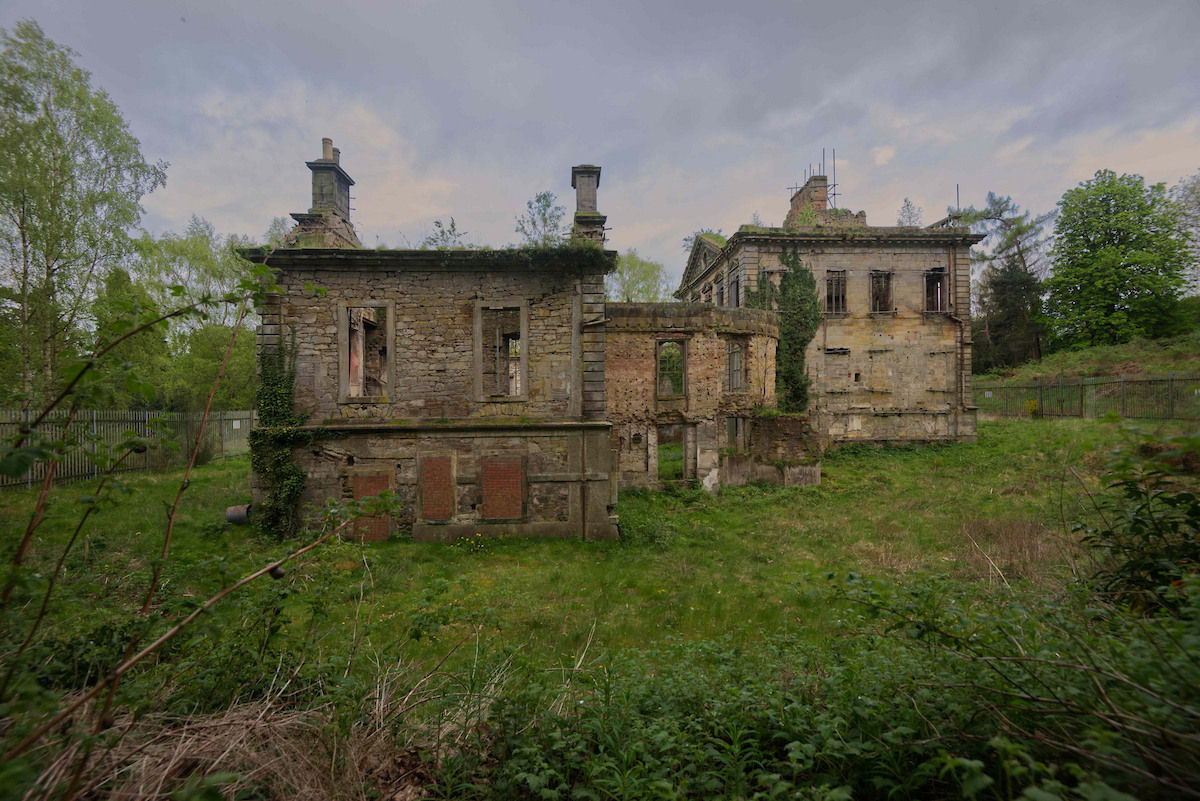
Image: Rob McDougall
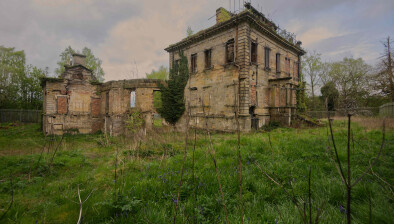
The Landmark Trust’s mission to save Mavisbank House in Midlothian has crossed another milestone, 18 months after a breakthrough £5.3 million grant from the National Heritage Memorial Fund.
Midlothian Council has approved Landmark’s planning and listed building consent application for a vital aspect of the phase one works to Mavisbank house, made all the more acute following recent masonry falls.
Campaigners have laboured for decades to save the architectural gem, its terrible condition and uncertain ownership had left this ‘Category A’ masterpiece in a marooned, derelict and highly perilous state.

The Trust awaits a decision on the planning application for the creation of a new drive to access the house, without which the building works cannot begin.
Both planning approvals for the house relate to phase one – Rescue – of the charity’s two-phase project. This will involve the consolidation of the ruinous shell, with urgent repairs and stabilisation to address the major defects, including subsidence, that have arisen following the catastrophic fire in the 1970s and the subsequent 50 years of decay. At the end of this phase, the scaffolding birdcage within the building that has kept it standing for 30 years will be removed and the structure will be stable and safe for carefully managed public access.
This will provide the essential basis from which the Landmark Trust can pursue phase two – Restore – in which the charity hopes to reroof and refloor the house, bringing it fully back to life.
Both phases are dependent on the separate planning application for the drive being approved as soon as possible, to create a new access route to the house; the historic drives were sold off or abandoned in the mid-20th century, leaving the house without legal right of vehicular access and making any restoration impossible.


The new drive follows as much as possible the historic east drive which hugs the side of the Esk Valley and allows glimpses of Mavisbank on the approach to the house. The precise alignment was closely informed by community consultation and extensive ecology and tree survey work to ensure any impacts on flora and fauna will be minimised and fully mitigated.
The route of the proposed access drive, which was put forward by the local community as their preferred option during a public consultation event in 2024, is the only viable option and has been an issue that has been considered in great depth many times over several decades.
Currently there is no established legal right of vehicular access to the house and this is one of the main reasons why its restoration has never previously been achieved. The historic north and south drives and parts of the east drive were sold off to private owners many years ago, which makes any sort of meaningful vehicle access to the site impossible at present. All of the other potential options have also been discounted on the basis of land ownership constraints, technical feasibility or visual impact.
No ancient or veteran trees will be removed and sensitive compensatory planting will be delivered. The planning officer’s report that accompanies the planning application for the access drive clearly recommends the application for approval and states that ‘in the longer term, given the nature of the development and sensitive design (in terms of layout, materials and species selection) the development will not give rise to significant adverse visual impacts overall. Furthermore, as the mitigation and enhancement planting matures it will result in an overall beneficial visual effect.’


Dr Anna Keay OBE, director of the Landmark Trust, said: “We are absolutely thrilled to have secured planning permission for the works essential to the rescue of Mavisbank, but this is only possible with a driveway. For half a century the lack of access to the site and the perilous condition in which it stands have been two of the great obstacles to its salvation. These two consents represent a real leap forward in the journey to save this jewel of a building.”

Share this article:

Subscribe to our newsletter to not miss articles like this one:
 SUBSCRIBE