







Glasgow’s first co-living tower approved for Tradeston
 Reading time: 2 minutes
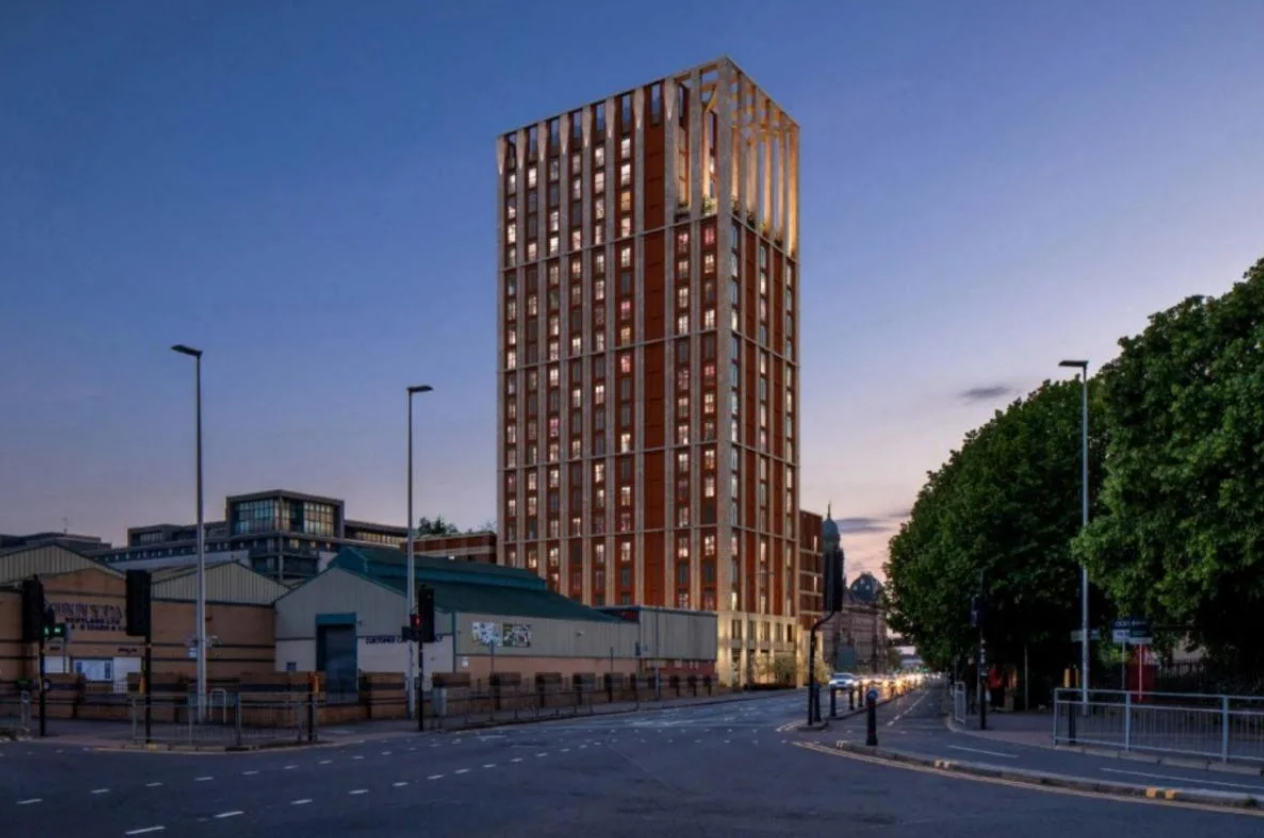
Image: Copperstone Partners 2 Limited, Claridge Architects
Glasgow councillors have approved the city’s first large-scale co-living development, giving the green light to a 19-storey residential tower at 100 Morrison Street in Tradeston.
The scheme, brought forward by Copperstone Partners 2, will see the demolition of a vacant 1970s office block last used by Glasgow City Council’s social work services in 2016. The building, which has stood largely empty despite attempts to market it, will be replaced with 420 compact studio flats alongside extensive shared amenities and ground-floor commercial space.
Each measuring around 22 square metres, the private studios will be fitted with a bed, kitchenette, shower room, sofa, dining table and workstation.


Shared kitchens, lounges, gym, cinema and games rooms, plus a large residents’ lounge on the top floor with panoramic views across the city are among the communal facilities.
Also included are landscaped terraces, cycle parking, tree planting, and a ground-floor café to encourage street-level activity.
The U-shaped tower has been designed by Claridge Architects, with 2,100 square metres of amenity space and 100 square metres of commercial floorspace.
Copperstone Partners 2, a joint venture between Ideal Holding Group and The Co-Living Company, say the model is aimed at young professionals and recent graduates, offering an alternative to HMOs and buy-to-let flats. Monthly rents will be inclusive of utilities, council tax, furnishings, and access to organised social events.


Planning consultant Gary Mappin described the project as “the first detailed proposal for large-scale co-living to be submitted to Glasgow City Council.” Similar projects are already operating in London, typically attracting residents aged 21–35.
The site sits close to Barclays’ new Scottish campus at Buchanan Wharf and Glasgow’s International Financial Services District, where major employers such as BT, JP Morgan Chase and HMRC are based. Developers argue the tower will regenerate a prominent island site and contribute to the growing cluster of build-to-rent and residential projects in Tradeston.
Seven objections were lodged, with residents warning of potential impacts on daylight, parking, and the already unstable quay wall at Windmillcroft Quay. Councillors were told that retaining the basement structure and using screw piles would help stabilise the river wall.
Despite concerns, planners recommended approval, describing the tower as a “metropolitan-scale landmark” that would support higher residential density and modern urban lifestyles in a highly accessible location.

Share this article:

Subscribe to our newsletter to not miss articles like this one:
 SUBSCRIBE

