


Greg Meikle: Glasgow’s regeneration is on the right track, but landscape must now lead its growth
 Reading time: 4 minutes
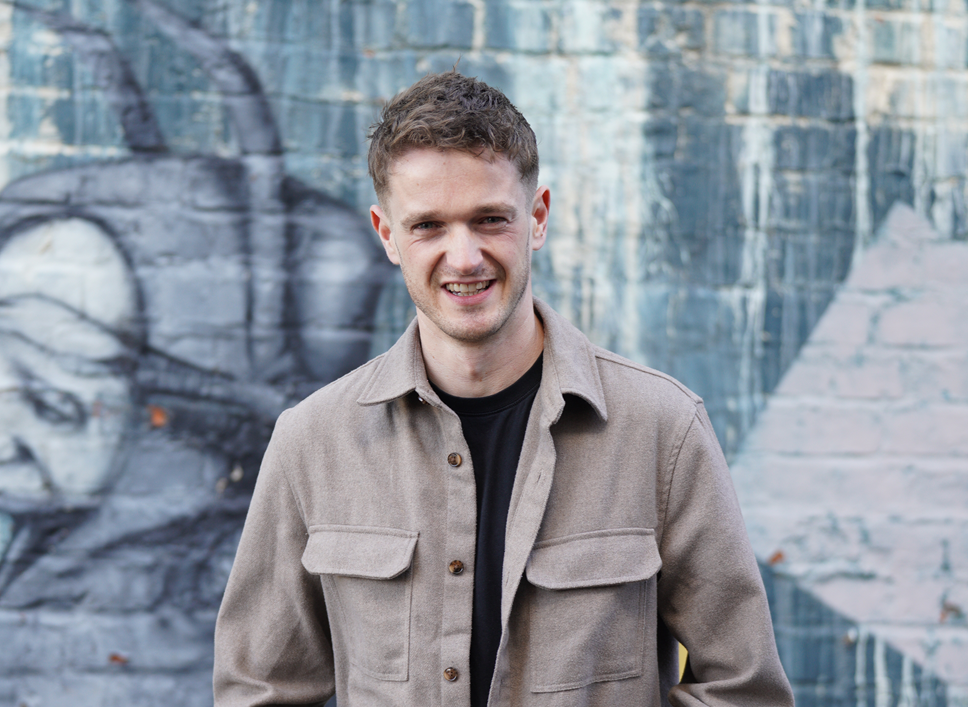
Greg Meikle
Greig Meikle, regional director at OOBE, explores why landscaping will be essential to the ongoing regeneration of Glasgow.
Glasgow feels different at the moment.
There’s a renewed sense of intent about the city. Regeneration sites that have sat dormant for years are back in active discussion. Investment is returning to the Clyde. The Avenues programme is reshaping key streets, while the planned transformation of George Square signals a renewed focus on the city’s civic heart. There’s momentum and, importantly, there’s confidence.

A joint manifesto from the Landscape Institute and British Association of Landscape Industries, launched ahead of the 2026 Scottish Parliament elections, has mirrored this opinion, calling for landscape to be embedded at the heart of decision-making.1 Not as an afterthought, but as critical infrastructure that supports climate resilience, public health and long-term economic growth.
That message feels particularly timely. At MIPIM in Cannes earlier this month, Scotland’s cities spoke with renewed confidence on investment and regeneration, with Glasgow commanding particular attention following recent analysis ranking it as the UK’s top destination for residential development.
That momentum is encouraging. But the question is how we ensure that growth is properly joined up, not just buildings and development plots, but the wider infrastructure that connects them. Streets, public realm, waterfronts and green networks will ultimately determine how well the city functions between developments.
At OOBE, we believe landscape is not decoration. It is not something applied at the end of a project once the “important” decisions have been made. It is the framework that allows places to function properly. Streets, waterfronts, parks and public spaces are the connective tissue that shapes how people experience a city every day.


Across Scotland, there is growing recognition that placemaking is fundamental to creating healthy, resilient and inclusive communities. In Glasgow, that shift is particularly important.
The River Clyde is the clearest example. For generations, it powered the city’s economy. Then, for a long time, it felt like the back of the city. Now it is becoming central again.
At Yorkhill Quay, where we have secured Planning Permission in Principle and are advancing individual plots, the ambition is to create a genuine neighbourhood on the banks of the river. Not simply housing with a waterside view, but a connected piece of city that feels coherent, walkable and open. That only happens when public realm is considered from the outset. It shapes how people move along the water, where they gather, how spaces perform year-round and how biodiversity is enhanced rather than squeezed out.
We are also working across sites at Broomielaw and Lancefield Quay, supporting clients at an early stage to understand how strategic landscape thinking can unlock development. Often, the breakthrough in viability or planning confidence comes not from increasing density, but from clarity around streets, routes and shared space.


This is where economic value and social value intersect.
The Glasgow Avenues programme has already demonstrated what is possible when public realm is treated as infrastructure. Rebalancing streets towards active travel, introducing significant tree planting and integrating sustainable drainage is not cosmetic change. It reshapes how people use the city centre, supports local businesses and reduces long-term climate risk.
There is potential for that approach to go further. Transformational Regeneration Areas remain a major opportunity, while the Clyde Mission is beginning to set a long-term ambition for the river corridor. But these initiatives will only fulfil their promise if landscape and public space are embedded as strategic drivers rather than left as residual elements.
Investors increasingly understand this and we are seeing it first-hand. Well-designed public realm increases desirability, strengthens identity and reduces risk. It also supports wellbeing. In a city where life expectancy can vary significantly between neighbourhoods, access to safe, high-quality green space is not a soft metric. It is part of the social infrastructure that underpins long-term prosperity.
If Scotland is serious about attracting investment, the focus must be on quality and coherence. Growth needs to be thoughtful, climate-aware and rooted in place.
Glasgow has always been a city of reinvention. The next chapter will not be defined solely by how many buildings are delivered, but by how well the city connects to its river, its streets and its communities.
There is real opportunity right now. The political will is there. Public investment is reshaping the city centre, and private sector appetite for waterfront and mixed-use development is returning. If that momentum is aligned around a more co-ordinated approach to development, infrastructure and landscape, Glasgow can set a benchmark for how a post-industrial city grows with confidence and care in equal measure.
That is the story worth telling internationally, but more importantly, it is the one that needs to be delivered here at home.

Share this article:

Subscribe to our newsletter to not miss articles like this one:
 SUBSCRIBE