






Loch Turret energy upgrades deliver continued clean water for 70,000 residents
 Reading time: 3 minutes
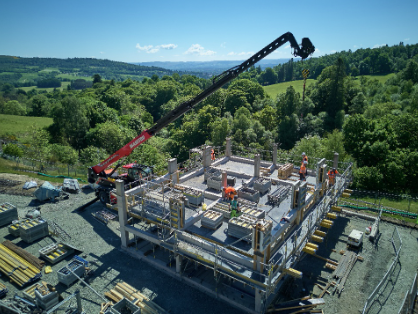
The energy network at Loch Turret Water Treatment Works is undergoing an upgrade that will see the construction of a new high voltage substation, the replacement of its hydroelectric turbines and an investment in the turbine power hall over the course of 18 months.
The treatment works at Loch Turret near Crieff in Scotland, which serves approximately 70,000 people, is provided with energy from a nearby substation, a critical plant asset.
The £7.2 million Scottish Water project will be delivered by WGM Engineering, an RSK Group company, with support from group companies CAN Geotechnical and Tarpave.


WGM senior project manager, Ian Anderson, said: “The substation and linked infrastructure is of critical importance to Loch Turret Water Treatment Works’ operations. The hydroelectric plant at the loch is one of Scottish Water’s longest running schemes, commissioned in 1966. The turbine harnesses the energy of the water from the reservoir to generate electricity, which is used to power the Loch Turret Water Treatment Works. Without this infrastructure, the water treatment works would be unable to function; therefore, its upkeep and the replacement of any ageing infrastructure are critical.
“As main contractor, WGM will deliver the electrical and commissioning works, as well as manage the subcontracting of related earthworks, civils and building packages. A team of 20 electrical, commissioning, civil and structural engineers will supply and install new high/low voltage switchgear and transformers at the substation; replace aged control equipment at the turbine power hall; install interconnecting cabling and cable management systems across the substation, turbine and power hall; and deliver building services for the construction of these new infrastructure assets.”
The hydroelectric turbine provides renewable energy to the site and is therefore an additionally critical asset as an export turbine, Ian explained. “The existing hydroelectric turbines are being replaced with modern equivalents, and new control equipment will also be installed, replacing the existing aged assets and ensuring future resilience. As it is an export turbine, any extra green energy generated and not used on-site is sold back into the national grid.”
As well as the technical challenges of delivering the project, the site is located on a steep embankment on an unfenced sheep farm, which has made access, weather and topography a challenge.


Ian Anderson added: “Loch Turret is located at the head of Glen Turret, and the water works there is the highest above sea level in Scotland at 1178 feet. This comes with its own environmental challenges, in addition to usual access via the sheep farm. To ensure the project is delivered as efficiently and mindfully to neighbours as possible, the team is liaising closely with Scottish Water, the local community and Glen Turret Estate.
“Programming of works has also taken into consideration weather risk, and construction activities with potential to be impacted by more extreme events have been scheduled for more favourable seasons.”
Sister RSK Group companies CAN Geotechnical and Tarpave have also provided expertise to the project. Ian Anderson concluded: “Being in the Turret Burn Valley, there is a risk of rockfall in the area. To assess this risk, colleagues at CAN carried out a geotechnical inspection of the valley area and delivered a risk assessment for working within the vicinity of suspected rockfall events. Additionally, Tarpave will lay new roads to access the new substation and turbine infrastructure, as well as reinstate any existing roads with access restrictions during the course of the project.”



Share this article:

Subscribe to our newsletter to not miss articles like this one:
 SUBSCRIBE

