





Michelle Forbes: The UK’s hidden infrastructure sector
 Reading time: 7 minutes

Michelle Forbes
Michelle Forbes, a senior project manager with Thomson Gray who specialises in the bereavement sector, tells SCN why the firm is uniquely positioned to support owners and operators of crematoria and cemeteries.
The UK’s bereavement sector is one of the critical but often overlooked elements of national infrastructure – ranking far behind healthcare, education and housing in the public consciousness. Even local authorities, who are responsible for around 70% of the country’s crematoria and cemeteries, do not always categorise them in the same way.
“Some councils place crematoria and cemeteries under community services, some under healthcare, and others put them under street works or green spaces,” says Michelle Forbes, a project manager at Thomson Gray with over 10 years’ experience in the sector.


One thing everyone agrees on is that it is a sector undergoing huge change. The last decade alone has seen a 20% increase in new crematoria, driven by limited cemetery space and demographic shifts in underserved areas.
Many existing crematoria are also in need of refurbishment. Recent changes to environmental legislation in Process Guidance Note 5/2 (25) have introduced more stringent controls on emissions, meaning that much of the equipment in older crematoria will require substantial upgrade.
“The changes to the environmental guidelines on their own are going to affect around 25% of the current marketplace,” says Michelle, who joined Thomson Gray four years ago.
“When you add to this the introduction of regulations in Scotland from March 2026 to support alkaline hydrolysis, there is a significant period of change upon us within the bereavement sector”.


Now sitting at the centre of Thomson Gray’s bereavement operations, with over a dozen major crematorium refurbishments and option appraisals completed, Michelle is enthusiastic about the opportunity to help with the sector’s transformation – improving the existing estate of crematoria and cemeteries, and perhaps changing attitudes along the way. It is something she is passionate about, both professionally, and personally.
“It’s a hidden world. But when you peek behind the curtain, the people you meet, the dedication to the service and the care that is provided, not only to the family but also the deceased are second to none. To be a part of that is a privilege.”
Project management role in the bereavement sector
The project manager’s role in this sector is especially complex and demanding, explains Michelle. It involves close coordination with the bereavement managers, undertaking options appraisal and feasibility studies based on current technology, operational flow and long-term population forecasts.
Project managers also oversee the procurement of specialist cremation equipment and design teams, coordinating multiple direct appointments and subcontractors, and maintaining near-constant communication with all stakeholders. They prepare detailed budgets, right down to the car parking requirements.


“These projects are rare occurrences for individual crematoria, and many bereavement managers will not have done it before. There will be challenges to be considered that have not been faced before, such as integrating new services, choosing procurement routes or understanding contractual requirements,” she explains.
“All they’ll really know is that something needs to be done – and that’s where we consultants come in.”
Michelle’s career to date gives her a unique and valuable perspective. Starting out as a spatial designer for schools and the retail sector, she developed a strong understanding of how space and operational needs influence movement and wayfinding. Later work in museums honed her skills in organisation and operations, then finding her way into project management, there developing an interest to the bereavement sector.
“Coming from a design background really helps. I understand the day-to-day challenges – the environment, the manoeuvring required and the impact that has on staff. It gives you a real insight.”
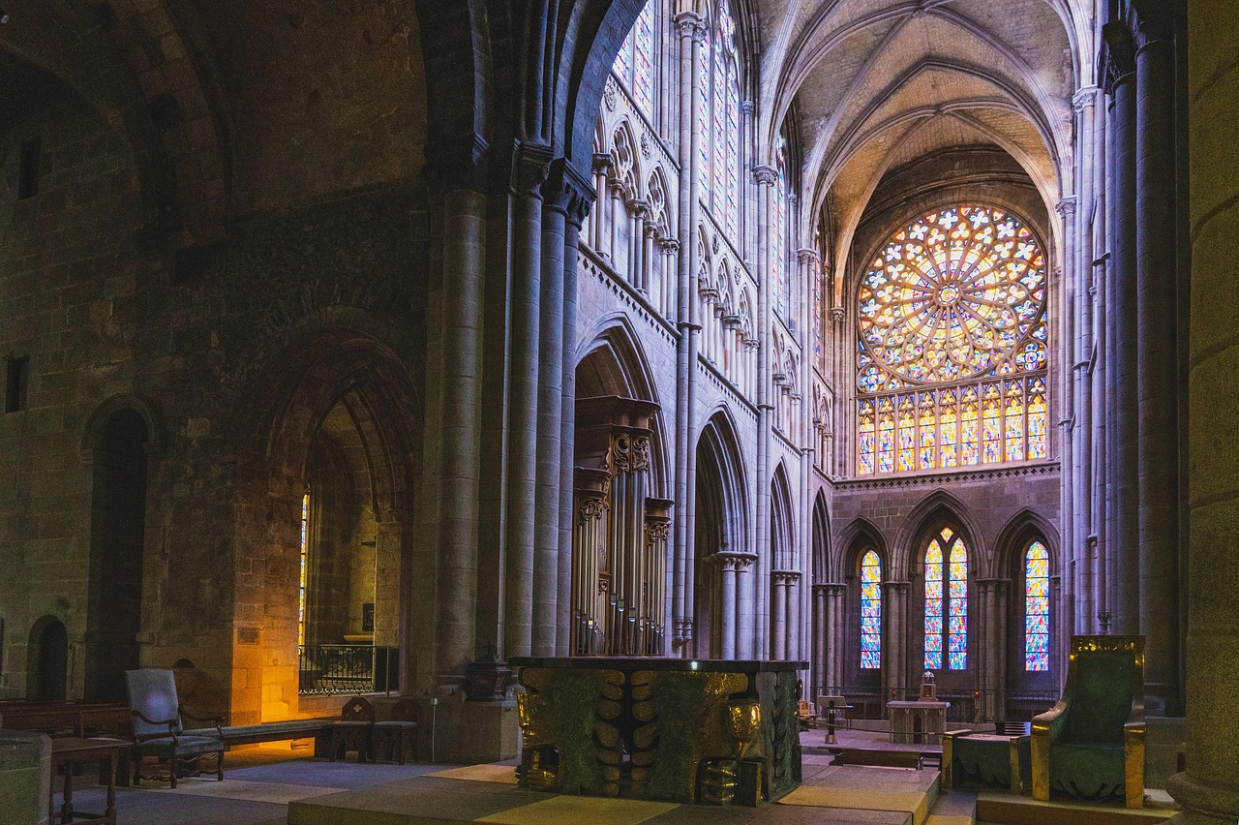
As a member of the Association for Project Management, Michelle has spent the last decade applying these insights to a wide variety of crematoria and bereavement projects. One refurbishment involved a listed building in the middle of a listed cemetery. Another required a complete overhaul: “Over 26 weeks, we took apart the entire building and then put it back together, extending it in three places. We also built the cremators on site.”
Yet another had a remit to strive for full inclusivity for neurodivergent people attending their services – an initiative Michelle is particularly passionate about.
Specific challenges of crematoria
Refurbishment
Refurbishment applies mainly to the publicly owned estate, presenting specific challenges, says Michelle. Many existing crematoria are located in listed buildings, requiring careful navigation of planning laws and in some cases specialist asbestos removal – all grist to the mill for Thomson Gray’s heritage experts, she says, who have extensive experience in this area.
Additionally, many buildings are simply too small to accommodate new emissions-abatement technology, meaning extensions are often required. This can pose access and logistical difficulties, especially where gravestones sit close to building walls.
Furthermore, most bereavement managers will want to continue offering funeral services while the refurbishment is ongoing – a situation that requires extremely sensitive handling to minimise disruption, including night and weekend working and carefully phased installation.
This is something Michelle feels strongly about getting right. “A funeral is a one-time moment, and we must do our utmost to avoid disrupting a family’s final goodbye to their loved one. But we can do it. We can provide a state-of-the-art facility and at the same time protect the sanctity of the funerals.”
New builds
New builds are a little more straightforward, as you do not have to protect the funeral service. “You can effectively construct the building around the equipment,” says Michelle.
Project scope typically includes establishing mains connections for utilities, providing transport infrastructure to support community access, and landscaping to create an appropriate environment for funeral services.”
Sustainability considerations
Sustainability is a core objective in both refurbishments and new builds, and Thomson Gray’s in house expertise enables this to be integrated from the start. “Our team advises on low carbon, energy efficient construction, from whole life carbon analyses and material selection to providing market insight into cremation equipment innovations.”
Thomson Gray’s multidisciplinary role
Thomson Gray’s multidisciplinary structure enables the firm to offer a fully integrated service, with clear communication and collaboration across in house departments. In addition to project management, the firm provides quantity surveying, building surveying, principal designer/CDM expertise and construction quality management. For architectural and mechanical and electrical design, the team draws on long standing partnerships with trusted suppliers who have the specialist skills required for this sector.
Future developments
Michelle is keeping a close eye on new developments in the sector where Thomson Gray’s expertise can support bereavement managers and operators. In Scotland, recent change to legislation now allows for the introduction of alternative funerary methods, such as water cremation, which could be provided by funeral directors.
“It’s an eco-friendly alternative, with no emissions to air, and could be sited in city centres, although there will be strict regulations in place,” she says.
She is also exploring ways to contribute to cemetery development, mortuary projects and the repurposing of buildings in the public estate, such as chapels, churches and community spaces, for use in the bereavement sector.
Following the Royal Assent of Martyn’s Law in 2025, Michelle is keen to support operators within the sector to understand and meet their duties to comply by Spring 2027, “with some churches, chapels and crematoria having a seated capacity of 200+ persons, then the new legislation will apply to them”.
Thomson Gray are members of the Institute of Cemetery and Crematorium Management.
To enquire about the service Michelle offers, get in touch at michelle.forbes@thomsongray.com
Website URL: Thomsongray.com
LinkedIn: Thomson Gray
Instagram: thomsongrayltd

Share this article:

Subscribe to our newsletter to not miss articles like this one:
 SUBSCRIBE