



New SFT Business Plan to accelerate investment and deliver sustainable infrastructure
 Reading time: 3 minutes

Peter Reekie
Infrastructure body the Scottish Futures Trust (SFT) has published its 2026/27 Business Plan, setting out a comprehensive infrastructure programme designed to accelerate investment, strengthen delivery, and improve long-term outcomes for communities across the country.
With a clear focus on collaboration, the Business Plan aligns closely with the Scottish Government’s draft Infrastructure Strategy (2027-37) and its associated Infrastructure Delivery Pipeline (2026-30), published earlier this year.
Together, these frameworks set a ten-year direction for infrastructure planning and investment, emphasising outcomes-focused, place-based approaches that support inclusive economic growth, enable the transition to net zero and strengthen resilience to future challenges.


Within this context, SFT’s role remains as an infrastructure centre of expertise. Building on its recently published 30-year Infrastructure Needs Assessment, which provides strategic insight to guide long-term decision making, SFT will work with its partners to translate national priorities into deliverable, high-impact infrastructure programmes.
The Business Plan is structured around four key areas of activity - strategy, investment, delivery and management - reflecting the full lifecycle of infrastructure.
In infrastructure strategy, SFT will continue to provide independent advice to government and the wider public sector, supporting the development of national and place-based strategies. A key priority includes advancing the implementation of the Infrastructure Needs Assessment.
Within infrastructure investment, the focus is on unlocking both public and private investment to deliver critical projects, including the use of innovative financing models such as the Mutual Investment Model for community health infrastructure.


In infrastructure delivery, SFT will continue to play a central role in supporting ongoing efforts to transform the construction sector, improve project outcomes, and develop a new delivery model for social infrastructure.
And in infrastructure management, SFT’s focus is on supporting the management and decarbonisation of public-private partnership (PPP) assets and the successful handback of PPP expiry projects to the public sector.
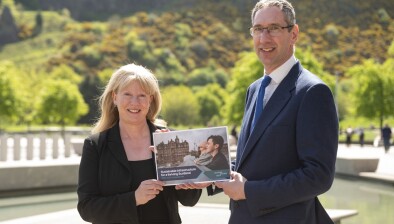
Peter Reekie, chief executive of the Scottish Futures Trust, explained: “Our Scotland-wide remit gives us the opportunity to make connections between local, regional and national infrastructure activities, enabling us to share best practice, foster collaboration and drive greater efficiencies.
“Crucially, we act as a bridge between the public and private sectors, helping to hit the sweet spot which delivers both commercial viability and progress on key policy objectives.”


Joe Philipsz, chair of the Scottish Futures Trust, said: “In an era defined by ever growing economic uncertainty, climate urgency and rapid technological change, the message is clear: coordinated, evidence-led and long-term infrastructure strategy will be essential to building a more sustainable, inclusive and resilient Scotland.”
Across all activities, SFT remains focused on three long-term outcomes: driving economic growth, enabling net zero and environmental sustainability, and building resilient, sustainable places.
From supporting the expansion of heat networks and low-carbon transport to promoting more efficient use of public assets and infrastructure, the Business Plan reflects a holistic approach to delivering these goals.

Share this article:

Subscribe to our newsletter to not miss articles like this one:
 SUBSCRIBE