





Paul Mitchell: Uncertainty is undermining Scotland’s building industry
 Reading time: 4 minutes
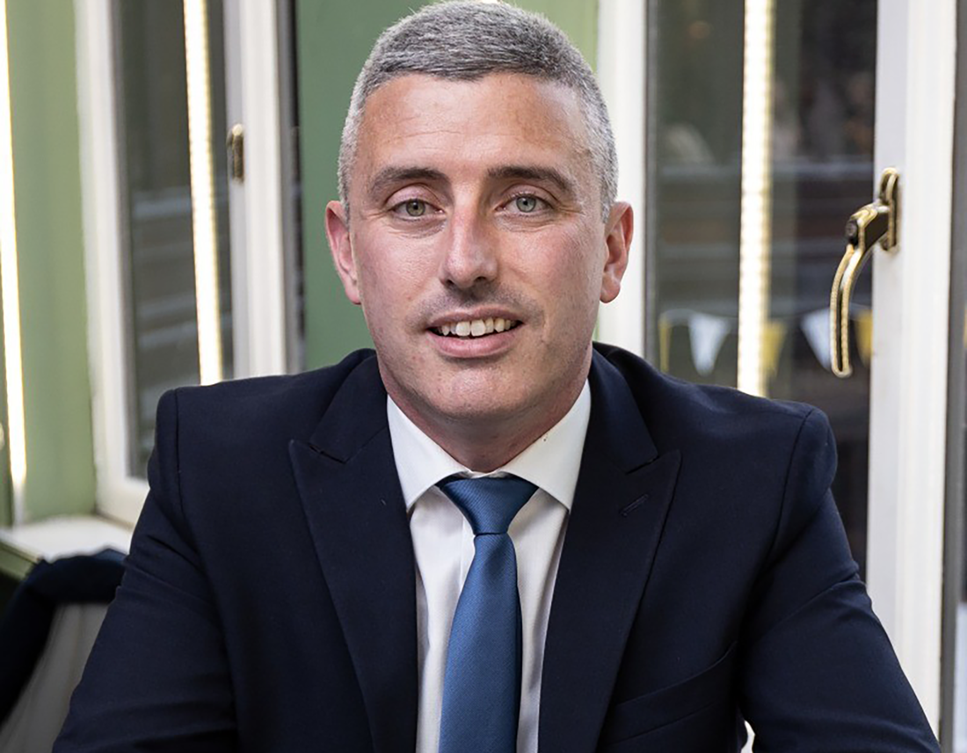
Paul Mitchell
Paul Mitchell, operations director at the Scottish Building Federation (SBF), outlines how the current climate of uncertainty is undermining Scotland’s building industry.
Construction is the engine room of the Scottish economy, contributing 7.4% of total output whilst directly employing 190,000 people, 7% of the nation’s workforce.
On the face of it, these are impressive statistics and underscore its importance. However, if we look below the surface, there is a concerning seam of uncertainty.


Unconfirmed levels of government investment, the inconsistent application of building regulations, planning delays and the looming building safety levy are having a detrimental impact right now.
Scottish Government statistics published last week confirm that it now takes an average of 37 weeks to process planning applications for major housing developments, far exceeding the 16-week statutory requirement.
The picture is even worse for small and medium-sized building firms, with local housing applications for developments of 49 homes or less taking an average of nearly five months to be processed, against a statutory timeframe of just two.
For commercial developments, average decision times also increased to 11.7 weeks in 2024/25, again missing the two-month statutory period. Uncertainty and delay in planning timescales makes project planning for builders extremely difficult and jeopardise developments, making many speculative builds unviable.


We are also aware of ongoing challenges relating to the national planning framework, NPF4. For example, one town in Scotland has nearly 200 potential housing plots yet the local council (one which has declared a housing emergency) is only supporting two sites, citing restrictions under NPF4.
Yes, there have been some steps forward. We welcome the appointment of Mairi McAllan as the inaugural Cabinet Secretary for Housing, the subsequent introduction of the Planning Hub to address delays, as well as the £4.9billion pledged to build 36,000 affordable homes by 2030 which we expect to be formally approved at the forthcoming Scottish budget.
Multiple impacts
But the impact of the surrounding uncertainty is also being felt in output. An 11% decrease in all sector housebuilding starts, and a 4% decrease in completions between 2023-24 and 2024-25 in Scotland were widely reported earlier this year.
And it is having a human impact. The Scottish construction workforce has shrunk by 14.3% over the past decade, losing over 31,600 people. Yet, we are not seeing the required increase in apprentice recruitment with anecdotal evidence that numbers are beginning to tail off.


Why? Because the incentive isn’t there. The Construction Industry Training Board (CITB) apprenticeship grant remains frozen at £14,500 in aggregate, unchanged since 2019.
The recent Budget also confirmed a further uplift in the Apprentice National Minimum Wage rate, which will rise to £8 per hour in April 2026.
While we all want to see apprentices treated fairly, this represents a 105% increase on the pre-Covid rate and will undoubtedly have an impact on apprenticeship recruitment next year, especially when craft apprentices attend college for around 30 weeks to develop their skills.
Uncertainty remains
Then there is the Scottish Building Safety Levy. While this new tax on developers has been postponed for a year, the uncertainty is already causing damage. The lack of clarity on the final rates and the absence of transitionary arrangements continue to influence investment decisions now.
The uncertainty created by constantly changing building standards also adds costs with often limited benefit to end users, further hindering affordable housing delivery.
Many builders are also hindered by substandard and insufficient design information at the outset of projects with design uncertainty leading to delays during the construction phase.
Further uncertainty arises with many service and utility providers not operating in accordance with recognised timeframes or service level agreements, particularly in rural and island communities.
Next steps
What we need - what Scotland needs - is a stable landscape with certainty over investment and regulation that allows for long-term planning.
Last year, we warned of a daunting outlook for the Scottish building industry, highlighting reduced tender opportunities, increased processing times for new developments and a lack of consistency in the interpretation and application of building regulations.
With a 2026 election looming, this is a genuine opportunity for greater political engagement from the Scottish Government to identify solutions to these increasingly urgent challenges.
A flourishing Scottish construction sector is the key to tackling the national housing emergency, delivering the transition to net zero, securing economic growth and providing skilled jobs and apprenticeships in every community in the country.

Share this article:

Subscribe to our newsletter to not miss articles like this one:
 SUBSCRIBE

