




Plans lodged to bring Springburn Winter Gardens back into public use
 Reading time: 5 minutes
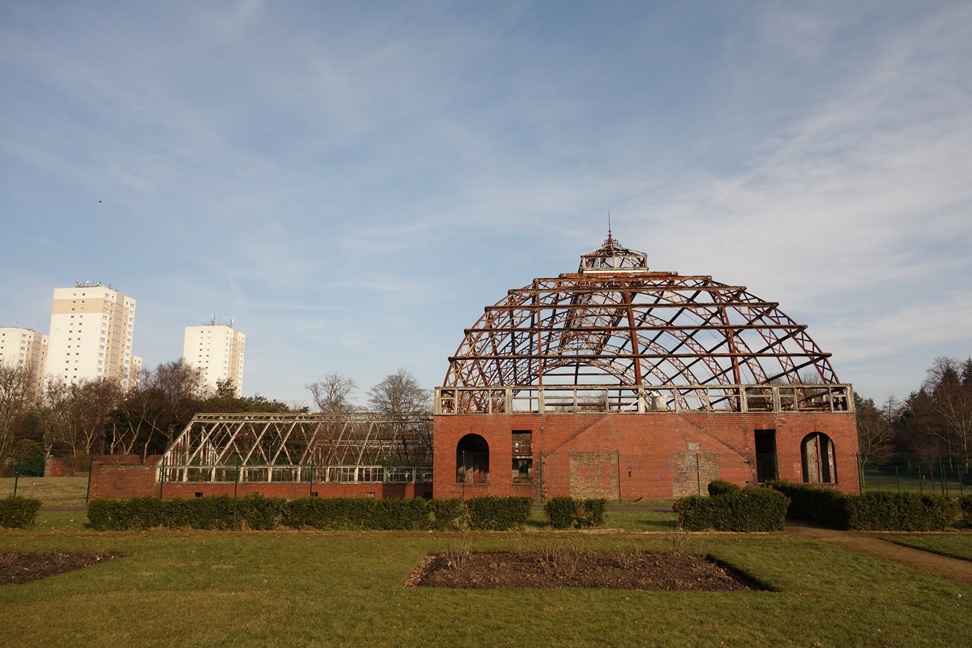
Image credit: Collective Architecture
Plans have been submitted to Glasgow City Council for the first major step in bringing the Springburn Winter Gardens back into public use, more than four decades after the much-loved Victorian glasshouse closed its doors.
About this development:
- Authority:Glasgow City
- Type:Leisure
- Applications:
- Team:Collective Architecture (architect), Brown and Wallace (quantity surveyor), Narro (structural engineer)
The Springburn Winter Gardens Trust (SWGT) has lodged applications for Planning Permission and Listed Building Consent to transform the derelict structure into a ‘Living Ruin’, creating a safe, accessible, open-air community space within the dramatic framework of the original 1900 glasshouse.
The proposals, designed by Collective Architecture, would see essential structural repairs carried out, non-original additions removed, blocked entrances reopened, and level-access flooring installed throughout the main hall, allowing the public to walk into the building freely for the first time since September 1983.


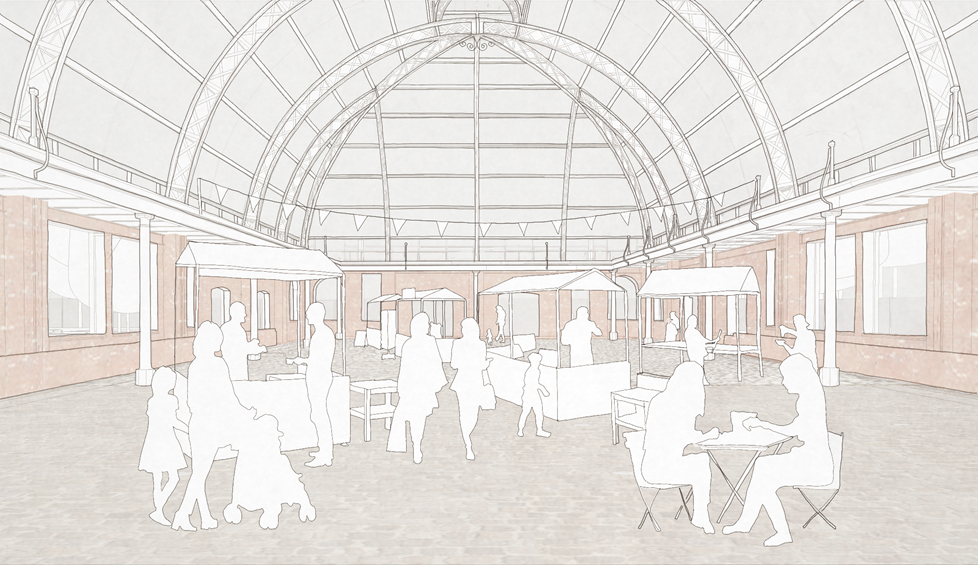
Image credit: Collective Architecture
The Living Ruin project involves:
- Urgent structural repairs to corroded steelwork and the primary steel lattice trusses to make the building safe
- Reopening original entrances by removing non-original brick infill that currently blocks access
- Installing level-access permeable paving across the main hall floor, using partially reclaimed brick from demolished non-original planters
- Removal of non-original features including later brick planters that reduce the usable floor area
- Safe removal and storage of original cast-iron staircase elements for future reinstatement
- Stabilisation of the surviving south ancillary greenhouse, with planting areas proposed to reflect the building’s horticultural heritage
- Careful removal of invasive vegetation that has destabilised masonry walls
The main hall which is approximately 45 metres long and 18 metres wide, with a soaring 9.2-metre arched roof, will provide a flexible, open-air space of around 800 square metres.


Under the proposals, the Winter Gardens would host markets, exhibitions, community gatherings, educational events and cultural activities on behalf of the local community alongside the establishment of new growing space.
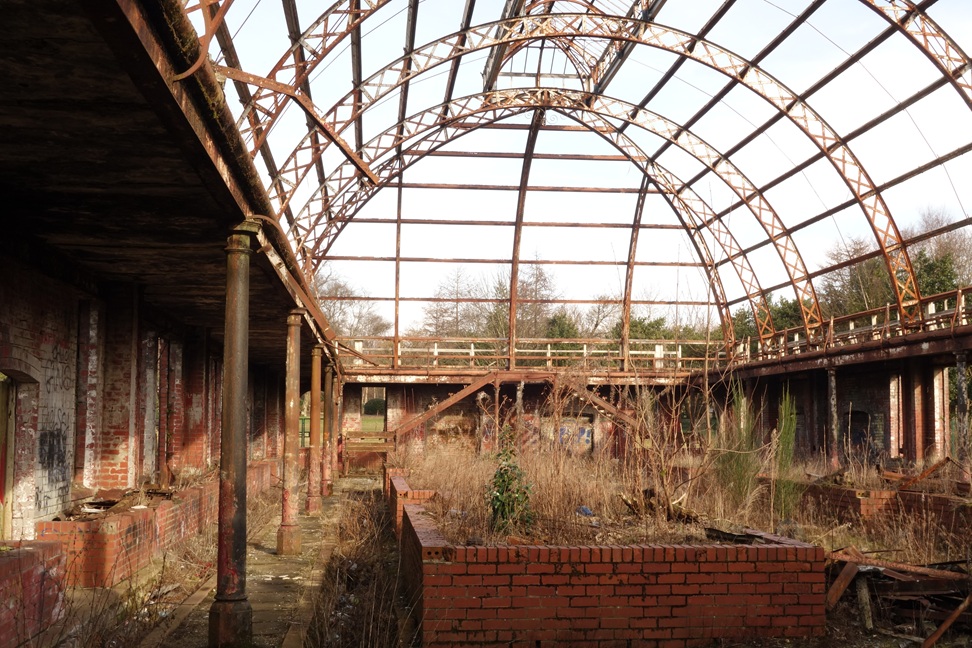
Image credit: Collective Architecture
Paul Sweeney MSP, chair of the Springburn Winter Gardens Trust, said: “Our ambition is to bring this extraordinary building back into the civic life of Springburn 43 years after it was abruptly closed to the public due to major storm damage. The Living Ruin is an important first step: safeguarding the historic structure, making it accessible and creating a versatile public space where people can gather, learn, grow, make and celebrate.
“The Trust has worked tirelessly for the last 13 years to save the building from collapse and, rather than waiting for the multi-million-pound funding required for a complete restoration in one go, our ambition is to put the Winter Gardens back into public use now in this initial £2 million phase, allowing the flexible development of community activities and a public events programme that will help to build the case for its full restoration in future phases.
“The skeletal ruin of the Winter Gardens has become a poignant symbol of Springburn’s decline; we are determined that our breakthrough project will finally restore this landmark to its rightful place as a symbol of pride for our community and as a showcase historic venue for Glasgow.”
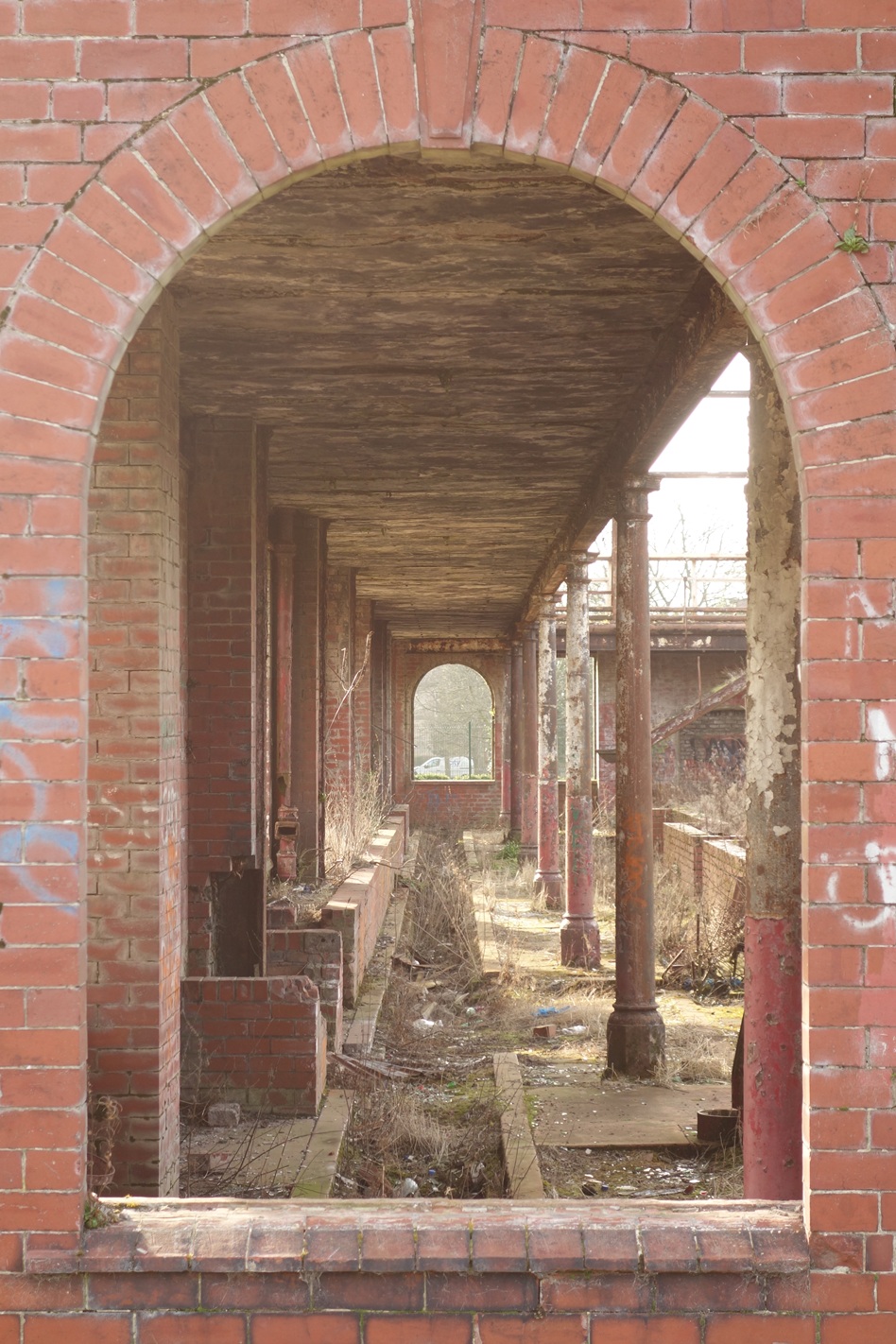
Image credit: Collective Architecture
Springburn & Robroyston (Ward 17) Councillor Graham Campbell said: “I’m very much in support of the Springburn Winter Gardens Trust efforts to bring this much loved and fondly remembered, though far too long neglected community asset back into functional use by the people of Springburn.
“The Area Partnership for Ward 17 which I chair is proud to financially support SWGT’s renovation and rescue works. I heartily commend the excellent design by Collective Architecture and in particular the heritage rescue work being undertaken with the expertise offered by structural engineers Narro.
“I very much welcome their plans to make the Winter Gardens a viable, usable community space, cultural events venue and open space for the enjoyment of our people and to protect its vital heritage for years to come.”
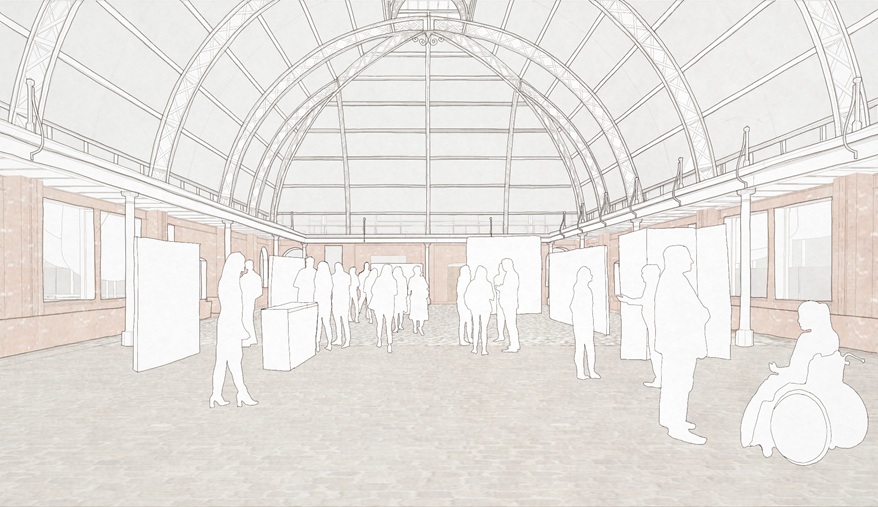
Image credit: Collective Architecture
Maisie Tudge, architect at Collective Architecture, said: “Collective began working with the Trust in 2018 to try to save the Winter Gardens. Throughout
this time, the project scope has taken many forms, but the importance of the Springburn Winter Gardens as a community asset has remained constant.
“In the Living Ruin proposal, we want to celebrate the building’s incredibly rich history by giving it a future; linking Springburn’s industrial past with the evolution of Glasgow as a city. We’re pleased to share that submitting the planning and listed building consent applications bring us one step closer to reviving the space and returning the Category A listed structure back into the hands of the community.”
The design team includes:
- Client- Springburn Winter Gardens Trust (SWGT)
- Project Manager - Sarah Robinson Frood, Innovate Rural
- Architect - Collective Architecture
- Quantity Surveyor - Brown + Wallace
- Structural Engineer - Narro
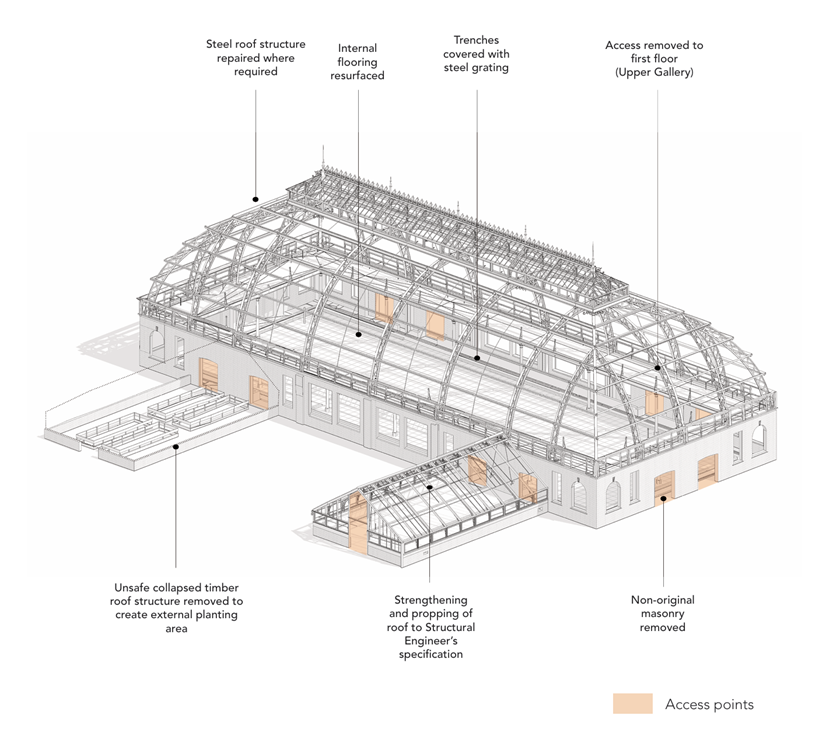
Image credit: Collective Architecture
A building of national significance The Springburn Winter Gardens were built in 1899–1900 by Simpson and Farmer, hothouse builders, with ironwork by William Baird of Temple Ironworks. At the time of construction, the glasshouse was the largest in Scotland. It was funded by a £10,000 contribution from Sir Hugh Reid of the Hyde Park Locomotive Works, one of the great Springburn engineering dynasties and opened as a centrepiece of Springburn Park in October 1900.
For generations, the Winter Gardens were at the heart of community life in Springburn, hosting concerts, exhibitions, children’s events and displays of exotic plants. The building was designated Category A Listed in 1985 — just days before Glasgow District Council was due to consider its demolition.
It is one of only five Victorian glasshouses surviving in Glasgow, alongside the Kibble Palace, the People’s Palace Winter Gardens, Tollcross Conservatory and Queen’s Park Glasshouses.
Following the demolition of the Springburn Public Halls in 2012, the Winter Gardens represent one of the last remaining Category A-listed civic buildings in the area, and a rare surviving link to Springburn’s illustrious industrial past as a world centre for locomotive manufacturing.

Share this article:

Subscribe to our newsletter to not miss articles like this one:
 SUBSCRIBE