



Raasay ferry store to transform into venison processing facility
 Reading time: 3 minutes
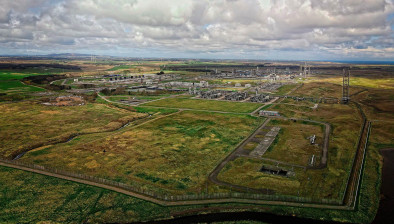
The island of Raasay is transforming a disused ferry store into a venison processing facility, forming part of a £750,000 investment helping five islands spearhead Scotland’s path to becoming carbon-neutral by 2040.
Nearly £129,000 has been awarded for the new facility which will see the conversion of the former East Suisnish Ferry Pier Store into a solar-powered food production hub.
Raasay also received £78,000 for the purpose of restoring habitats by removing invasive species and planting 4,000 native trees.


Cabinet Secretary for Climate Action and Rural Affairs Gillian Martin said: “Island communities face real challenges such as cost of living, higher energy costs and the growing impacts of climate change.
“This investment will help thousands of residents build stronger, more self-sufficient communities fit for the future. These projects show how tackling climate change can create jobs, grow local economies and keep more money in island communities.”
Martin added: “Across the five islands, the funding will support solar power, battery storage, low-carbon heating, habitat restoration and local food production.
“These represent practical, community-led action designed to reduce reliance on imported fuels and help islands become more self-sufficient ahead of a 2040 carbon neutral target.”


Tom Lusink, community development officer, Raasay Development Trust, said: “We’re grateful to be awarded this funding, which is essential for Raasay to continue its net zero journey.
“The island’s most significant carbon levers lie within its natural environment, and if the island is to reach net zero, sustainable deer management will need to be part of it.
“Building the venison processing facility builds on the crofting community’s legacy of taking ownership for its deer management, and we will continue to support community stewardship of the island.”
Lusink added: “The habitat restoration — which focuses on controlling an invasive plant species that threatens these natural carbon stores, and restoring these habitats through active planting — now has a proven track record, but requires a long-term approach.


“High-impact projects need long-term funding that works to local timescales.
“It’s vital these projects also serve the community, which is why they’ve been designed to offer diverse employment and skills opportunities, with nearly all funds being invested within the island.”
Councillor John Finlayson, chair of Highland Council’s Eilean a’ Cheò area committee, said: “This funding is a strong endorsement of the vision and ambition of the island community and will deliver lasting economic and environmental benefits.”
On Barra, £182,000 will go towards energy storage, heating and infrastructure upgrades at Northbay Hall and Gàradh a’ Bhàgh a’ Tuath.
For Islay, £75,000 will fund solar panels, battery storage and heating upgrades across community buildings.
On Great Cumbrae, £144,500 will go towards fitting solar panels and battery storage in 17 homes.
In the context of Hoy, a total of £140,000 will be used to install solar panels and battery storage at Longhope’s YM Community Hall.

Share this article:

Subscribe to our newsletter to not miss articles like this one:
 SUBSCRIBE