





Written by:

Scotland’s housing builds slow to lowest level in over a decade
 Reading time: 4 minutes
Written by:
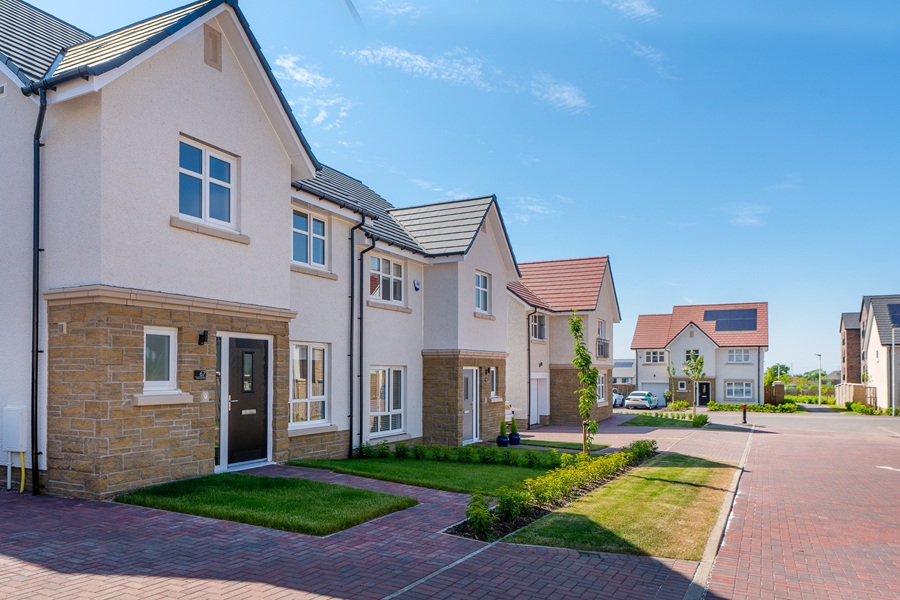
The number of new homes added to Scotland’s housing stock has fallen to its lowest level since 2014-15, excluding the pandemic period, according to official statistics published today.
Between April 2025 and March 2026, 18,028 new homes were added, 8% fewer than the previous year.
The annual housing statistics show that, as of 31 March 2025, Scotland had an estimated 2.75 million homes. Some 60% were owner-occupied, while 23% were social rented and 13% were private rented or occupied rent-free. The remaining 4% were vacant properties or second homes.


Tenure estimates for March 2026 cannot yet be produced, as they depend on dwelling statistics from National Records of Scotland.
Drawing on the Scottish Household Survey, the figures paint a varied picture of who lives where.
Owner-occupiers skew older: 47% of owner-occupied households had a highest income householder aged 60 or over, compared with 37% in social housing and just 12% in the private rented sector.
The private rented sector is the most ethnically diverse. Around 11% of adults in private rented households were from a minority ethnic group, against 5% in social housing and 2% among owner-occupiers.


Health conditions are markedly more common in social housing. Some 61% of social rented households reported at least one member with a long-term physical or mental health condition or illness, compared with 34% of owner-occupied and 26% of private rented households.
Single-parent households are also more prevalent in social housing, making up 10% of social rented households, compared with 6% in the private rented sector and 2% of owner-occupied homes. The overall share of households with children is broadly similar across tenures, at 23% for both social and private renting and 20% for owner-occupiers.
Private renters appear most exposed to housing costs. About 12% said they may have to move because of those costs, compared with 5% of social tenants and 3% of owner-occupiers.
Difficulty paying the mortgage or rent was more common in the rented sectors, affecting 8% of social rented and 7% of private rented households, compared with 1% of owner-occupiers.
Local authorities managed around 329,788 homes as of March 2026, some 52% of Scotland’s social housing stock.
Vacant council homes rose 4% to 10,253, nudging the vacancy rate up from 3% to 3.1%. Almost half (49%) of these were normal letting stock being prepared between tenancies, with 69% of those empty for less than six months. The rest included homes undergoing modernisation (23%), awaiting demolition (16%), used as temporary accommodation for homeless households (7%) and in low-demand areas (4%).
Councils made 22,843 permanent lettings in 2025-26, down 14% on the previous year. Just over half (51%) went to homeless households, while 25% went to applicants on waiting lists and 22% to existing tenants moving home.
Of the 26 councils that own housing stock, nine saw waiting lists grow, fourteen saw them shrink and three stayed broadly level. The figures do not capture those waiting only for housing association homes.
Councils issued 16,104 notices to begin eviction proceedings, similar to the previous year and 34% lower than before the pandemic. There were 646 completed evictions or tenant abandonments, 94% of them linked to rent arrears. That is 4% lower than in 2024-25 and 44% below pre-pandemic levels.
Local authorities also own 19,963 supported homes for older people and 29,413 for people with physical disabilities. Provision has risen by 18% over the past decade.
Social justice and housing secretary Shirley-Anne Somerville acknowledged the pressures on the construction industry.
“We recognise the challenges facing the new build sector, driven by international and domestic economic pressures, and we are using every lever at our disposal to accelerate housebuilding across Scotland,” she said.
She added that Scotland “continues to lead the rest of the UK in housebuilding relative to our population size”, and said the Affordable Housing Supply Programme was improving, with approvals up 42% and starts up 34% in the year to June 2026.
Ms Somerville also highlighted a new national housing agency, More Homes Scotland, which she said “will bring greater focus, coordination and ambition to unlock stalled developments and attract investment.” Backed by a record £926 million budget this year, she said the government remains focused on its target of delivering 110,000 affordable homes by 2032.

Share this article:

Subscribe to our newsletter to not miss articles like this one:
 SUBSCRIBE