





And finally… Scottish enlightenment
 Reading time: 2 minutes
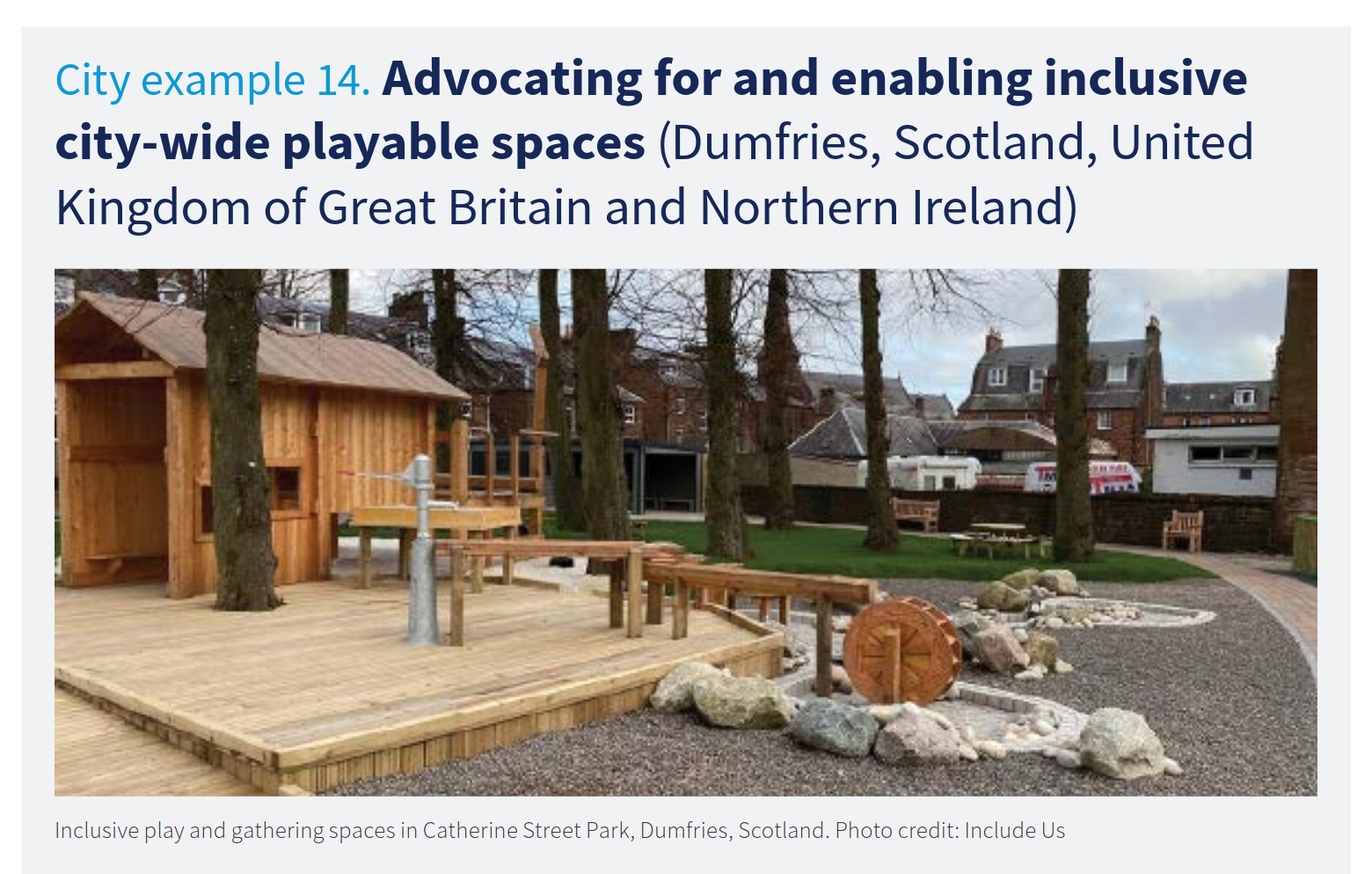
An excerpt from page 33 of the WHO's guide to creating public urban spaces for children
A play park in Dumfries has been recognised by the World Health Organisation (WHO) as a world-leading example of inclusive design.
The Catherine Street Inclusive Park features as a case study in the WHO’s new guide to creating urban public spaces for children.
“Initiatives to make urban playgrounds and parks more inclusive and accessible spaces for children with disabilities can be forged by local groups,” the report says.


“For example, in Dumfries, Scotland families of children with disabilities needed accessible public play spaces where children could play freely alongside their siblings and friends.
“In 2016, a working group was formed and led by the Parents’ Inclusion Network, in partnership with other stakeholders, to campaign for inclusive and accessible play spaces in the town.
“As part of this initiative, Catherine Street Park was renovated to incorporate a new circular pathway, turfed grass areas, flower beds, raised growing beds, accessible seating, and sensory play opportunities.
“It also features a wheelchair swing, a wheelchair-accessible roundabout and trampoline, a slack line and a climbing frame.”


Dr Andrzej Zieleniec, chairperson of Include Us, the charity now responsible for the park, said: “From local pocket park to regional resource to national award winning inspiration to global exemplar. Who would have thought?”

Share this article:

Subscribe to our newsletter to not miss articles like this one:
 SUBSCRIBE