




Written by:

Architects praise GSA for Mackintosh Building clarity
 Reading time: 5 minutes
Written by:
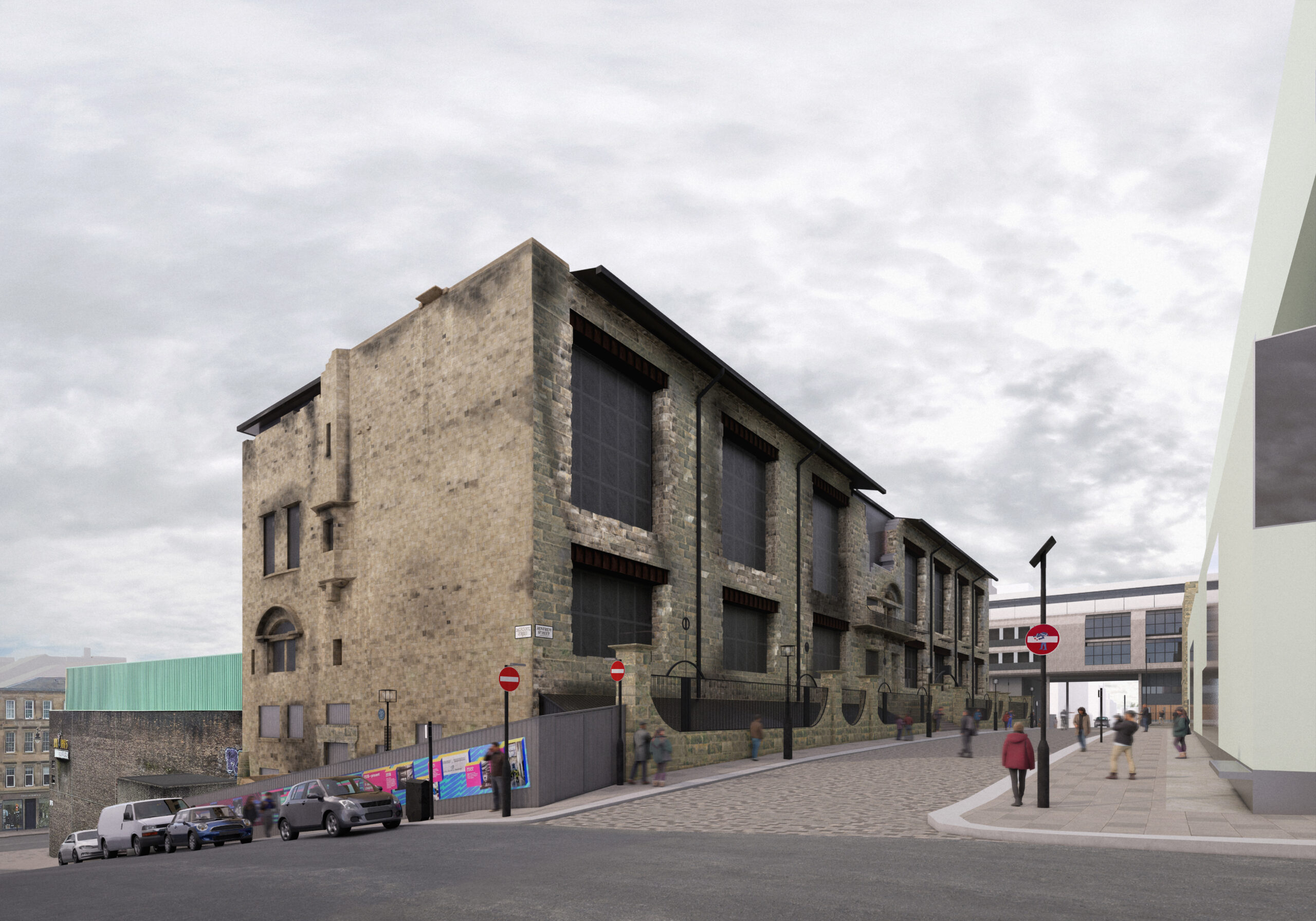
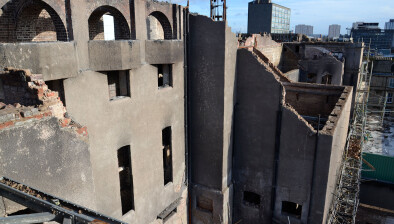
The Glasgow School of Art (GSA) has confirmed its long-awaited plan for the fire-ravaged Mackintosh Building, drawing a broadly supportive response from professional architecture bodies after a weekend of confused reporting about the building’s fate.
The announcement, made public yesterday, follows weekend coverage in The Sunday Post suggesting the school was pursuing a “partial rebuild” that would see the building’s facade retained while its celebrated interior, including the timber-lined library and the glazed “hen run” corridor, was accepted as permanently lost. The GSA moved quickly to dispute that characterisation, calling the report “inaccurate” and confirming that a fuller statement on its investment plans for the building would follow.
That statement has now arrived in the form of a Strategic Outline Business Case Addendum, an 80-page analysis prepared after the school settled its long-running insurance claim relating to the 2018 fire. The document sets out the options considered for the building’s future and the financial reasoning behind the school’s decision.


The GSA’s Board of Governors has concluded that the school cannot fund the full reinstatement of the Mackintosh Building on its own. Rebuilding the building faithfully would cost in the region of £265 million — roughly five times the school’s annual turnover — a sum the board judged unaffordable without putting the institution’s financial sustainability at risk. Despite reaching a settlement with insurers, rising construction costs mean a substantial funding gap remains.
Rather than abandoning reinstatement, the board says it will invest insurance funds in an enabling project intended to lay the groundwork for eventual rebuilding. The first step will see the external scaffolding that has enclosed the site since 2018 replaced with an internal retention system, exposing the building’s facade to public view again and creating a more stable structure for future works, in keeping with the school’s Conservation Management Plan. Work on site is expected to begin next summer, once design and permissions are finalised.
The business case also floats a longer-term ambition: turning the Mackintosh Building into the anchor of a creative and cultural production innovation district, intended to draw investment and support new businesses in the surrounding area. The school says talks with the city, government and other partners on that vision will begin immediately.
Ann Priest, chair of the GSA’s Board of Governors, said the school wants the building rebuilt but cannot jeopardise its financial health to do so, stressing that governors have a duty to safeguard the institution for current and future students.


She said: “The Glasgow School of Art is recognised internationally for the quality of its education, research, and impact. We make a substantial educational, cultural, social and economic contribution to Glasgow and beyond and it is important that we continue to do this now and in the future.
“As Governors, we are legally bound to act in the best interests of the School and have a duty to current and future students and staff to keep the School in good financial health, focused on its core educational purpose.
“In the 12 years since the first fire, and against the backdrop of a changing higher education landscape, the GSA has consistently demonstrated that its ability to operate – and indeed thrive – is not dependent on the Mackintosh Building.
“However, we believe that the Mackintosh Building – loved and cared for by so many people connected to the school, both in the past and since 2018 – can have a new purpose and become a catalyst for innovation, regeneration and economic growth in and around Glasgow.”


Ann argued the Mackintosh Building’s revival could anchor wider regeneration in a part of Glasgow already home to much of the city’s creative sector, noting that further plans will create museum-standard interpretation of the building’s history alongside its retained fabric.
Stephen Hodder MBE, a GSA governor and RIBA Stirling Prize winner, described the updated business case as thorough, heritage-expert-led work, and said the project would let the public see the building’s facade again while laying a foundation for future reinstatement.
He said: “The updated business case for the Mackintosh Building is a comprehensive piece of work that has been led and delivered by architects and other experts well-versed in complex heritage projects.
“This gateway project will let people see the Mack’s magnificent external elevations again, on a building for which so many people in Glasgow and around the world have a real and enduring affection.
“It also creates a solid foundation for future reinstatement works, guided by our Conservation Management Plan.
“Alongside colleagues on the board and in the management team, I now look forward to supporting this new and significant phase of work on such an important building.”
Historic Environment Scotland’s chief executive, Katerina Brown, welcomed the investment as a milestone in securing the building’s long-term future and said her organisation was already engaging with the school on next steps.
The Royal Incorporation of Architects in Scotland (RIAS) and the Royal Institute of British Architects (RIBA) issued a joint statement broadly endorsing the school’s approach.
The two bodies praised the GSA for working proactively with architects on the building’s future and backed the plan to stabilise the facade and carry out stone repairs, calling the building “one of the most important buildings in Scotland and the UK.”
They said faithful reinstatement should remain everyone’s preferred long-term outcome, but agreed with the school’s assessment that GSA cannot deliver that alone. Both organisations called for the Scottish and UK governments to help find the resources needed for full reinstatement, describing the building as one future generations would curse today’s leaders for losing.

Share this article:

Subscribe to our newsletter to not miss articles like this one:
 SUBSCRIBE