




Architectural Heritage Fund marks 50 years by naming 25 standout projects
 Reading time: 3 minutes
As part of its 50th anniversary celebrations, the Architectural Heritage Fund (AHF) on 1 October announced 25 standout projects which span across the UK.
The projects present the product of 50 years of heritage-driven regeneration.
Covering the four nations, the projects have been put into five regional groups: Northern Ireland, Scotland, Wales, North & Midlands and London & South.


The projects consist of medieval stone forts and Victorian courthouses to industrial potteries, seaside piers and arts venues developed within redundant warehouses.
The projects represent historic buildings which had the potential to have been lost, given new purpose by the communities they are situated within.
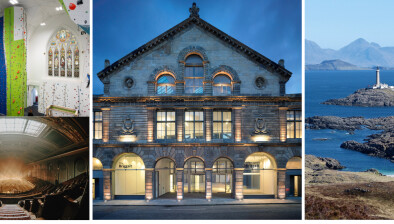
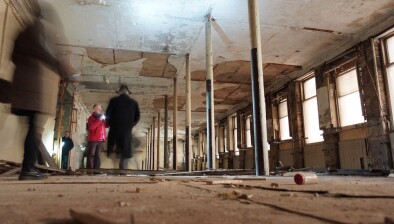
The projects have distinct differences. Riddel’s Warehouse in Belfast is a four-storey Victorian ironmongery warehouse with a cast iron atrium that is being turned into a multi-use arts venue and coworking hub - rescued from the Buildings at Risk Register following years of disuse.
In Glasgow’s southside, Kinning Park Complex was an ex-Edwardian school famously occupied by local mothers for 55 days to stop its shutdown, which has been restored as a space for dance groups, artists, musicians and community projects.


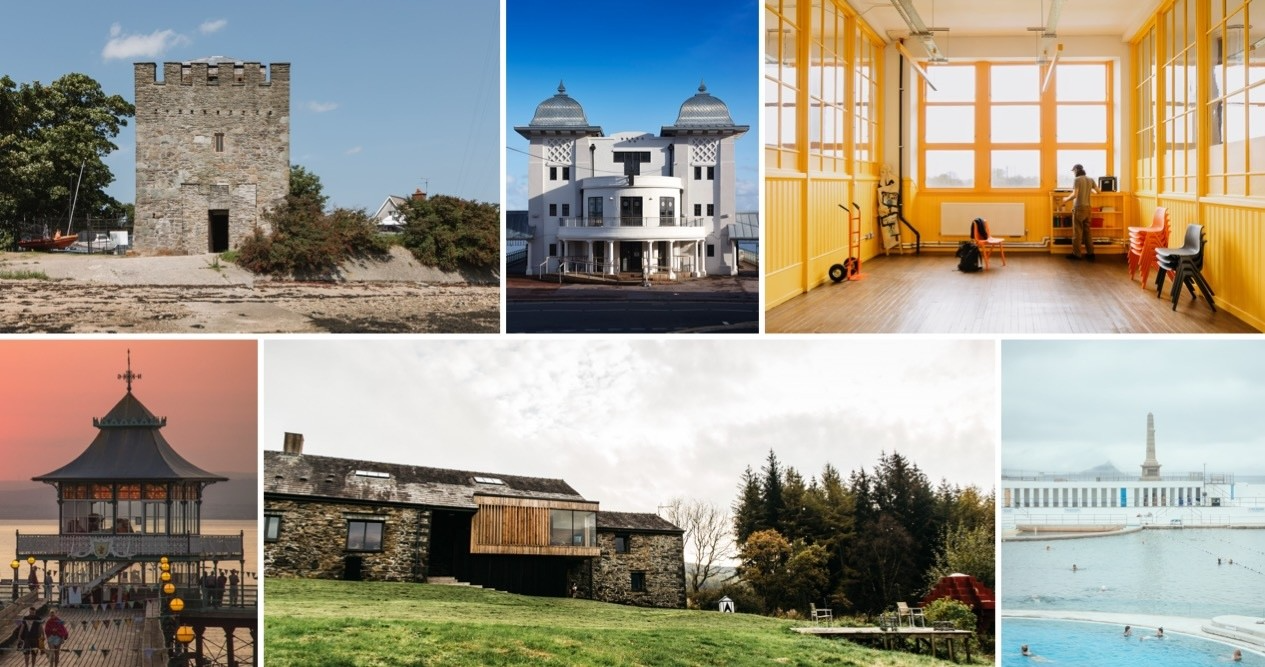
Grizedale Arts in the Lake District used support from the AHF to bring a listed Cumbrian pub back to life to serve the purpose of a community venue and arts centre.
In Penzance, Jubilee Pool became the UK’s first lido to be heated by a geothermal well, which is now open year-round and saving more than 500 tonnes of CO2 per year.
At Penarth Pier Pavilion in the Vale of Glamorgan, a Victorian seaside landmark has been secured for Wales.
Additionally, in County Tyrone, Lissan House is a 17th-century plantation house completely volunteer-run on its 260-acre estate.
The projects also include Middleport Potteries in Stoke-on-Trent, where Burleigh pottery has been preserved as a working heritage attraction.
Also included is the Mid-Wales Llanfyllin Workhouse, which is a surviving New Poor Law workhouse and now a community enterprise with a café, bunkhouse and events space.
Another project is the Observer Building in Hastings, a seven-storey 1924 printworks transformed into an affordable workspace and housing in one of the most deprived coastal towns of England.
Matthew McKeague, chief executive of the Architectural Heritage Fund, said: “These 25 projects are a snapshot of what that looks like across the UK. They are hugely different in scale, age and what they’ve become, while all sharing a similar spirit.
“They are united by the fact that local communities saw potential in a building that others had given up on, and found a way to bring it back.”
Fiona Ruth Twycross, Baroness Twycross, parliamentary under-secretary of state for Museums, Heritage and Gambling said: “Heritage is there to be used, not just admired.
“The Architectural Heritage Fund champions the impact of heritage and community-led regeneration.”
Baroness Twycross added: “The AHF is there through every step of the way, providing advice, loans and grants to local communities to help create new futures for these historic buildings.”
The AHF, since its foundation in 1976, has supported 2,432 projects in the UK, awarding 3,079 grants and loans with a collective value of more than £182 million.

Share this article:

Subscribe to our newsletter to not miss articles like this one:
 SUBSCRIBE