





Charities urged to plan early for VAT as Capital Goods Scheme threshold more than doubles
 Reading time: 3 minutes

William Ford
Charities and other third sector organisations undertaking property and construction projects are being urged to build VAT planning into their earliest project discussions, as a significant reform to the Capital Goods Scheme (CGS) takes effect tomorrow.
From 29 July 2026, the threshold above which land, buildings and civil engineering works fall within the CGS rises from £250,000 to £600,000 (exclusive of VAT), reducing the number of projects that will require ongoing monitoring under the scheme.
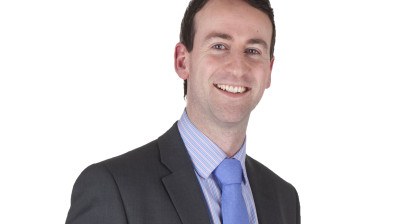
William Ford, Glasgow-based associate director for VAT at accountancy and business advisory firm Azets, said the change would ease a long-standing administrative burden for organisations with limited finance resources.


“Until now, organisations undertaking qualifying property projects have been required to monitor VAT recovery and make potential adjustments over a ten-year period,” Ford said. He noted that while the scheme serves an important purpose in ensuring VAT recovery reflects the long-term use of an asset, it has placed a considerable compliance load on charities and third sector bodies in particular.
Ford said the higher threshold should mean many smaller and medium-sized property projects no longer require a decade of CGS monitoring, cutting the need for further VAT adjustment calculations. He described the change as a “pragmatic simplification” that should free up finance teams already managing grants, restricted funding and partial exemption calculations to focus more on their organisations’ core activities.
Despite the welcome relief on compliance, Ford cautioned that the underlying complexity of VAT rules affecting the sector remains unchanged. Organisations such as charities, leisure and culture trusts, development trusts, care facility operators and community groups frequently combine grant funding, exempt supplies, non-business activity and trading income within the same organisation - and sometimes the same building.
That mix matters most, he said, when a construction or refurbishment project is under way, because VAT recovery is often tied directly to how a building will ultimately be used. Decisions taken early in a project - sometimes by architects, operational staff or funders rather than finance teams - can determine whether VAT on construction costs is fully recoverable, partially recoverable, or not recoverable at all. Such decisions can also have knock-on effects for Land and Buildings Transaction Tax in Scotland or Stamp Duty Land Tax elsewhere in the UK.


Ford pointed to existing reliefs - covering relevant residential purpose, relevant charitable purpose and village hall provisions - that can allow qualifying construction work to be zero-rated for VAT. Care facilities, community buildings, charitable residential accommodation and some recreational or welfare-focused developments may qualify, provided strict conditions are met.
However, he said these reliefs are frequently overlooked or considered too late in a project to deliver their full benefit, given how dependent they are on technical interpretation and correct implementation.
Ford warned that by the time VAT issues surface late in a project - once contracts are signed, funding agreements finalised, designs fixed and construction under way - advice tends to focus on damage limitation rather than strategic planning. He said some organisations proceed on the assumption that VAT will be recoverable, only to later find a significant proportion of it is not, creating unplanned costs for organisations already working within tight funding constraints.
His advice to third sector finance teams and their advisers is to treat VAT as part of the conversation from the outset of any property or construction project, alongside legal, funding and operational planning, rather than as a technical matter to be resolved towards the end.

Share this article:

Subscribe to our newsletter to not miss articles like this one:
 SUBSCRIBE