




Conservation effort repairs ‘Lady Grange’s House’
 Reading time: 4 minutes
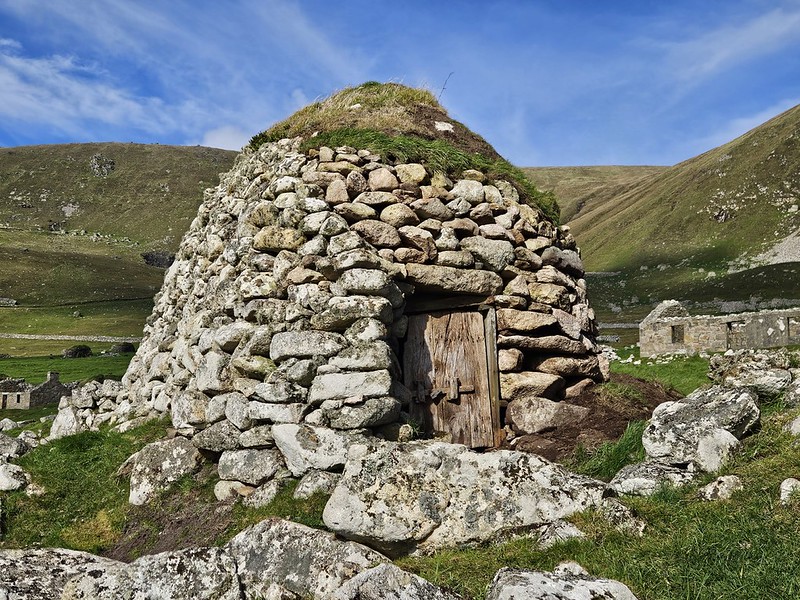
'Lady Grange's House' after (Image credit: National Trust for Scotland)
The National Trust for Scotland has successfully repaired one of the most significant structures on St Kilda, following a major collapse in 2022.
The beehive-shaped, stone building known as ‘Lady Grange’s House’, is notable among the 1,200 stone cleitean scattered across the main island of Hirta due to its size and a longstanding historical connection.
In January 2022, it suffered a significant collapse and the complex repair project that followed has been described by the Trust as one of the most challenging undertaken on St Kilda in more than half a century of conservation work.


Cleitean are stone storage structures built by the former St Kildan community and are a defining feature of the archipelago’s historic landscape. Constructed without mortar and topped with turf roofs, they were used to store food, fuel and other essential supplies. A representative selection is monitored and maintained to ensure their survival in the harsh Atlantic weather, where wind speeds have been recorded as high as 144 miles per hour.
The damaged structure is a particularly significant cleit due to its possible connection with historical figure Rachel Chiesley, known by her title ‘Lady Grange’. Rachel was famously exiled to St Kilda in the 18th century by her husband James Erskine; a Jacobite supporter who feared his wife would expose his sympathies to the UK government.
Whilst direct archaeological evidence linking her to the structure has not been confirmed, historical accounts, maps and the intrinsic oral tradition of Hebridean storytelling have long associated the cleit with her imprisonment on the island.
The major repair project sought to stabilise the structure while preserving its visual appearance and cultural significance. Joiners Neville Oldroyd and Andy Smith built a bespoke timber access structure that allowed specialist drystone workers Euan Thompson and Steve Denham to carefully rebuild the damaged sections using original stonework. Archive photographs taken before the collapse were used to ensure the repairs closely matched the original construction.


The work also reinstated the distinctive doorway and rehanging of the cleit’s wooden door, recreated by a work party in the 1970s based on a historic photograph from 1918 of the original. All buildings on St Kilda are vulnerable to damage from exposure to the elements and this vital conservation project has strengthened this historic structure while retaining its character.
Clare Henderson, National Trust for Scotland archaeologist, said: “Traditional St Kildan construction techniques were followed throughout the repair project. The unique turf roof was re-instated using a combination of new turf, grass seed harvested on the island and turf from the roof that had come away during the collapse. The building was intricately repaired stone by stone using methods found on St Kilda.
“During the repair, we also had a rare opportunity to examine the internal structure and construction method of the cleit, including the roof composition, which gave us a new insight into precisely how St Kildans built and maintained these unique buildings. This ongoing conservation work is essential to ensure these remarkable buildings survive for future generations.”
Susan Bain, Western Isles manager for the National Trust for Scotland, said: “We are absolutely delighted to have successfully repaired ‘Lady Grange’s House’. When the major collapse occurred in early 2022, it quickly became apparent that this was going to be one of the most challenging conservation projects undertaken on St Kilda in more than half a century.
“This sympathetic repair has brought this historic cleit back to life and is a testament to the Trust staff’s expertise, the skilled contractors and the St Kildans ingenuity. As custodians of the archipelago, the National Trust for Scotland continues to monitor and maintain these fragile yet resilient cleitean and the other buildings that form a vital part of the island’s cultural landscape.”
St Kilda is the UK’s only dual UNESCO World Heritage Site, one of only 39 in the world, and is recognised for its unique natural environment and cultural heritage.

Share this article:

Subscribe to our newsletter to not miss articles like this one:
 SUBSCRIBE