




Written by:

Difficult questions and a ‘moral obligation’ to share: NASC gears up for ScaffEx26 and Scottish Construction Summit
 Reading time: 7 minutes
Written by:

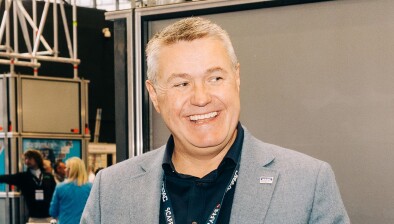
NASC group CEO Clive Dickin
Ahead of ScaffEx26 this week and its sponsorship of October’s Scottish Construction Summit, the National Access & Scaffolding Confederation (NASC) says it is seeing a marked shift in how Scotland’s construction industry engages with the scaffolding and access sector, with Tier 1 contractors and local authorities now actively seeking out NASC members, rather than treating accreditation as an afterthought.
Speaking to Scottish Construction Now ahead of both events, NASC group CEO Clive Dickin and Lloyd McKenzie, the organisation’s business development manager for Scotland and Northern Ireland, set out why quality and safety standards in scaffolding matter well beyond the industry itself and why they want contractors, clients and curious visitors alike to come to them with their hardest questions.
NASC is now 81 years old and has built its reputation on safety-led guidance, auditing and competence standards, both for scaffolding contracting businesses as corporate entities and for individual scaffolders through the CISRS card scheme. NASC’s remit stretches well beyond traditional construction sites, taking in sectors such as petrochemicals and distilling, wherever safe access is required.

According to McKenzie, engagement in Scotland and Northern Ireland has changed noticeably in the last year and a half. Where NASC has long had a solid membership base in the region, he says the organisation is now seeing local authorities and Tier 1 contractors actively getting involved, particularly specifying NASC members on their projects and, crucially, asking for that assurance up front rather than treating it as a box-ticking exercise further down the supply chain.
Dickin adds that this regional engagement is part of a deliberate, wider strategy. “Over the past three years, NASC has become extremely focused on supporting the nuances of each of the devolved administrations, then further the nuances for each area,” he said.
He points to a recent visit to areas north of Aberdeen and around Elgin’s distillery country, where the need for training and support was clear, and where scaffolders can feel disconnected from the industry’s centres of gravity in Glasgow and Edinburgh. Making sure those communities aren’t overlooked, he says, is a genuine commitment for the organisation.
ScaffEx26
The conversation turned to ScaffEx26, which takes place today and Friday, NASC’s third edition of an event that started in Belfast in 2024. Dickin, who joined NASC following what he describes as a rigorous appointment process, says the idea grew out of a recognition that the industry lacked a genuine large-scale celebration of itself. A dinner alone, he felt, wasn’t inclusive enough to reach everyone in the sector.


He said: “The key ethos is shared knowledge, shared experience, networking, at whatever level you are in scaffolding. And that involves clients as well. Wherever you are using scaffolding and access, and it’s important to reference access, hoists, and temporary roofing, and to recognise the complexities. These are areas that the scaffolding and access contracting sector fundamentally delivers.”
The growth has been rapid. After close to 3,000 attendees last year, Dickin says organisers are hoping for somewhere between 3,500 and 4,000 this time around. This year’s conference theme ‘Skills, Safety and Success’ was shaped directly by NASC’s own research.
An independent study commissioned by the organisation earlier this year found a vacancy rate of around 4.4% among the average NASC member, alongside a retirement rate of roughly 7%, pointing to as many as 40,000 vacancies emerging across the sector over the next five years. That, Dickin says, is why talent and career progression, encouraging scaffolders to push through Part 1 and Part 2 qualifications rather than staying at labourer level, sit at the heart of this year’s event.
Safety, unsurprisingly, is the other constant. Dickin points to NASC’s SG4 guidance document and its annual safety report as evidence of an industry that has made real strides, but stresses there can be no complacency. “Safety is an inbred element to the sector’s success,” he added.


Asked what a first-time visitor shouldn’t miss, McKenzie highlights the conference programme for scaffolding business owners, alongside a new demo zone showcasing innovation in software and AI within the sector. Dickin, meanwhile, singles out the access to product manufacturers as something he didn’t fully appreciate before joining the industry.
With the majority of the UK’s 13 system scaffolding manufacturers exhibiting, he says it gives business owners and managers a rare chance to compare products and services side by side, what he calls a “Pepsi Taste Challenge” for scaffolding systems, and to make informed decisions about diversifying their business.
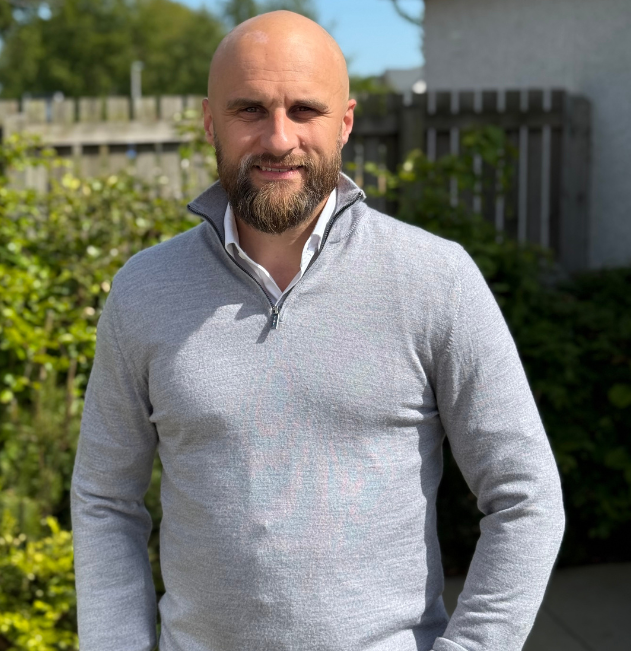
Lloyd McKenzie
‘A moral obligation’ to call out bad practice
One of the more striking threads in the conversation was NASC’s insistence that safety concerns should override commercial instincts to stay quiet about competitors’ shortcomings. Dickin recounts a discussion at NASC’s membership standards committee the day before the interview, where the topic was the obligation companies have to speak up when they see other firms getting it wrong.
Asked directly whether safety supersedes the commercial benefit of keeping such concerns to yourself, Dickin doesn’t hesitate: it does, without question. He draws a comparison with aviation, where a known technical fault or an unfit pilot would never be allowed to result in take-off, and asks why scaffolding, a similarly professional, safety-critical sector, should be any different.
He told SCN: “I think absolutely we’ve got that moral obligation to share. To say ‘you’re not quite getting that right’. No, you don’t have an obligation to go and say how to get it right. We can help with that. That’s what NASC is about. And to clients that are using scaffolding contractors that are with the greatest of respect of other generic assessment bodies, they don’t look at the fundamentals of the safety requirements of scaffolding and access. And NASC, as that membership body, fundamentally does.”
NASC’s role, Dickin says, is to help contractors and clients understand where they stand against recognised standards such as TG20, TG30 and the CISRS card scheme, and to hold members to account, including through a formal complaints process and, where necessary, expulsion.
Sponsoring the Scottish Construction Summit
NASC’s involvement doesn’t stop with ScaffEx26. The organisation is also coming on board as a sponsor of October’s Scottish Construction Summit, and both Dickin and McKenzie are clear about what they want from it.
McKenzie and colleague Phil Goddard will be on the stand throughout the day, and his message to attendees is to come and ask the difficult questions. NASC technical head Mark Collinson will also deliver two conference sessions on the day, which McKenzie flags as unmissable for anyone wanting to understand what genuine quality and safety assurance in scaffolding looks like.
For Dickin, the Summit is another expression of NASC’s commitment to the devolved nations and their specific needs. Getting scaffolding and access procurement wrong, he warns, can shut down a site and derail a client’s programme and budget.
NASC wants to make those risks easy to understand, and is offering free “info membership” to any organisation that wants ongoing updates on guidance and standards. That applies whether a visitor is at the very start of a procurement process or already on site and spotting something that doesn’t look right.
Measuring success
Looking ahead to how NASC will judge the autumn once ScaffEx26 and the Summit are behind it, Dickin points to continued membership growth alongside a safety report showing no deterioration in outcomes. This will provide evidence, he says, that clients are increasingly choosing NASC members because of safety standards rather than in spite of the extra scrutiny. As a not-for-profit organisation, he’s keen to stress that growth isn’t being driven by commercial ownership interests, but by genuine improvement in an industry that, in his words, still sees too high a level of serious incidents.
McKenzie’s measure of success is getting asked hard questions on the stand, whatever level they come from, a Tier 1 contractor or a small scaffolding business considering membership for the first time, and being able to answer them.
ScaffEx26 takes place on 10–11 September, with the Scottish Construction Summit following at the SEC Glasgow on 22 October. Attend the Summit for free here.

Share this article:

Subscribe to our newsletter to not miss articles like this one:
 SUBSCRIBE