



Written by:

Football’s second chance: How Trevor Steven wants to put mental health on a par with site safety
 Reading time: 7 minutes
Written by:
Trevor Steven
Two construction workers take their own lives every working day. For Trevor Steven, that statistic, heard by a friend on the radio in 2019, set in motion a seven-year journey that has taken him to building sites across the UK, and now to a charter that he hopes will change how the industry looks after its people.
Trevor, the former Everton, Rangers and England winger, is founder and chief executive of Mindflow, a young charity that uses football to start conversations about mental health on construction sites. Its Mindflow Charter asks firms to commit to a measurable framework of workplace mental health practice. In an interview with Scottish Construction Now editor Kieran Findlay, Trevor said the aim is to put psychological safety on the same footing as physical safety.
The idea began with a conversation between Trevor, then living in Dubai, and a friend who had founded construction software firm Causeway Technologies. Having heard the suicide statistic on Radio 5 Live, the friend rang to talk it through, knowing Trevor was looking for a new challenge with real purpose.


Trevor said the link between football and construction felt natural. “Most of us could have ended up on building sites if we hadn’t got lucky at certain points,” he said. “There was a real understanding of the people in the two worlds.” By the end of the call, he had agreed to move back to England. “The idea was that if we could save one life in construction, then everything we’ve done is worthwhile.”
Covid slowed the project, but when it ended, Trevor decided he needed evidence of his own rather than borrowed statistics. Over about 18 months, he completed around 1,500 face-to-face surveys with workers on site, often opening with a short video of himself and a message to workers that, even in his footballing prime, he was just another man who was doing his job.
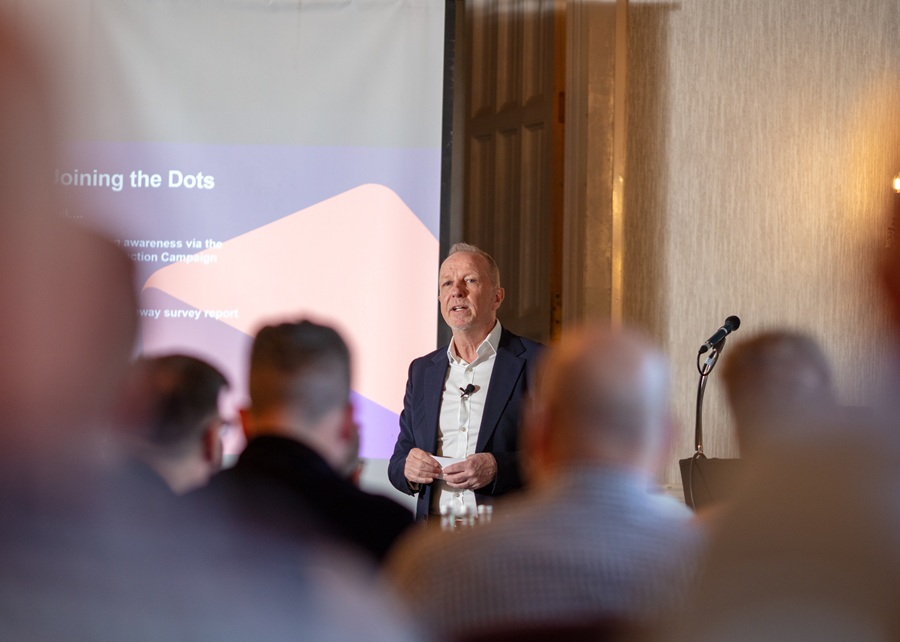
The resulting report was launched in London in November 2023 in front of 200 stakeholders, including Balfour Beatty and MPs. Trevor is candid about what happened next. “We’d got a survey and a report, but we hadn’t changed anything really.”
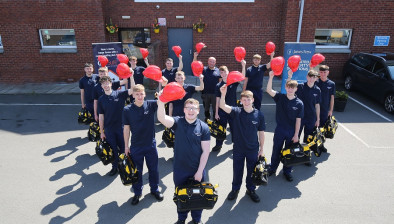
That realisation led to Mindflow, built around the idea of former professionals walking into site cabins to get workers talking. Piloted in the north west of England with ex-players including Paul Stewart, Paul Lake, David White and Jason McAteer, the “Match-Ups” don’t dwell on football. They use it to draw people into the room.
“It’s the common language of the industry,” Trevor said. “That’s what brings people in, because they’re curious.” The players talk briefly about their careers, then share their own struggles and ask workers to look out for each other.
The results, he said, can be striking. After one talk in Manchester, a young worker in his early twenties came over to shake his hand and hug him. “He said, ‘I so needed to hear that.’ That, to me, was a win.”
After a talk by McAteer in north Liverpool, a worker in the audience went to management and admitted to a £40,000 gambling debt he could no longer cope with. “They looked after him from there. Those are potentially life-saving.”
The scheme also helps the players. Trevor said most footballers disappear from view once their careers end, and many find the loss of purpose and profile hard to take. Mindflow pays them for their time, and he believes the work gives them something meaningful to get out of bed for. “Can you imagine getting up and saying, I’m going to try and share my story today’?”
Big names such as Gary Lineker, Robbie Fowler and Stuart Pearce lend their profile as Mindflow champions, while others go on site. Peter Beardsley is lined up for the north east, and Steven is in talks with Stan Collymore and Matt Holland, among others.
The Match-Ups reach workers. The charter, which Trevor began developing at Christmas 2024, is aimed at management. “I said we needed something that’s going to change the whole industry, not just be intervention-led. How do we do prevention?”
He worked for around three months with Anna Evans of Bovis, now a Mindflow trustee, and psychiatrist Dr Oliver Harrison to produce ten principles. The charter was unveiled in Liverpool alongside then Greater Manchester mayor Andy Burnham.
Registered firms complete a 35-question self-assessment and are awarded a one-, two- or three-star rating, depending on how far mental health practice is embedded in the business. Firms then appoint a Mindflow champion and receive supporting templates and checklists. Fees run from £150 for the smallest firms to £2,200 for the largest.
Trevor said the system is deliberately not a pass-or-fail test. “You can’t fail. It’s not about losing because you’re one star. It’s about winning because you’re on the journey.” Ratings are self-declared and not independently verified, and he accepts that, in the first year, the gains may be marginal. “It’s our first year at school. What we want is to show a trend of behaviour.”
Registered firms are asked to share simple data, such as how many staff attended a mental health activation on site. The data is analysed with Warwick University, which Trevor said can show what works and where the gaps are.
Half of the first ten registrants are tier one contractors, and Trevor hopes they will lead the way. “This isn’t designed just for them. It’s designed for them to set the lead,” he said, adding that he expects them to encourage thousands of smaller firms in their supply chains to follow. The ultimate ambition is a “Mindflow site” that workers recognise from the banner on the hoarding.
The overall message is that “we want to balance the books between physical safety and psychological safety.” Existing assessment schemes cover physical safety, but until now there has been no equivalent for mental health.
On site, Trevor said, that might mean a short morning chat over a cup of tea about how everyone is feeling, rather than just the day’s hazards. He cited a trick used by Sam Allardyce at Bolton Wanderers, who asked players to score their state of mind on a slip of paper each day. When he spoke to around 200 Balfour Beatty health and safety staff in Coventry recently, he said, “you could hear a pin drop.”
The case for productivity exists, he said, citing national statistics suggesting that poor mental health costs the sector billions through absence and presenteeism, though Mindflow generally avoids leading with it. “If you’ve got a good team looking out for each other, you get a better outcome. It’s common sense.”
Mindflow is only just starting in Scotland. Former Scotland and Rangers defender Colin Hendry has run Match-Ups for the charity, including two in Edinburgh during October. The charity is now appointing regional representatives, including one in Scotland, to help players with the logistics of site visits, and Trevor plans to recruit more Scottish football names.
His message to the industry is: “We need to do this together, otherwise we’ll be here in ten years’ time and we’re still looking at the same toll. If you don’t use football, you’re wasting an opportunity, because that’ll get you everywhere.”
More information on the Mindflow Charter is available at mindflow.charity.
If you or someone you know is struggling, Samaritans can be contacted free on 116 123.

Share this article:

Subscribe to our newsletter to not miss articles like this one:
 SUBSCRIBE