


Opinion: Is the Scottish Passivhaus Equivalent policy on track?
 Reading time: 6 minutes
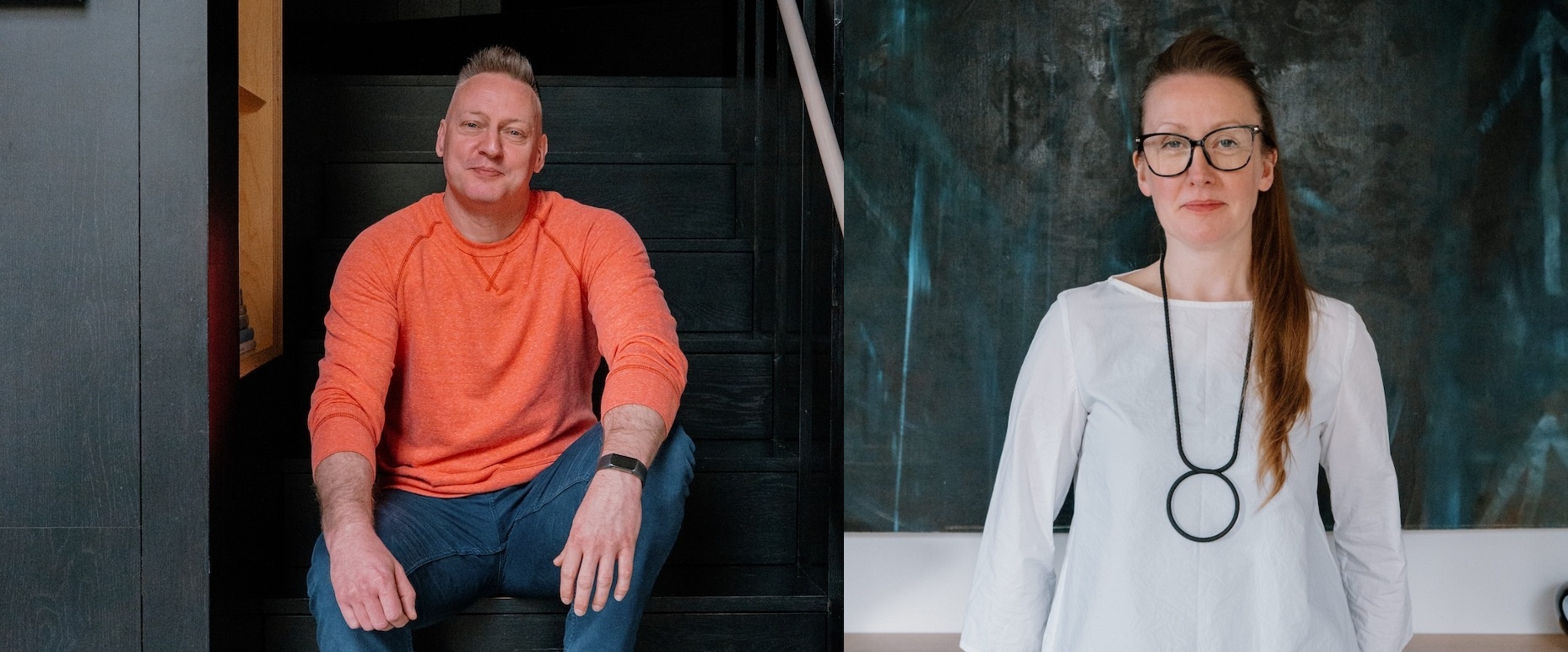
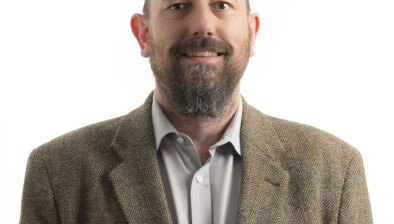
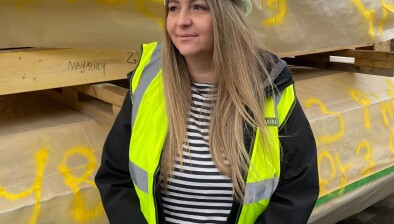
Martin McCrae and Mhairi Grant
Directors Mhairi Grant & Martin McCrae from the architecture studio Paper Igloo share their thoughts on the Stage 2 consultation of the Scottish Government’s Passivhaus Equivalent policy and encourage the Scottish construction industry to engage with the consultation before 16 October 2026.
Our first reaction is that there’s a lot to be positive about. But, as with most things, the detail matters. The really exciting part for us is the proposal that a Certified Passivhaus can be treated as ‘deemed to satisfy’ Section 6 of the Scottish building standards.
That’s a significant step forward that could make a real difference to the process. At the moment, we need to do both Passivhaus modelling in the PHPP and SAP calculations for building standards compliance. If Passivhaus Certification is accepted as demonstrating compliance, we’re not having to do two versions of the same task. And that’s important for our clients too. It means less duplication, less unnecessary complexity, and potentially less cost.


There’s also been quite a significant change in the proposed energy metrics. There’s a clear move towards absolute energy targets, rather than relying so heavily on a notional building to demonstrate compliance. That’s a really important – and welcome – shift.
For us, the whole point is that a building should perform well in the real world. We’re interested in how much energy a home actually needs, how comfortable it really is when people are living in it, and so whether the design decisions we make are achieving those goals. That’s much more meaningful that simply demonstrating that a building is – on paper – a certain percentage better than another theoretical building.
The Scottish proposals are moving towards a much more performance-led approach, and that’s something we’ve been advocating for a long time. But there are still some important questions and missing elements around exactly how the targets are set and the modelling is carried out.
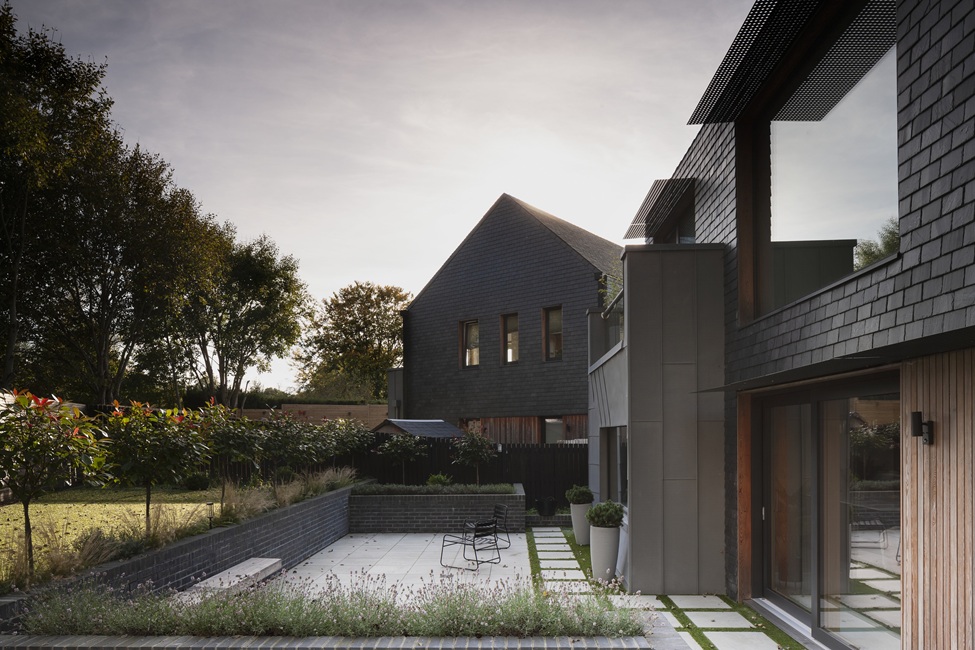
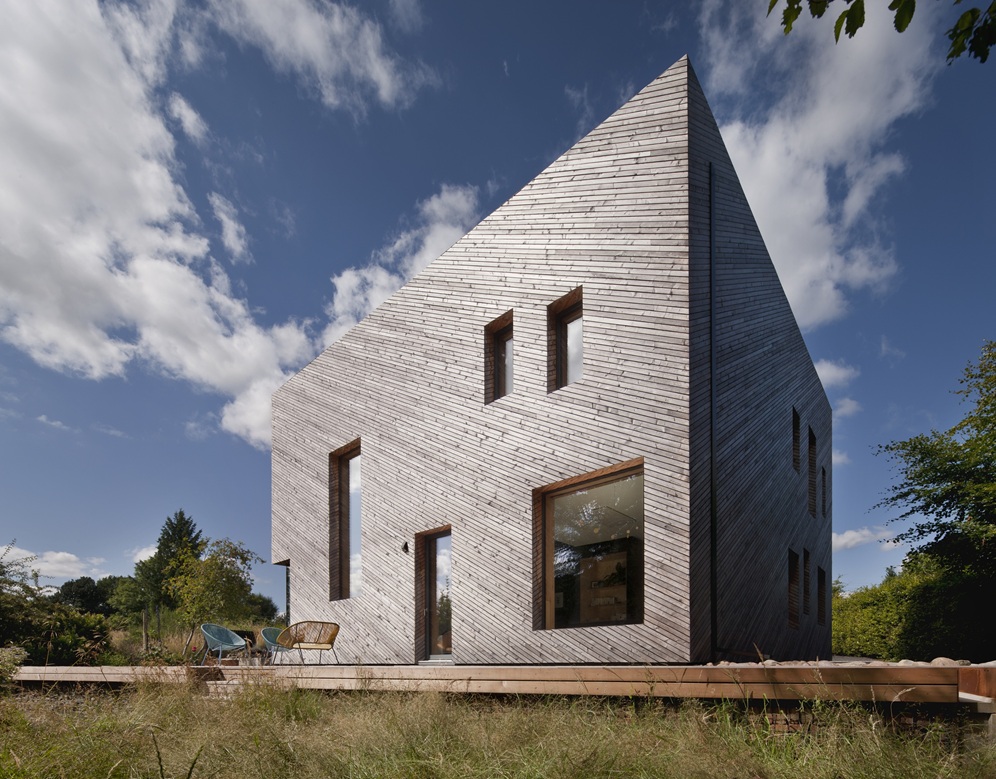
© David Barbour
We agree with the Passivhaus Trust – there are three main areas in particular we would like to see improved.

First, ventilation losses need to be properly accounted for within the space heating metric. If we’re trying to accurately represent how a building will perform, the metric needs to include all the significant sources of heat loss.
Second, we think the proposed airtightness limit needs to be more ambitious. A proposed upper limit of 5 m³/ (h.m²) is an improvement, but it’s still a long way from what’s achievable with good design and construction.
And third, we’d like to see a single space heating metric rather than the proposed range tables. The simpler we can make this, the easier it will be for everyone to understand and use consistently.
So, is this genuinely a Passivhaus equivalent? We think it’s important to be careful with our language. A lot of these proposals have been informed by Passivhaus, and that’s a really positive thing. But ‘informed by’ and ‘equivalent to’ aren’t necessarily the same thing. Nor are they necessarily going to give the same results. And that’s disappointing, because Passivhaus has so much to offer Scotland.

© David Barbour
What is it about Passivhaus that makes such a difference?
For us, one of the biggest things is reliability.
Passivhaus is an international low-energy building standard with more than 30 years of evidence behind it. The approach has been tested and refined over lots of building types. And crucially, Passivhaus buildings perform as designed. That sounds obvious, but it isn’t the norm.
That’s why we’re so interested in fabric-first design approaches. Reduce the energy demand in the first place, and then you need much less to continue to heat and run it. And that’s also a climate issue. We’re not facing a climate-do-what-you-want-now-and-we’ll-fix-it-later. We’re in a climate emergency. Passivhaus gives us a way of making very significant reductions in the energy demands – and operational carbon – of buildings. And buildings are a huge part of the climate challenge. We don’t have unlimited time to gradually improve building performance. Every new building we construct will be with us for decades.
So we think it’s really important that the Scottish Passivhaus Equivalent is as robust as it can be – or, at the very least, there’s a clear trajectory towards getting there. We don’t want to build in compromises now that become much harder and more expensive to fix later.
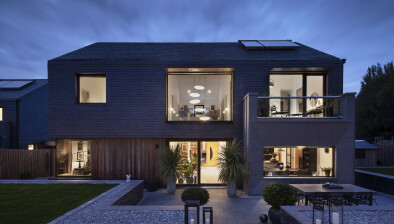
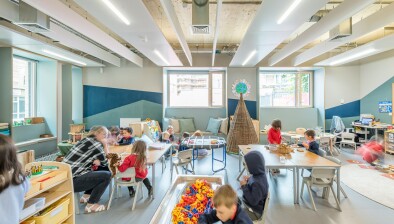
We know first-hand that Passivhaus can make a difference to the people living in these buildings. We’ve had really positive feedback from people living in our Abhainn Passivhaus development in Hamilton, and we’ve also collected post-occupancy monitoring data, that backs up the design predictions. That these homes are comfortable and require radically less energy to run. That’s the bit that can sometimes get lost in the discussion about standards and metrics. Ultimately, we’re designing homes for people.
A warm, comfortable, healthy home should be the baseline.
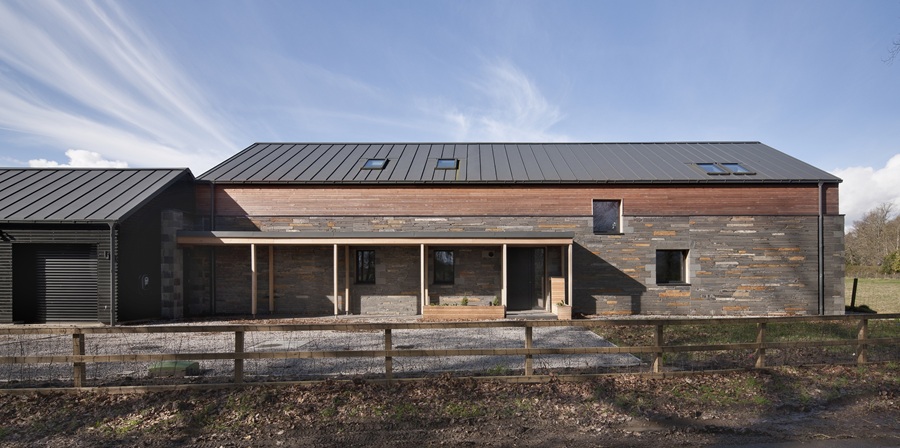
© David Barbour
What’s the cost of not going far enough?
We need to think about the long-term benefits of improving Scotland’s housing stock now, rather than just looking at the cost of construction today. Every new building that
doesn’t perform as well as it could is potentially a building that needs improved – or worse, replaced – later. And retrofitting is almost always harder than getting it right from the start.
The Scottish Passivhaus Equivalent doesn’t need to be perfect on day one, but it does need to be ambitious, evidence-based and focused on real building performance.
There’s a lot in the proposals that we welcome – particularly the move towards absolute energy targets and the ‘deemed to satisfy’ compliance route – but we think there’s an opportunity to make the policy stronger and simpler.
Scotland has a chance to make its new buildings some of the best performing in the UK. We should take it.
We’d strongly encourage anyone with an interest in building design, construction, housing or energy to read the Passivhaus Trust’s consultation response and submit your own response before 16 October.

Share this article:

Subscribe to our newsletter to not miss articles like this one:
 SUBSCRIBE