




Scottish Government rejects £40m Flamingo Land resort at Loch Lomond
 Reading time: 4 minutes
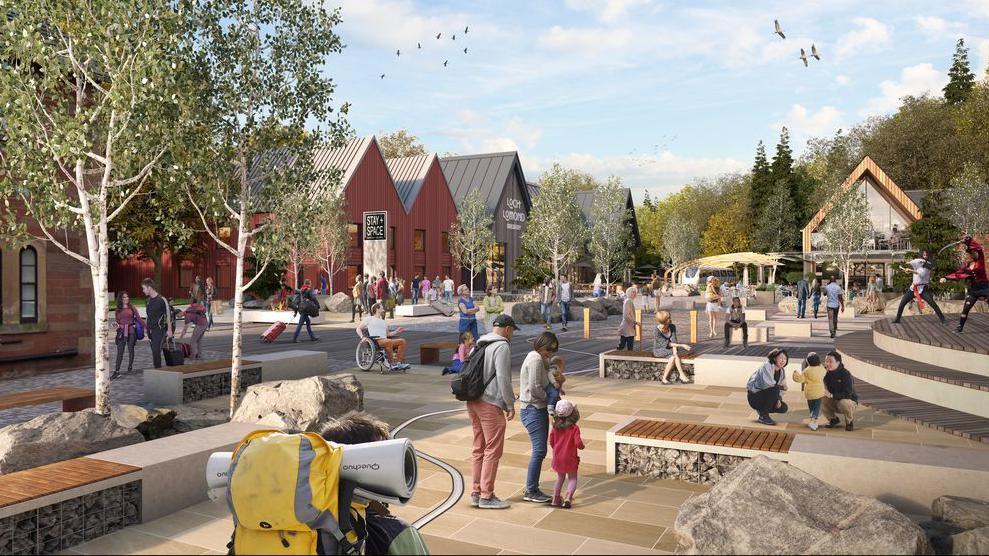
Plans for a £40 million holiday resort on the banks of Loch Lomond have been rejected by the Scottish Government, bringing an end, at least for now, to one of Scotland’s most contentious planning battles.
About this development:
- Authority:Loch Lomond and the Trossachs
- Type:Residential, Commercial, Leisure
- Applications:
- Team:Anderson Bell + Christie (architect)
The long‑running proposal, led by Yorkshire‑based theme park operator Flamingo Land through its Lomond Banks subsidiary, sought to deliver a major leisure development at Balloch, West Dunbartonshire. The project included more than 100 holiday lodges, two hotels, a waterpark, a monorail and extensive parking infrastructure.
Ministers said the refusal was based on “flood risk, woodland loss and wider policy conflicts”, concluding that the development did not comply with the National Park’s statutory aims. While acknowledging “significant socio‑economic benefits”, the government said these were outweighed by “substantial concerns relating to flood risk” and the “extent and location of woodland loss”, particularly the potential permanent loss of ancient woodland.


The decision goes against the recommendation of the government’s own planning reporter, who had previously approved the scheme in principle subject to 49 conditions. Ministers said they accepted the reporter’s findings but reached a different conclusion on the environmental risks.
Flamingo Land first submitted plans in 2018 but withdrew them after a wave of public opposition. Revised proposals lodged in 2020 were unanimously rejected by the Loch Lomond and The Trossachs National Park Authority, which cited conflicts with both regional and national environmental policy.
Concerns centred on the impact on the River Leven’s floodplain, the loss of historic woodland and the effect on the area’s natural beauty. More than 150,000 people signed petitions opposing the development, making it one of the largest environmental campaigns in Scottish history.
Despite this, Lomond Banks won an appeal last year when the government’s reporter recommended approval. Ministers then “called in” the application in June 2025 due to its national significance, ultimately deciding to refuse permission.


Jim Paterson, development director for Lomond Banks, said the decision “flew in the face” of the project’s potential to deliver “transformational investment” in one of Scotland’s most disadvantaged communities.
He argued that issues around flood modelling and woodland impact could have been resolved through further design work, adding:
“Today’s outcome is dismissive of the reporter’s recommendation and is bad news for Scottish business and tourism as a whole.”
The company said it will now review the decision and consider its options, including the possibility of a legal challenge.


Environmental bodies including the Woodland Trust, SEPA and the National Trust for Scotland, had all raised concerns about the development. Campaigners welcomed the government’s decision, with Scottish Greens co‑leader Ross Greer, who led the public campaign, calling it “a huge victory for the local community”.
He said the resort would have had a “devastating impact” on the landscape, adding that Flamingo Land should “walk away” after repeated rejections.
Local Labour MSP Jackie Baillie also welcomed the outcome, saying the proposal had been “flawed” and overwhelmingly opposed by residents.
Heather Reid, convener of Loch Lomond & The Trossachs National Park Authority, said the decision “vindicated” the board’s earlier refusal.
She said it supported the long‑term vision for the National Park:
“A vision where people and nature not only coexist, but thrive together.”
The authority will now review the full decision, noting that a six‑week window remains for any legal challenge.
With the plans now refused at ministerial level, Flamingo Land faces a choice: pursue a court challenge, redesign the scheme yet again, or abandon the site altogether.

Share this article:

Subscribe to our newsletter to not miss articles like this one:
 SUBSCRIBE