



SHBT unveils new strategy to expand historic building restoration work
 Reading time: 4 minutes
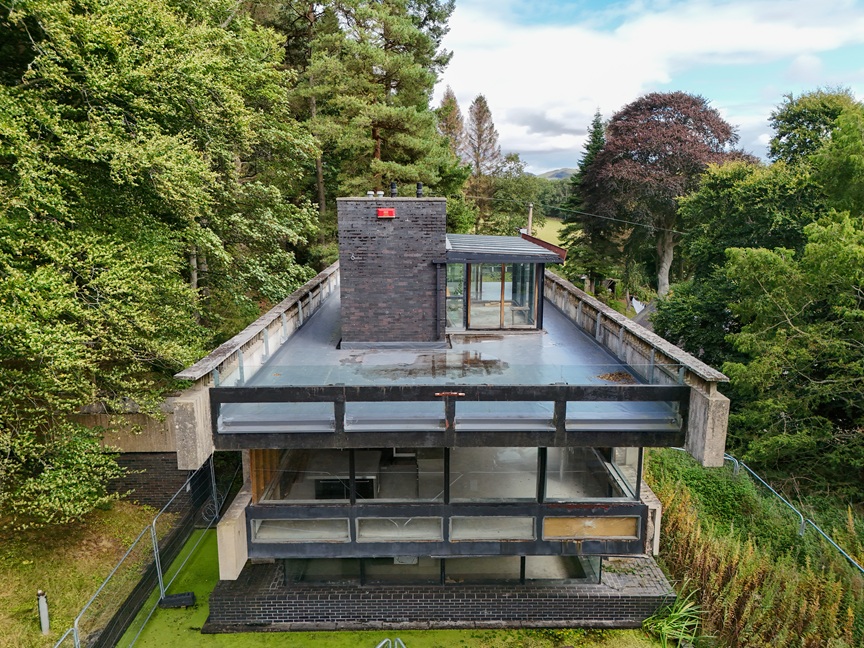
Image: Mike Bolam
Scottish Historic Buildings Trust (SHBT) has published a three-year strategy that sets out its plans to restore more at-risk buildings through community partnerships, innovation in project delivery, and entrepreneurial stewardship as the charity approaches its 50th anniversary in 2028.
Since its foundation, SHBT has restored over 30 historic buildings at risk, supporting the restoration of many more, and has delivered over £50 million of capital investment into Scotland’s built heritage.
Our Future at Fifty, announced today, establishes SHBT as a truly national charity for Scotland, responding to a growing and widespread need for its specialist expertise. It also demonstrates how SHBT is delivering on the national heritage strategy, Our Past, Our Future. Rising to meet the challenges facing the sector, including the traditional building skills crisis and the energy efficiency of historic buildings.


Dr Samuel Gallacher, SHBT’s director, said: “We are an ambitious and growing charity making a real impact across Scotland for the historic built environment. Following Highland Historic Buildings Trust joining SHBT in November 2025, we now have an even stronger national presence. We are also excited to be able to deliver our part of Scotland’s national heritage strategy, Our Past Our Future, which sets ambitious targets for the sector as a whole.
“Indeed, our specialist skills and approach to save historic buildings from Kintyre to Caithness, from Eyemouth to Angus, are more in demand than ever. With new projects and partnerships, and both appetite and capacity to do more, we are enthusiastic about what the future holds, guided by our new strategy.”
George McNeill, chair of SHBT, said: “Perhaps most importantly, this strategy centres on our engagement with local communities. The role of local communities as the leading agents for historic building restoration has been the defining trend of the last decade, and a trend now accelerating as a growing number of institutional owners look to others to take on responsibility for historic buildings. SHBT can play a unique role during this period of transition, especially in rural areas, by working in genuine partnership to deliver community-led building restoration projects.”
The strategy is structured around three core pillars; becoming a truly national charity through place-based partnerships, collaborating closely with local authorities and heritage bodies; becoming outward-facing by tackling sector-wide issues, including skills shortages; and becoming entrepreneurial through innovative coalitions and income diversification through our heritage consultancy for the third-sector and for local authorities, diverse events programme and historic property management.
Philip Long OBE, CEO at National Trust for Scotland, said: “Scottish Historic Buildings Trust is an important partner for National Trust for Scotland in saving the nation’s historic buildings for future generations. We welcome their new outward-facing strategy to work across the country, their appetite to seek new approaches to conservation issues, and build effective partnerships which, further to our current work together on the ambitious project to restore and reopen the Bernat Klein Studio in Selkirk, offer the potential for future collaborations between SHBT and National Trust for Scotland.”
Hazel Johnson, director at BEFS (Built Environment Forum Scotland), said: “SHBT’s Our Future at Fifty strategy demonstrates the sector-wide collaboration needed in addressing Scotland’s heritage challenges; working with a wider range of communities, partners and regions to help the sector restore and reuse significant historic buildings across Scotland, towards thriving places.
“BEFS particularly welcomes the commitment to work in genuine partnership on issues including the traditional buildings skills crisis and the need to invest in appropriate climate adaptation. This strategy shows how heritage organisations can be both entrepreneurial and mission-focused, and at BEFS we look forward to continuing to work alongside SHBT as they deliver on these ambitious plans.”
Central to the strategy is SHBT’s community-embedded Traditional Building Skills model, developed in Eyemouth in the Scottish Borders. The scheme delivers pre-apprenticeship training alongside local restoration projects. The model takes on several derelict buildings in rural communities, training local people in traditional crafts whilst saving buildings at risk. The project was recently recognised by a cross-party motion in the Scottish Parliament.

Share this article:

Subscribe to our newsletter to not miss articles like this one:
 SUBSCRIBE