




Prospective Strathclyde Uni spinout to pursue carbon capture for concrete
 Reading time: 4 minutes
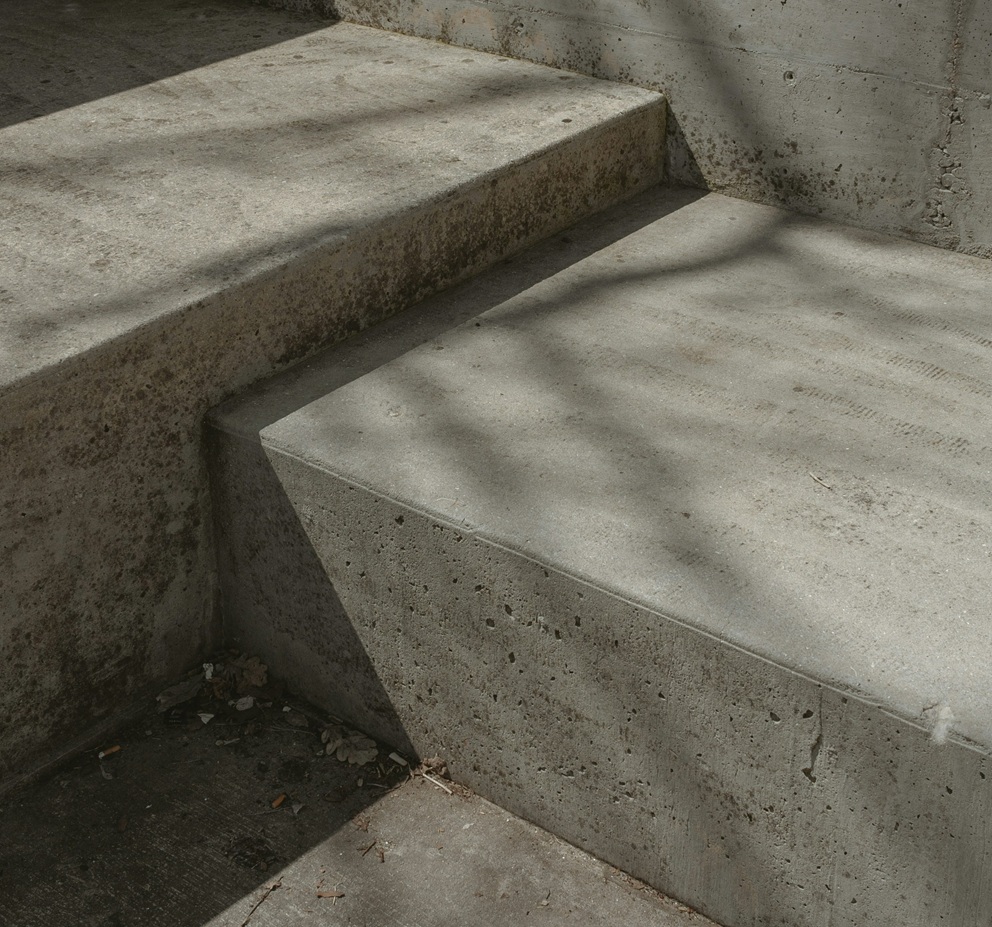
A company being established by a University of Strathclyde researcher is pursuing innovative methods of combining carbon capture with sustainable building materials.
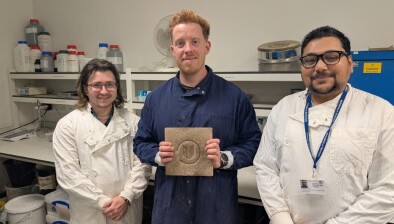
Phil Salter, a researcher in Strathclyde’s Department of Civil and Environmental Engineering, is setting up Ureaka to develop technology for locking CO2 securely and permanently into cement replacements and construction materials as a practical, economically viable and carbon-negative – removing more CO2 than it produces – alternative to more conventional materials.
The approach avoids high-temperature kilns and is designed to be easier to deploy in real-world settings.


Cement and concrete are major sources of CO2 emissions, accounting for 8% of the global total – nearly double the amount generated by aviation. Ureaka estimates that if all the concrete in the UK were replaced with their carbon-negative concrete, or bioconcrete, it could avoid the production of 14.8 megatonnes of CO2 and sequester, or store away, 6.7 megatonnes. All of this is equivalent to taking more than five million petrol cars off the road for one year.
The company, a prospective spinout from Strathclyde, has already gained international recognition as one of 50 global finalists in CarbonX Program 2.0, a climate solutions competition run by technology company Tencent.
Mr Salter said: “We believe this is something that no one else is doing, replacing cement completely while storing CO2 in a binder system. It’s one of the biggest environmental challenges there is and concrete is one of the most difficult things to decarbonise.
“This is not just because of the high energy which is used to produce cement but also because it releases CO2 in that reaction. It’s a process emission which has to be captured or stored and there’s not really any way around that when making regular cement.”


Ureaka’s material, enabled by low-cost, plant-derived enzymes, is up to 30% – around half a tonne per cubic metre – lighter than traditional concrete and is suitable for use in most types of building.
The CO2 supplied for the venture is sourced from industrial point sources, such as distilleries and biogas, and is used to help upcycle abundant silicate minerals and industrial waste streams that might otherwise be landfilled.
Ureaka is developing solutions for both existing and new concrete, including liquid systems for repair and remediation, and drop-in cement-replacement binders for new builds.
Mr Salter said: “There’s a clear advantage to this biocementation strategy in that the liquid you’re pumping in is like water. It has very low viscosity and it can get to places that regular cement and chemically-based grouts can’t. This makes it well suited to applications like repair, remediation, and treating cracked or damaged concrete. Alongside this, we’re developing binder formats that can be used as a direct cement replacement in mainstream manufacturing.”


Mr Salter has been advised in the creation of Ureaka by Strathclyde’s Industry Engagement & Commercialisation team within Strathclyde Inspire, the University’s flagship entrepreneurship programme which offers entrepreneurial training and opportunities to all students, staff members and alumni. The company has also received funding from Scottish Enterprise’s High Growth Spinout Programme and the Industrial Biotechnology Innovation Centre (IBioIC).
Mr Salter added: “Some PhD students may not be aware that they can commercialise their research but if you come up with a new idea or process, there is the option to do this.
“I’ve had a really good experience working with the commercialisation team at Strathclyde. After five years, I’m still just as fascinated by my subject as I was when I started; if you love your research and want to continue doing it after a PhD, it’s a great way to go forward.”
Ureaka has been shortlisted in the Making An Environmental Difference category of the 2026 Scottish Knowledge Exchange Awards. The winners are to be announced on 19 March.

Share this article:

Subscribe to our newsletter to not miss articles like this one:
 SUBSCRIBE