




Written by:

Architects’ Showcase: Hassell champions ‘wellness’ with Usher building in Edinburgh
 Reading time: 6 minutes
Written by:
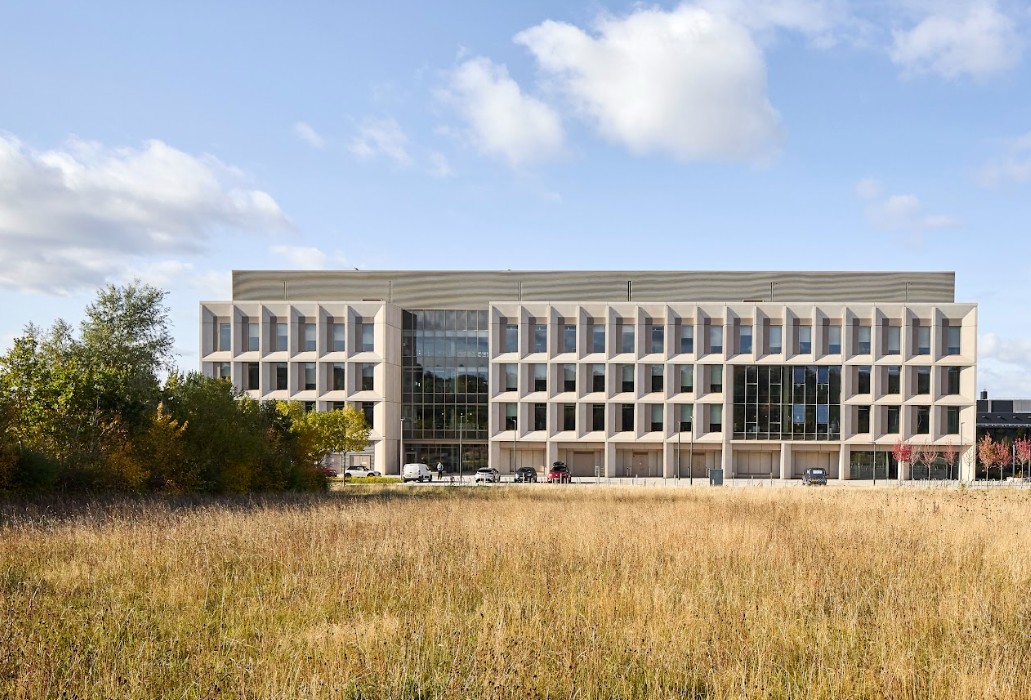
Usher building (© Hufton + Crow)
Hassell’s 2026 RIAS award-winning Usher building for the University of Edinburgh at the BioQuarter has a “holistic approach to physical and mental health and wellness embedded throughout the design”, the international design studio’s senior associate, Will Hartzog tells SCN.
Designed by Hassell, with construction by McLaughlin & Harvey, the building would be a space for more than 900 researchers, students, and healthcare providers.
The building is a major milestone for the first phase of the BioQuarter’s transformation. “By establishing a collaborative and inclusive environment early in the district’s development, the project aims to help shape the BioQuarter’s physical identity and long-term impact,” Hartzog explains.


Home to the Usher Institute and its partners, the building is one of six hubs located in Heriot-Watt University and the University of Edinburgh that constitute the data-driven Innovation initiative, which is part of the Edinburgh and South East Scotland City Region Deal.

Will Hartzog
Aiming to foster a sense of community, the building facilitates different modes of interaction, in which workspaces alongside more flexible spaces are accessible to staff and students. Communal areas, cafes, project rooms and presentation areas are all featured within the building.
Holding a gross internal area of 11,100 square metres, it is also home to a clinical trials unit, a sound studio, wellbeing spaces and various amenities in the ground floor that can also be used by the public.


The staircases promote movement to double-height recreation areas which bring in green space from outside.
Hartzog says: “For communal breakout spaces, including the tea points and wintergardens, the largest expanses of glazing are used strategically to maximise a feeling of connection to the outdoors.”
But promoting agility and access to green space was not the only focal point of the project, with the design process carefully taking into account the history of the University of Edinburgh and the city itself.
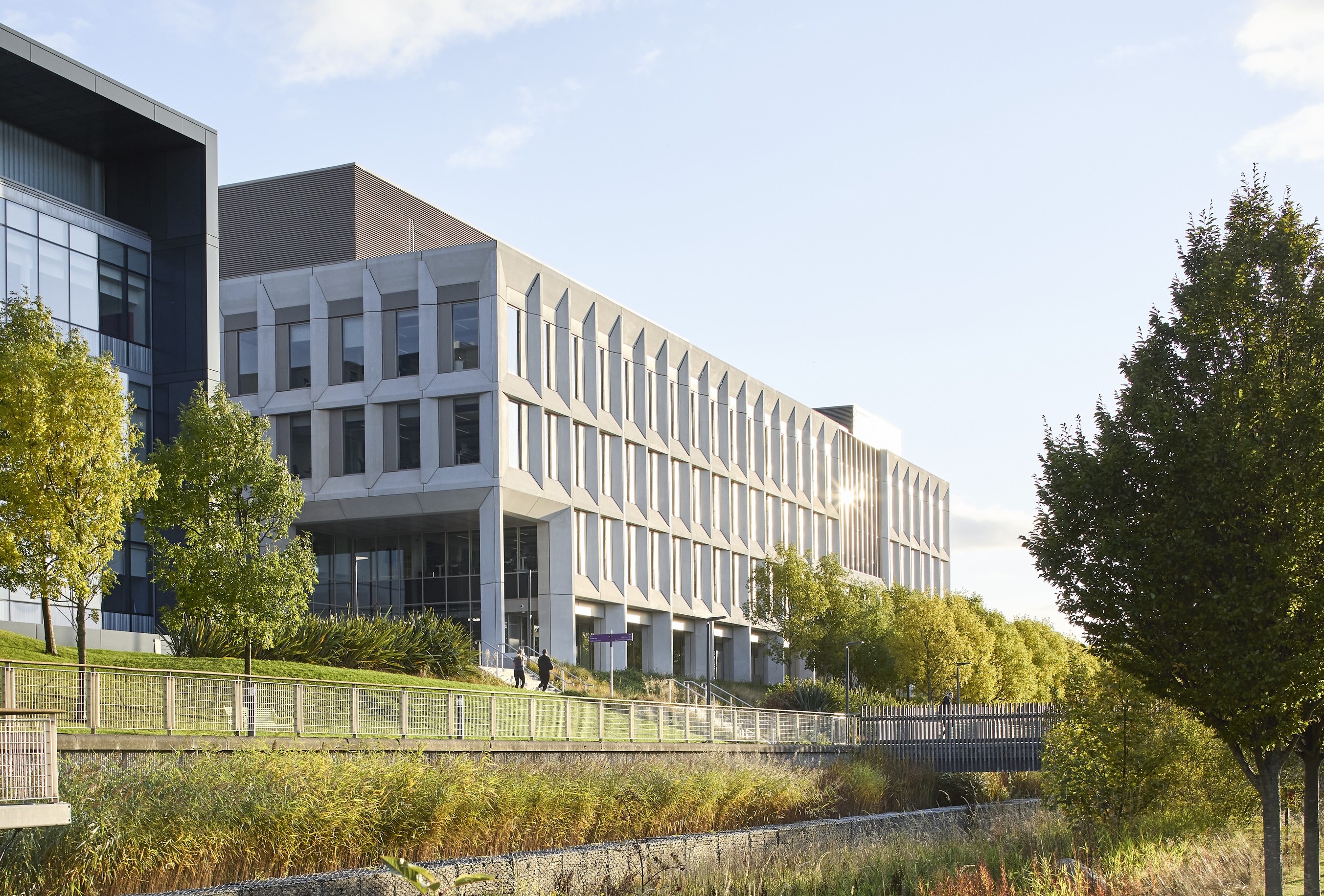
Usher building showing access to green space
Hartzog explains that while modern materiality has been employed in the project, the “aim for the external expression of the building was to establish a civic identity as an extension of the historic city centre.”


Completed in 1902, the original Usher Institute building in Edinburgh’s city centre, had been gifted to the university. The development of the new building started in 2018 and the project’s construction was completed in 2024.
However, maintaining a sensitive outlook towards the historical surroundings was not the only area of focus within the project. During the design process, Hassell was in touch with researchers from the medical field, liaising with the Usher Institute through focus groups, open days and further engagement, enabling those using the building to influence the direction of the design.
The global pandemic also brought about alterations during the design stages of the project. “The timing of the COVID-19 pandemic coincided with critical design development stages for the Usher project. As a team, we were challenged to rethink the motivations for the project in that context and, I think, we were ultimately able to deliver a better building as a result,” Hartzog says.
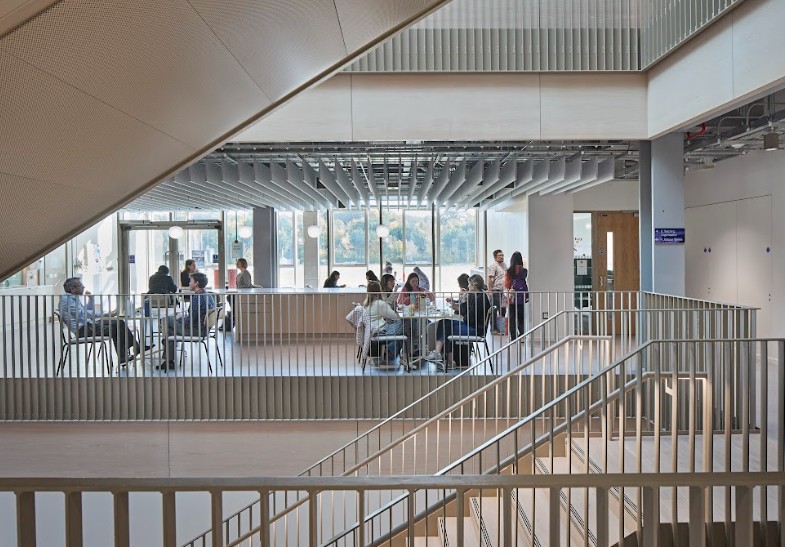
Usher building showing communal space
Hartzog explains: “[A] fundamental shift of thinking occurred during the design stages coinciding with the COVID-19 pandemic from an approach of designing a place people ‘need’ to be, to one of a place people ‘want’ to be.
“The starting point for this was to ensure a variety of workspaces and settings – including critical communal spaces, a café, project rooms, and formal and informal presentation zones – that would offer adaptable flexible settings in addition to the core traditional work settings.”
As such, the design features a ground-floor event hall which can house 170 people, facilitating conferences, teaching spaces and community engagement. Two public entries are also featured within the building, with the main entrance in the north corner providing a connection to the Royal Infirmary of Edinburgh.
Ways to promote modes of working which prioritise health have also been incorporated in the design, including light wells which allow for natural light to reach the building. Access to fresh air in the majority of the open-plan areas also allows users to have more autonomy over their chosen environment.
The objective of the project is to also heighten interaction among users, through the variety of spaces it offers. Hartzog explains: “The building users are a mix of academic and commercial partners, so enabling the chance encounters and informal conversations so critical to innovation was a driver…”
Hassell selected GRC as the main padding material, implementing lighter cladding instead of precast solid panels, enabling a variety of geometric arrangements in the project that add a sense of depth without obstructing viewpoints.
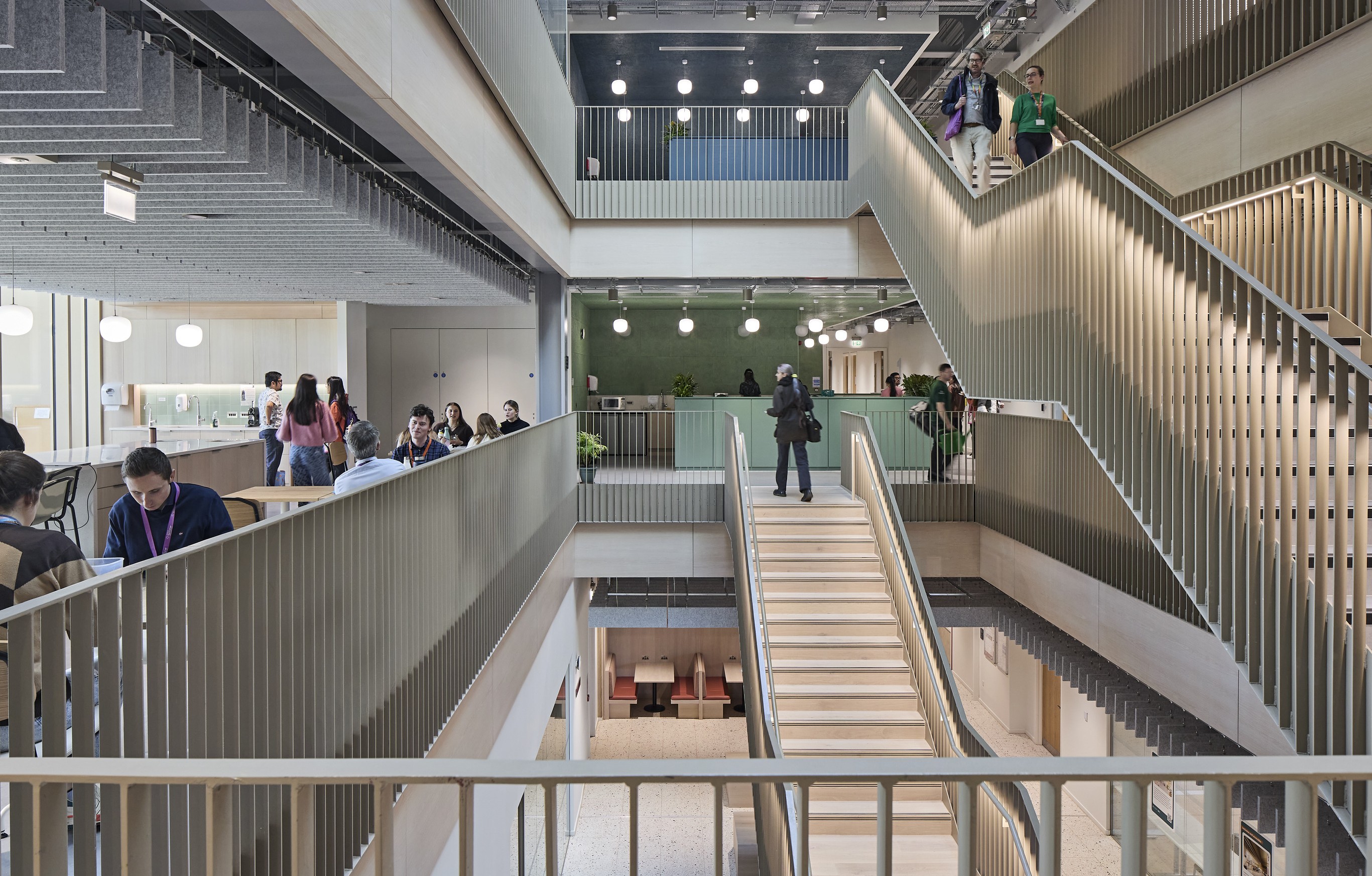
Staircases in Usher building
The GRC serves the purpose of connecting with the wider architecture in Edinburgh. Hartzog says: “GRC (Glassfibre Reinforced Concrete) was chosen as the primary façade materiality. Its expression of solidity and tonality aims to create a direct reference to the prevalent sandstone structures in the city centre.”
Built for population health research, the RIAS judges commended the project, explaining how “the arrangement of spaces demonstrates a sophisticated understanding of circulation, light and user experience.”
Cycling parking facilities and shower areas have also been included in the project. Additional spaces can be used for yoga or table tennis, with a herb garden and library also facilitating quiet spaces.
Hartzog said in a press release from Hassell: “Every corner, from informal gathering spots to dedicated meeting rooms, invites connection and sparks collaboration. It’s a space that breaks down the usual barriers, giving way to a research community that feels more connected, engaged, and accessible to all.”
Project Team
Services provided by Hassell: Architecture and interior design services
Contractor: McLaughlin & Harvey
Structural engineer: Woolgar Hunter
Environment/sustainability Consultant: Cundall
Facade consultant: Montresor Partnership
Acoustic engineer: Sandy Brown
Café Interior design: Significant Others
Fire consultant: Astute Fire Engineering
Landscape architect: LUC
Principal designer: ORSA
NEC supervisor: AtkinsRealis
Environmental/M&E engineer: KJ Tait
Project management (Stages 1-3): AtkinsRealis
Quantity surveyor: Thomson Bethune

Share this article:

Subscribe to our newsletter to not miss articles like this one:
 SUBSCRIBE