



Costs no longer top concern for firms considering energy and infrastructure disputes
 Reading time: 4 minutes

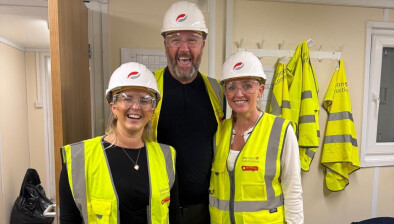
Stuart Clubb, partner at Shoosmiths leading on energy and infrastructure disputes in Scotland
A new era of geopolitical instability and the increase of AI are reshaping the disputes landscape, with costs no longer the top concern for companies when bringing a claim, a new report has found.
‘Litigation Risk 2026: Responding to the new wave of global risks’ is the third annual litigation risk report published today by law firm Shoosmiths.
Of businesses surveyed, more than half did not include costs associated with litigation within their top three considerations, despite the average price of a major litigation remaining at over £600,000. They instead cited legal merit, reputational risk and duration as primary concerns.


Scotland remains a major forum for disputes. The third annual litigation risk report shows 31% of respondents engaged in disputes last year, slightly less than the marked spike of 2024 (44%) but greater than 2023 (28%).
Disputes overall are increasing in the UK, and three quarters (75%) of organisations are expecting to engage in disputes across England and Wales in the next year. Disputes in North America and the EU also continue to rise year-on-year.
The report also reveals that businesses are citing AI-adoption as the biggest emerging risk, with 55% expecting litigation relating to AI to increase over the next three years, putting it ahead of intellectual property, breach of contract and group litigation.
Other key findings include:


- An aggressive expansion of litigation resources is expected
To support in house teams in managing disputes, three out of four firms (74%) intend to increase headcount to support in house teams in managing disputes, and 71% plan to increase spending on dispute resolution.
- Three in four companies (73%) expect state-sponsored cyberattacks to be the greatest form of geopolitical risk
Over two thirds of businesses (70%) have already strengthened cybersecurity programmes and a further 26% have explicit plans to do so.


- Supply chains are being scaled back or localised
A substantial 85% of firms have reassessed, or plan to reassess, their use of international suppliers because of geopolitical risk factors, suggesting a trend towards localisation, shifting to ‘friendlier’ countries, or shortening supply chains.
In response to companies’ intentions to increase litigation resources, Andrea Murray, director of competition, litigation and compliance at Virgin Media O2, said: “You have to build a really strong case of sustained need for headcount to be able to justify that. You can’t just resource for your peaks.”
Shoosmiths’ third-annual report, providing insight into and monitoring trends in how companies approach and respond to the disputes landscape as well as the risks and challenges it creates, is based on a comprehensive survey of more than 360 general counsel and in-house lawyers from large businesses across sectors, including financial services, real estate, automotive and technology & telecoms.
Alex Bishop, partner and head of litigation, regulatory and compliance at Shoosmiths, said: “Now in its third annual edition, our Litigation Risk Report 2026 draws on three years’ worth of data, enabling more informed conclusions on the evolution of disputes and more tailored guidance on how businesses can respond effectively to an increasingly complex risk environment.
“We’re in an era of global instability, and that is having a real impact across boardrooms. By analysing global trends and areas of concern for businesses, organisations can better anticipate potential disputes and implement targeted risk-mitigation measures to safeguard both their reputation and financial position.”
Andrew Foyle, a partner on contentious financial services matters within Shoosmiths’ dispute resolution and litigation team in Scotland, noted that regulatory disputes continue to rise (55% in 2025 compared to 36% in 2023).
He said: “Disputes are common across all sectors, but particularly the Financial Services sector where 63% of respondents had dealt with regulatory disputes in the past year.
“That’s perhaps unsurprising, given increased regulatory activity and which reflects the embedding of Consumer Duty, steps to tackle financial crime (the new corporate offence of failure to prevent fraud) and various mis-selling issues - notably the motor finance commission cases.”
Stuart Clubb, a partner who leads on energy and infrastructure disputes in Scotland, added: “Scotland’s fast-growing renewables sector is facing increasing litigation risk, with 60% of clean energy companies across the UK already engaged in regulatory disputes.
“Environmental, contractual, and tech disputes are identified as the top risks for the sector over the next three years. It’s significant that with 70% of lawyers in the clean energy sector favouring arbitration as the most effective forum, increased use of arbitration and other forms of alternative dispute resolution is likely.”

Share this article:

Subscribe to our newsletter to not miss articles like this one:
 SUBSCRIBE