





Professor Bill Minnis: Managers should take time to really understand strategic planning as function of management
 Reading time: 4 minutes
Professor Bill Minnis
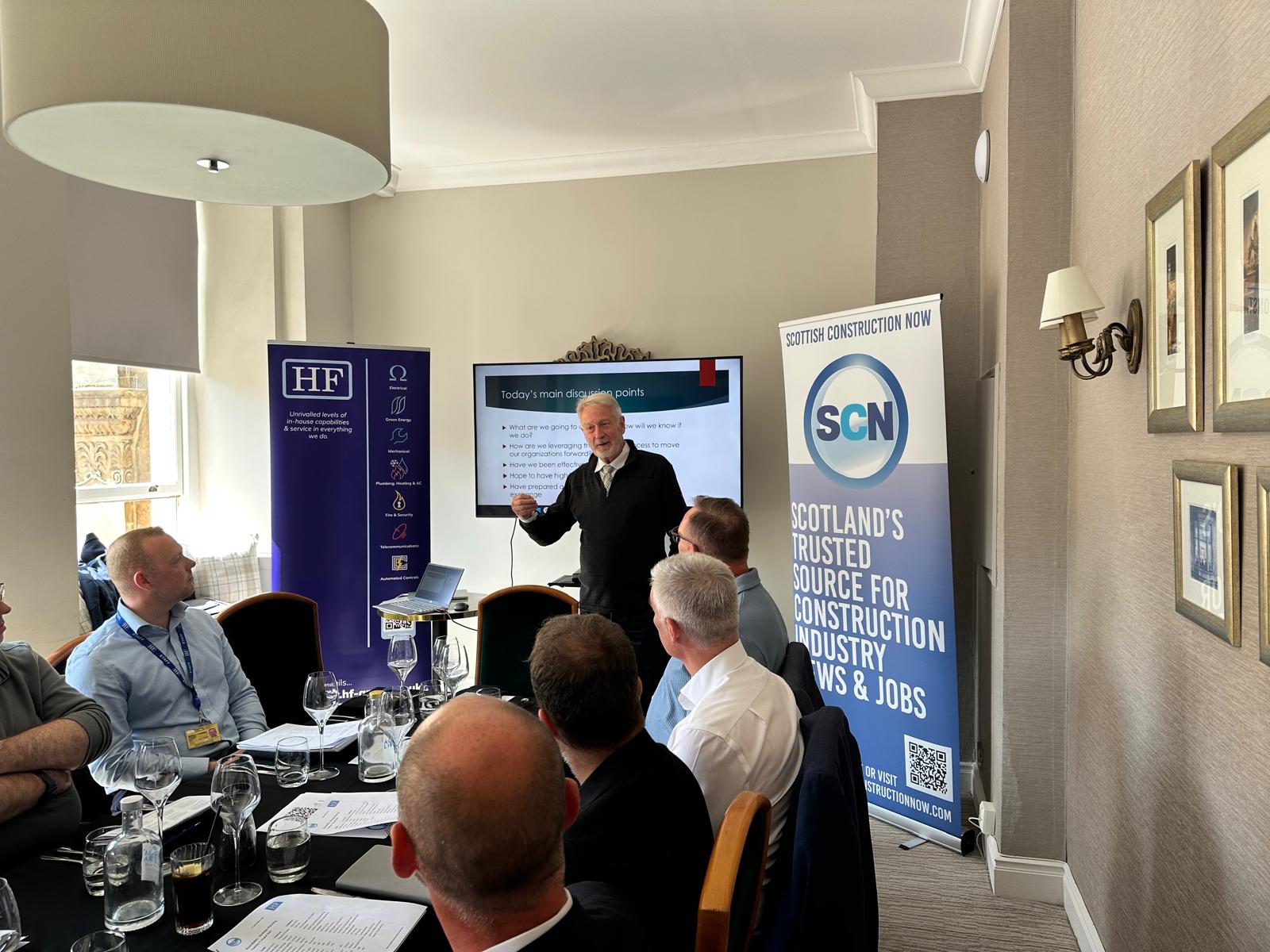
After leading a roundtable event on strategic leadership for Scottish Construction Now last week, Professor Bill Minnis, recently Dean of the Business School at Stockton University in New Jersey, shares why strategic planning should be a part of your organisation’s regular practice and, more importantly, how to prepare yourself for the task to make the outcome more valuable.
In a recent survey of leadership in the Scottish construction industry, it was found that there appears to be a lack of confidence in the strategic planning process. After discussion with a select group of industry CEOs and managing directors, several reasons surfaced for this phenomenon.
Firstly, the increasing uncertainty in the market makes it appear impossible to predict or forecast future operations. Increasing disruption due to economic, geopolitical, workforce, capital availability and environmental considerations; organisational leaders question the value of planning.


In fact, what was discovered through the survey, planning was often perceived to be more important during difficult times within the organisation. The need to adjust and respond to these external pressures causes the leaders to also feel the need to operationally change the direction. Planning becomes reactionary rather than anticipatory.
It was also indicated that very few of the strategic “tools” developed in academia for assisting with the process were used. The strategic planning process was often a tedious and confrontive process that consumed time and often patience with a lack of vision and good analysis.
There is a definite need for greater organisational flexibility and adaptability during a time of greater variability in the macroenvironment. A keen knowledge of the strategic planning process becomes a necessity. Many organisations hire external consultants to assist with the development, which is certainly a plus, but it is still important for the leadership to be knowledgeable of the topic of strategic planning, implementation and evaluation.
As a young man in healthcare administration with a degree in biology and chemistry, it did not take long to figure out I lacked the business education necessary to understand the integration of the many functions of business (marketing, finance, accounting, information, technology, innovation, accounting, and law) into a recipe for future corporate operation.


It is important to note on the academic level, topics like strategy and entrepreneurship have become major programmes in academia, with a curriculum and research base to support their development. I pursued an MBA to gain the knowledge I needed. I will say, of all the education I obtained, the MBA was the most satisfying, mainly because most students in my cohort were there to change careers, pursue advancement or, like me, become more prepared to do my job. Most were engineers, from the sciences, and individuals with arts/humanities degrees.
Today there are alternatives to graduate degrees (although as an academic I believe a graduate degree is a very worthwhile endeavour) from many sources in the form of certification programmes and executive education. These programmes are more efficient from a time perspective and bring together individuals who want an intensive educational experience to enhance their knowledge and career. Often, participants in these programmes are more “mature“ individuals who have considerable operational experience, and the instructors are also academics with real world understanding and experience.
My reason for taking this article to this conclusion is because I believe the largest barrier to the usage of strategic planning is a lack of understanding of what it is and how to use it as a management tool. Consultants are an excellent resource, but it is also important for management to understand what is needed and how to implement. I always suggest reading the seminal authors on the topic; Drucker, Porter, Mintzberg, Grant, Johnson, Senge, and Christensen.
There are things to learn from each about why strategy is difficult, important and a process best studied. Continuing a manager’s knowledge development in all the functional areas of business will yield better business methods.


Sponsored by HF Group, the roundtable event was hosted at Glaschu in Glasgow City Centre on August 11th. Read summaries of the day from SCN editor Kieran Findlay and also on the HF Group website.
To hear from Professor Bill Minnis and many more speakers at the upcoming Scottish Construction Summit, sign up here to attend for free.

Share this article:

Subscribe to our newsletter to not miss articles like this one:
 SUBSCRIBE