




Written by:

Strategic leadership: Inside the Scottish Construction Now roundtable
 Reading time: 7 minutes
Written by:
Professor Bill Minnis
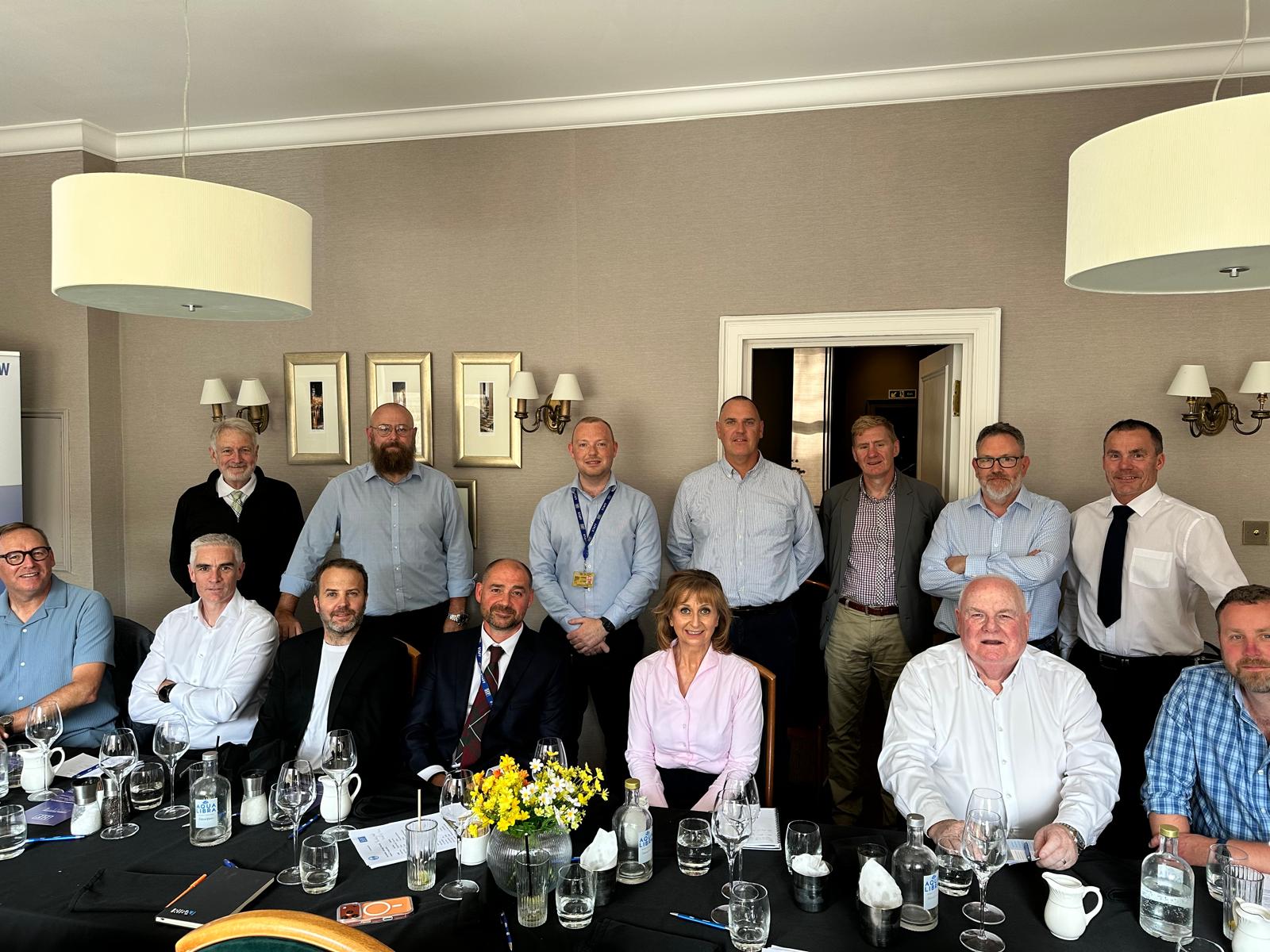
Scottish Construction Now, in partnership with sponsor HF Group, recently brought together senior leaders from across the country’s construction sector for a candid roundtable on one of the industry’s toughest challenges: strategic leadership.
Those in attendance at the event hosted at Glaschu in Glasgow City Centre on August 11th included:
- Hugh Fulton, managing director at HF Group
- Paul McDevitt, managing director at McDevitt & Co
- Kieran Findlay, editor at Scottish Construction Now
- Martin Elsby, partner at DM Hall
- Derek Hutchings, partner at Troup Bywaters + Anders
- Laurence Casserly, director at Bellrock
- Robert Butler, director at Butler Consulting Engineering
- Neil Pearson, director at Butler Consulting Engineering
- Jeanette MacIntyre, managing director at Indeglås
- John Brown, group managing director at Veitchi Group
- Stephen Logan, managing director at Veitchi Flooring
- Janice Russell, managing director at McTaggart Construction
- Marcus McLaughlin, electrical estimator at HF Mechanical & Electrical
- Gordon Lundie, director at Lundie Media
- Michael Kilpatrick, associate director at Waterman Structure
- Jon Jewitt, managing director at Jewitt & Wilkie Architects
- Martin McHugh, managing director at Martec Engineering


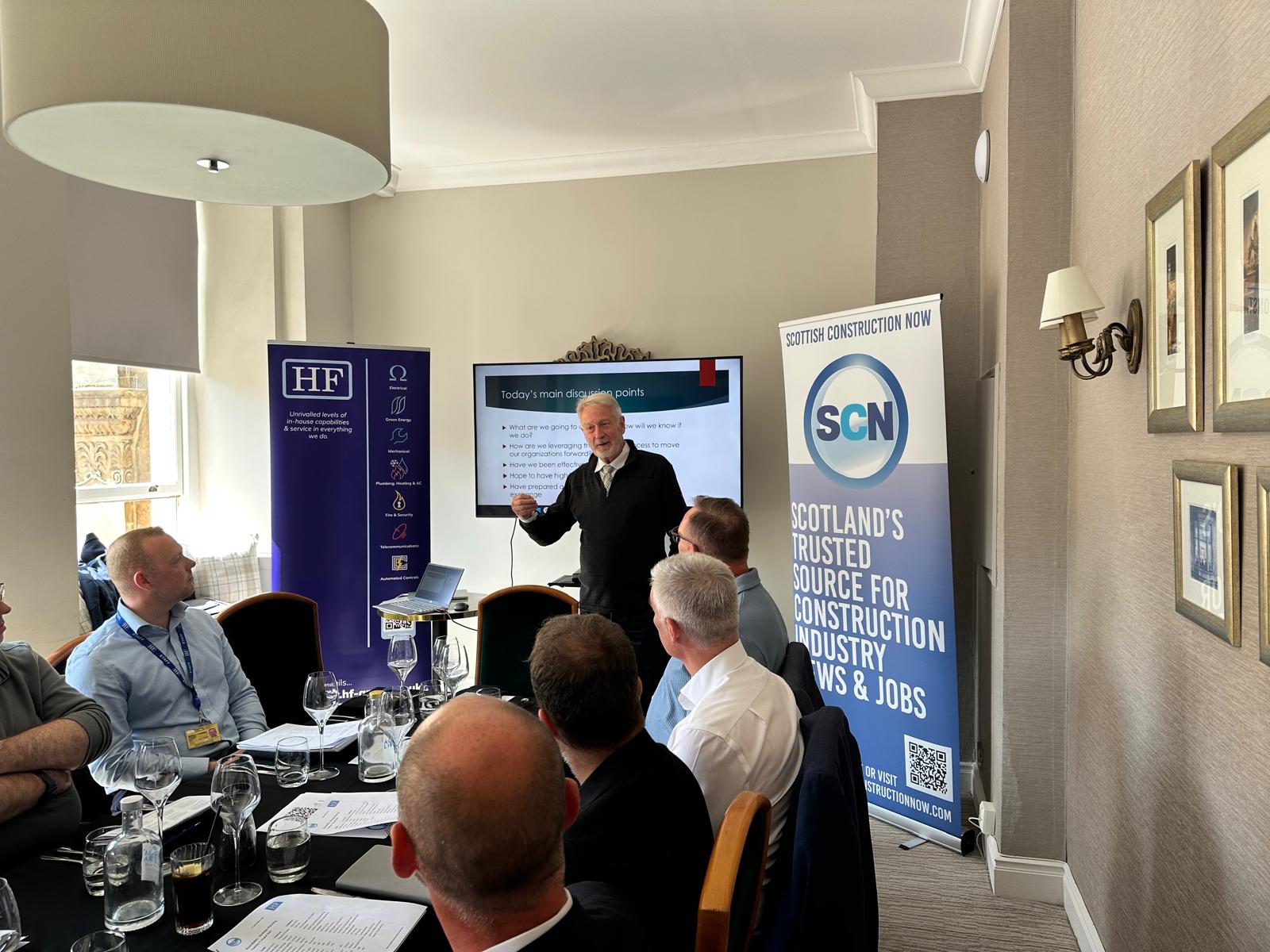
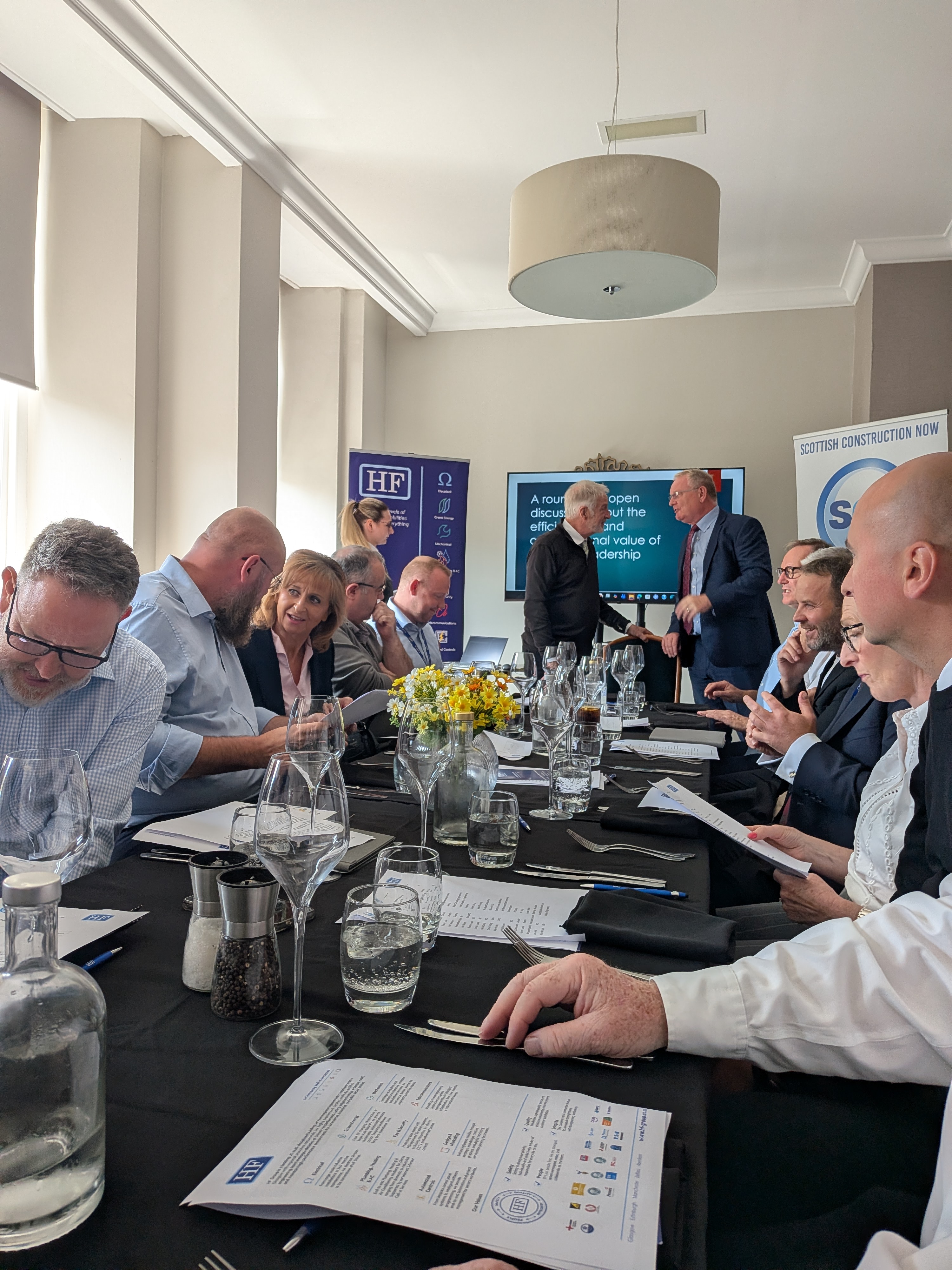
Guiding the discussion was Professor Bill Minnis, recently Dean of the Business School at Stockton University in New Jersey, who used the results of a pre-event strategy survey as a springboard for debate.
Professor Minnis opened by turning the lens on himself. Despite a career that has taken him from academia to a five-year stint as a bank president, a role he stepped into during the depths of 2012 with no prior banking experience, he described much of his own success as accidental rather than planned. Opportunities arrived through relationships and reputation as much as through deliberate design.
That framing set up the day’s central question for guests: is your organisation’s progress the result of genuine strategic intent, or have you simply ended up in the right place at the right time? Bill argued that networking and connection are inseparable from strategy - that the people you know and the rooms you’re in shape the plans you’re able to make, and that roundtables like this one are themselves a strategic act.
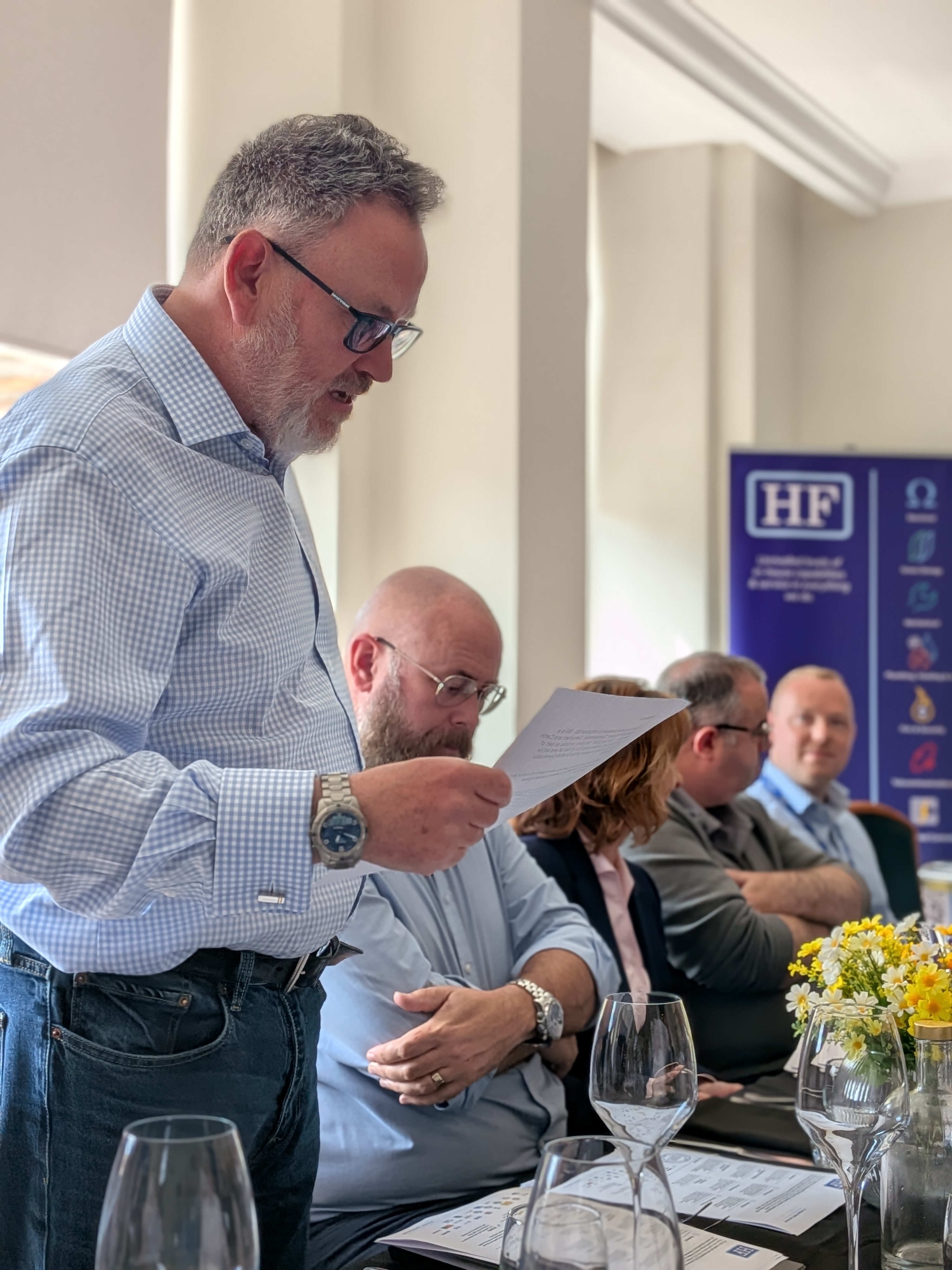
Paul McDevitt got preceedings underway
A recurring thread was the idea that leaders should extend their strategic horizon rather than trying to nail down every detail early. Professor Minnis encouraged the room to think in multiple time frames at once - six months, a year, three years, five, even 20 - while accepting that only the near term can be mapped with real precision.


The further out the vision, the more it should stay directional rather than prescriptive: succession, staff development, and organisational resilience are long-term bets that don’t need a fully worked-out roadmap on day one, just a clear intention and the discipline to keep adjusting as circumstances change.
He also drew a distinction between “change” and “transition”. Change implies stopping one thing to start another; transition is a more strategic, continuous movement from where you are to where you need to be. A subtler, more sustainable way of thinking about organisational evolution in an uncertain environment.
Professor Minnis used higher education as a cautionary tale. Universities, he argued, are structurally slow to adapt, bound by tenure, tradition, and bureaucracy, and many can see disruption coming (falling enrolments, declining international student numbers, widening deficits) without being able to move quickly enough to respond.


His own experience coming in as an interim dean tasked with cultural change reinforced the point: institutions that over-rely on “the way things have always been done” risk being overtaken by circumstances they saw coming but couldn’t act on. The lesson for construction leaders was clear: flexibility and adaptability have to be built in deliberately, or organisations risk the same fate.
The 80/20 split
Drawing on research about decision-making, Professor Minnis shared the idea that roughly 80% of organisational decisions are made on the basis of fast thinking (pattern-matching to past experience) while only about 20% come from genuine analysis of things outside prior experience.
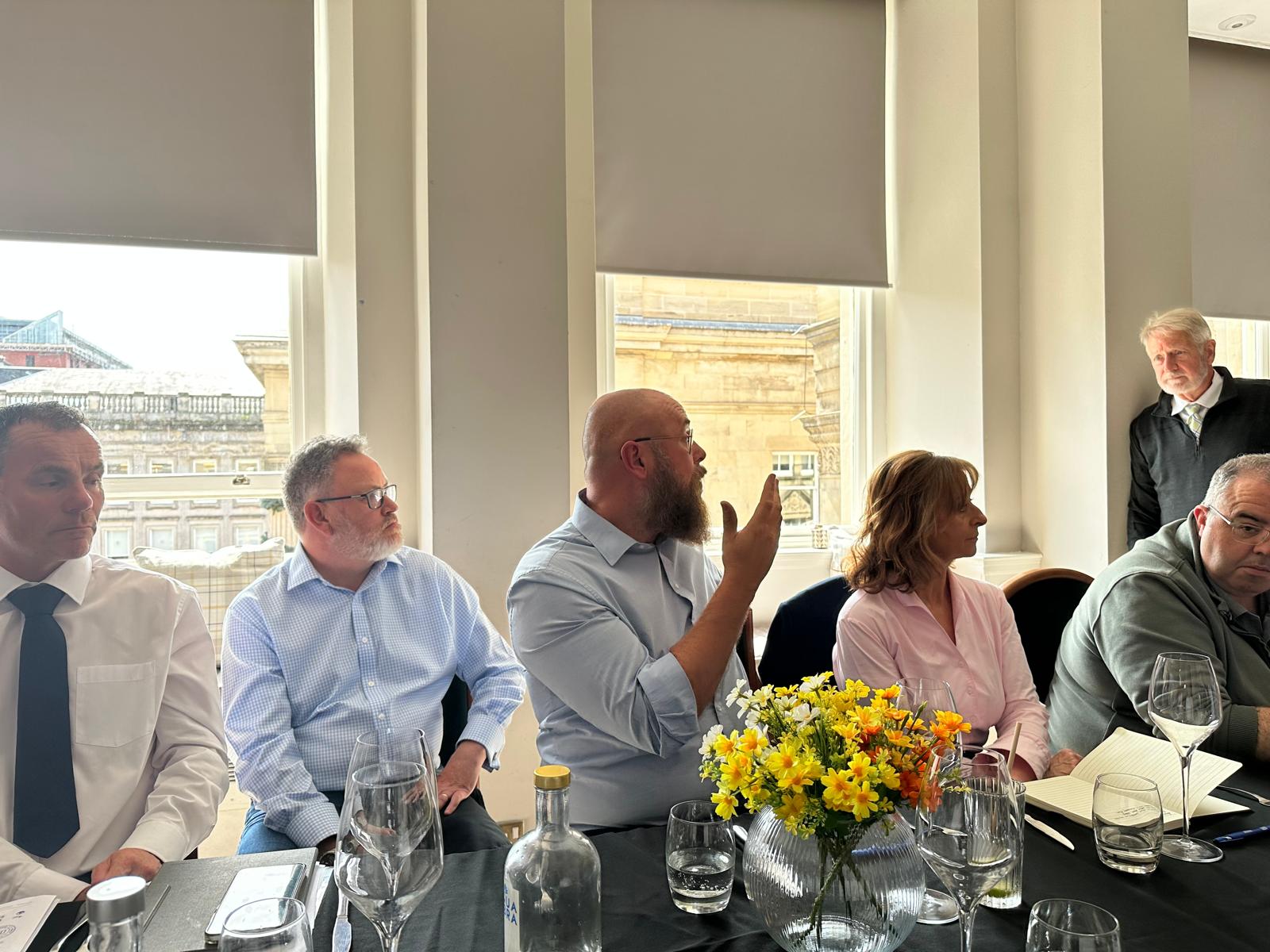
He suggested this bias toward the familiar is a natural pull for any organisation, but that someone in every leadership team needs to occupy that 20% space: watching for change, analysing what’s coming, and pushing the organisation to consider possibilities its history alone wouldn’t suggest. He linked this to why younger entrepreneurs, unencumbered by decades of “how we’ve always done it,” are often freer to build in genuinely new directions, while older, more experienced leaders bring valuable judgement but can also become anchored by it.
The conversation that followed among attendees surfaced several recurring concerns:
- How well is strategy actually communicated? Several guests noted that their organisations may well have a strategy, but that it tends to lose clarity and coherence the further it travels from the top of the business. This was echoed in the survey data, where a meaningful share of respondents felt senior leadership’s understanding of strategy differed from how it was understood elsewhere in the organisation.
- Are we doing more strategy than we think? There was a shared sense that plenty of strategic thinking happens informally, leaders constantly weighing “what’s the next step”, without it ever being written down or labelled as strategy. The suggestion was that many organisations underestimate their own strategic activity simply because it isn’t formalised.
- Formality, process, and the pull of the day-to-day. Guests pushed back on the idea that strategic planning has to mean locking people in a room to produce a large formal document. There was appetite for a lighter-touch, more embedded approach, built into the rhythm of the organisation rather than treated as a separate, occasional exercise, partly because the demands of daily operations so easily crowd out longer-term thinking. One guest also raised how a short-term, experience-driven mindset in business can make it harder to sustain genuine long-term strategic planning.

Takeaways
Across both Professor Minnis’ material and the guests’ own reflections, a consistent picture emerged: most organisations in the room are doing more strategic thinking than they give themselves credit for, but struggle with formalising it, communicating it consistently, and protecting space for it amid daily pressures.
The organisations best placed to navigate ongoing uncertainty, Professor Minnis suggested, are those that push their vision further out, stay willing to challenge their own habits and history, and make sure someone is always looking at the 20%.
Hugh Fulton, managing director of event sponsor HF Group, said: “For HF, sponsoring this roundtable was a fantastic opportunity to bring senior leaders together at such a critical time for our industry. Professor Minnis’s insights really underscored the need for adaptable, forward-thinking strategy across the Scottish built environment.
“We were thrilled to partner with Scottish Construction Now for such a productive and engaging afternoon, and we look forward to continuing these important conversations.”
Kieran Findlay, editor at Scottish Construction Now, added: “This event was the first of many roundtables that we plan to deliver, so it was especially pleasing that we were able to bring together such a high calibre attendance.
“My thanks go to Professor Minnis for his time and valuable insights, Paul McDevitt for helping put the event together and, of course, HF Group for making the event possible.”
To hear from Professor Bill Minnis and many more speakers at the upcoming Scottish Construction Summit, sign up here to attend for free.
Read more about the roundtable on HF Group’s website.

Share this article:

Subscribe to our newsletter to not miss articles like this one:
 SUBSCRIBE