



UK downturn eases as sector shows early signs of stabilisation
 Reading time: 3 minutes
The UK construction sector began 2026 on a firmer footing as the pace of decline in activity slowed to its weakest in seven months, according to the latest S&P Global UK Construction PMI.
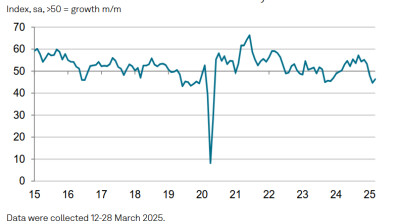
January’s headline index rose sharply to 46.4, up from December’s five‑and‑a‑half‑year low of 40.1. Although still below the 50.0 no‑change threshold for the thirteenth consecutive month, the latest reading signalled a notably softer contraction and the strongest overall performance since June 2025.
Housebuilding continued to drag on overall output, registering 39.3 in January. Despite remaining the worst‑performing category, the rate of decline eased to a three‑month low. Survey respondents pointed to a persistent lack of new residential development and subdued buyer demand.


Civil engineering activity also fell sharply, posting 40.6, while commercial construction showed the clearest signs of stabilisation. At 48.4, commercial activity recorded its slowest decline since May 2025, with some firms citing improved investment sentiment and greater clarity following the Budget.
New work decreased at the slowest rate in three months. Where order books did deteriorate, firms attributed this to fragile client confidence and heightened risk aversion — particularly in the housing sector. However, pockets of improvement were reported, including a tentative turnaround in public sector work and increased enquiries for commercial projects heading into 2026.
Business confidence strengthened for the second month running. Around 38% of firms expect output to rise over the next year, compared with 17% anticipating a decline. Optimism reached its highest level since May 2025, supported by expectations of lower borrowing costs, increased infrastructure spending and hopes of a housing market recovery.
Input cost inflation accelerated to its fastest pace since September 2025. Firms reported higher raw material prices, rising wage bills and increased subcontractor charges — even as demand remained subdued. The squeeze on margins contributed to a further fall in employment, extending the current run of job losses to 13 months.


Purchasing activity also declined sharply, reflecting a lack of new work to replace completed projects. However, softer demand and improved materials availability helped supplier performance, with delivery times shortening for the sixth consecutive month.
Tim Moore, economics director at S&P Global Market Intelligence, said the latest data suggested the sector may be “exiting its tailspin” as firms grow more hopeful about project pipelines in 2026.
“The latest reduction in total industry activity was the slowest since last June. Commercial work outperformed, with activity moving close to stabilisation amid a post‑Budget boost to contract awards,” he said.
“Business activity expectations rebounded to an eight‑month high, while the pace of job losses moderated.”


Jordan Smith, regional director at Thomas & Adamson, said the sector “remains under pressure” but noted clear signs of easing decline.
“Residential construction continued to be the weakest-performing sector, though its rate of contraction eased. Commercial construction showed signs of stabilising, helped by greater clarity following the Budget,” he said.
“Improved material availability and better supplier performance indicate supply chains are stabilising, but ongoing cost pressures and weakness in housing continue to weigh on the industry.”
Brian Smith, head of cost management at AECOM, said two consecutive months of slower decline suggest the market may be “climbing out of its slump”.
“Confidence in the capital will remain low in the short term, but competition is healthy and order books are nearing capacity for 2026,” he said.
“Tender prices are rising as contractors pass on labour and material costs, and sticky inflation means interest rates aren’t falling as quickly as hoped.”

Share this article:

Subscribe to our newsletter to not miss articles like this one:
 SUBSCRIBE