




Heritage charity challenges Edinburgh World Heritage hostel stance
 Reading time: 4 minutes

Jocelyn Cunliffe
The chair of an influential charity dedicated to protecting Scotland’s historic buildings has urged Edinburgh World Heritage (EWH) to reconsider its position on controversial plans for a large-scale capsule hostel in the city’s New Town.
Jocelyn Cunliffe, chair of the Architectural Heritage Society of Scotland (AHSS), has called for reflection and open dialogue after EWH expressed support for proposals to convert four Category A-listed townhouses and associated mews buildings at Atholl Crescent into a 544-bed hostel.
She warns that the EWH stance places it at odds with professional opinion and civic opposition, with all four city centre ward councillors recently condemning the proposals and the developer’s approach.


The proposals are currently under appeal to the Scottish Government after the developer chose to withdraw the application and seek a decision before it was determined by the City of Edinburgh Council.
She said: “I hope that Edinburgh World Heritage will reflect on its outlier position on Atholl Crescent and engage constructively with organisations such as the Architectural Heritage Society of Scotland and others who share a commitment to protecting the city’s historic fabric.
“Open discussion would be a positive step in ensuring that decisions affecting Edinburgh’s heritage are made with the fullest possible understanding of their long-term implications.”
Cunliffe, a conservation architect and former partner at Gray, Marshall & Associates, also questioned a central element of Edinburgh World Heritage’s formal response as a statutory consultee – a claim that the intensity of occupation was a “management issue” rather than a planning consideration.


She added: “How a building is used matters just as much as how it is altered. The issue is not simply the physical alterations that may or may not take place. It is the scale and intensity of the proposed use.
“Cramming in hundreds of sleeping pods into those spaces inevitably alters that character, regardless of whether the pods themselves are technically removable.”
Cunliffe warned that approving developments of this significance could have wider implications for the city.
“If developments of this scale and intensity are considered acceptable within some of the most important Georgian buildings in the New Town, what precedent does that set for other streets and crescents?,” she asked.


“These pressures cannot be allowed to erode the very qualities that make the city special.”
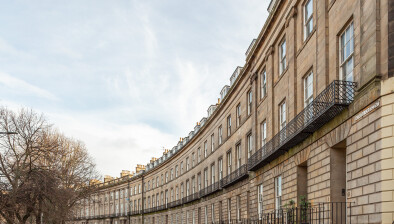
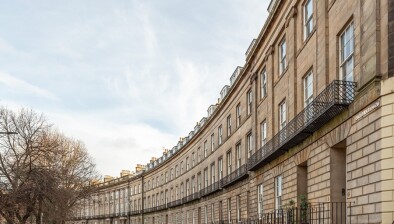
Atholl Crescent forms part of Edinburgh’s New Town, a UNESCO World Heritage Site internationally recognised for its architectural and urban planning significance. Designed in the early 19th century by architect Thomas Bonnar, the crescent is a key example of Georgian town planning, with its uniform terraces and carefully proportioned residential buildings contributing to the area’s distinctive character.
Numbers 14–17 Atholl Crescent are Category A-listed townhouses, reflecting their national importance as buildings of exceptional architectural and historic interest. For many years, the properties were occupied as offices by a legal firm, before becoming vacant in recent years.
Proposals have been brought forward to convert the buildings, along with associated lane properties, into a 544-bed capsule-style hostel - a level of intensification that has prompted significant concern among residents, elected representatives and heritage bodies. The plans represent a substantial shift from both the buildings’ original residential purpose and their more recent use.
As well as political condemnation and criticism from AHSS, formal objections from the Cockburn Association and the West End Community Council add to the more than 280 objections lodged against the hostel plan.
The appeal, by a developer called Atholl Crescent Propco Ltd, is currently under consideration by a Reporter at the Scottish Government’s Planning and Environmental Appeals Division.

Share this article:

Subscribe to our newsletter to not miss articles like this one:
 SUBSCRIBE