




Residents against 544-bed ‘super hostel’ welcome new allies
 Reading time: 5 minutes
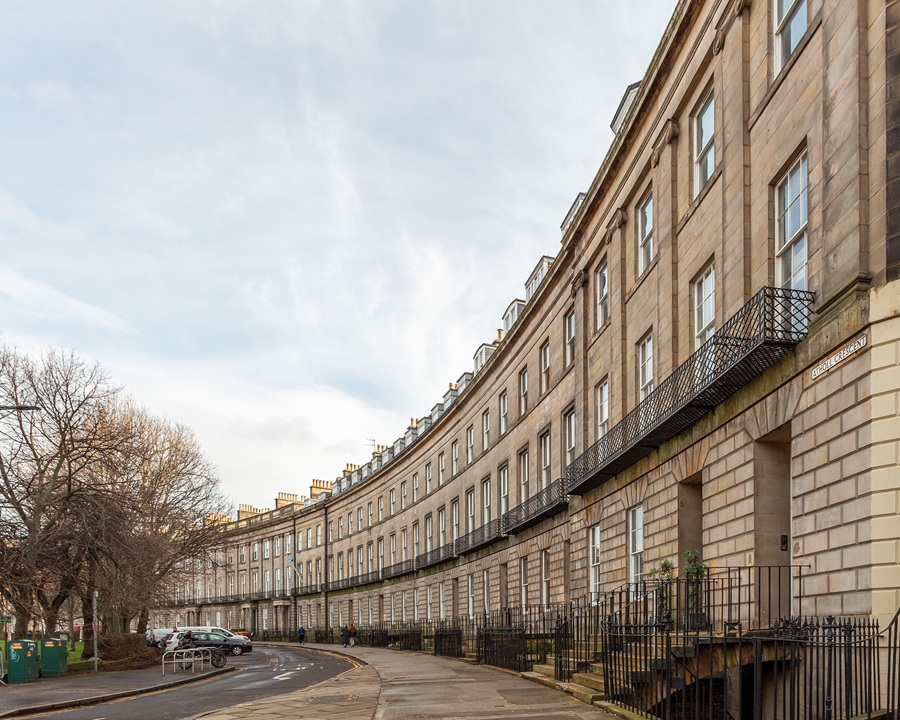
Residents in Atholl Crescent who mounted spirited community opposition against a 544-bed “super hostel” have welcomed a similar group emerging on the opposite side of the New Town.
Neighbours in Forth Street are undertaking their own battle against a proposed apart-hotel in their backyard and are following the example of Atholl Crescent in resisting the development.
Philip Flockhart, the conservation architect who is leading the Atholl Crescent campaign, said the two groups were introduced by Claire Miller, the local Green Party councillor.

He added: “The similarities are startling. They might be different streets, with different labels on the application, but the story is the same. Historic townhouses are being pushed towards high-density visitor accommodation, with little thought for communities or the buildings themselves.
“Communities fighting these battles in isolation are easier to ignore. There is real strength in recognising shared threats and shared values and in making sure decision-makers know that people across the New Town are organising to resist the degeneration of their neighbourhoods.”
Now the two groups are ready to share advice, experience and public support, with Atholl Crescent residents believing the intense pressure generated by their campaign has already benefitted the Forth Street group.
Controversially, Edinburgh World Heritage (EWH) supported the Atholl Crescent hostel plans, putting it at odds with other conservation groups, heritage bodies, community representatives and politicians of all parties.


But campaigners believe that months of pressure since then has led to EWH taking the opposite stance on Forth Street, expressing concern for “alternative uses, particularly housing, which may bring more positive impacts” and of “potential conflict of different uses on residential amenity”.
Philip Flockhart added: “We offered EWH the opportunity back in February to reconsider their support for the proposed 544-bed hostel and extend the same consideration to the Atholl Crescent community as is now apparently offered to Forth Street. We were ignored.
“Why now, but not three months ago when we were repeatedly asking about this? EWH owe everyone in Atholl Crescent an apology and an explanation. The response on Forth Street is in sharp contrast to the EWH response on Atholl Crescent where they have let residents down badly.”
Philip also praised the role of Councillor Miller in bringing the two groups together and added: “This is an example of how helpful our elected representatives can be in coordinating local action. Councillor Miller has already supported our campaign and has now asked me to share what we had learned with the Forth Street residents.”


Councillor Miller, who serves the city centre has been instrumental in connecting the two groups. She was struck by the parallels between the two cases - each involving a historic residential street in the UNESCO World Heritage Site threatened by high-density visitor accommodation. Both sites also have narrow lanes to the rear likely to suffer when lorries are servicing the proposed hotels.
She added: “There may be other similarities, so I am hoping that Philip and the Atholl Crescent group will be able to offer analysis and insight that will help the Forth Street residents with their campaign.”
The plans at the centre of the Atholl Crescent campaign involve converting four Category A-listed Georgian townhouses in Edinburgh’s West End into a high-density dormitory hostel. The townhouses sit within the New Town Conservation Area and Edinburgh’s UNESCO World Heritage Site.
Objections to the scheme have been wide-ranging. Residents raised concerns about the density of occupation on a quiet, predominantly residential street. Opponents also highlighted the extent of internal alterations, the absence of genuine hotel-standard facilities, and the risk of establishing a precedent that could see similar schemes rolled out across the World Heritage Site.
All four local ward councillors - drawn from four different political parties - publicly opposed the application. Formal objections were also submitted by the West End Community Council, the Cockburn Association and the Architectural Heritage Society of Scotland.
Meanwhile, Forth Street residents are opposing proposals to convert a row of B-listed Georgian townhouses into an apart-hotel. New Town & Broughton Community Council (NTBCC) have followed in the footsteps of the West End Community Council by objecting saying that “the scale, interventions and intensity of the proposed development raise significant concerns” and “risks undermining the spatial character and architectural integrity of the listed Georgian interiors.”
The NTBCC raise a more general concern shared by both groups that such use “contributes to an increasing pattern of converting buildings within the city centre to visitor accommodation. While tourism is an important part of Edinburgh’s economy, the cumulative loss of employment and mixed-use functions risks undermining the balanced character of the New Town”.
In its formal response to the Forth Street application, EWH warned that the proposals would have a negative impact on the Outstanding Universal Value of the World Heritage Site. It highlighted the loss of gardens and mature trees, the effective “slapping together” of individual buildings and the erosion of a street pattern historically designed and valued for residential use.
Campaigners have welcomed the EWH position on Forth Street but Philip Flockhart has raised serious questions about consistency in its approach, given the organisation’s earlier stated support for the Atholl Crescent application.

Share this article:

Subscribe to our newsletter to not miss articles like this one:
 SUBSCRIBE